
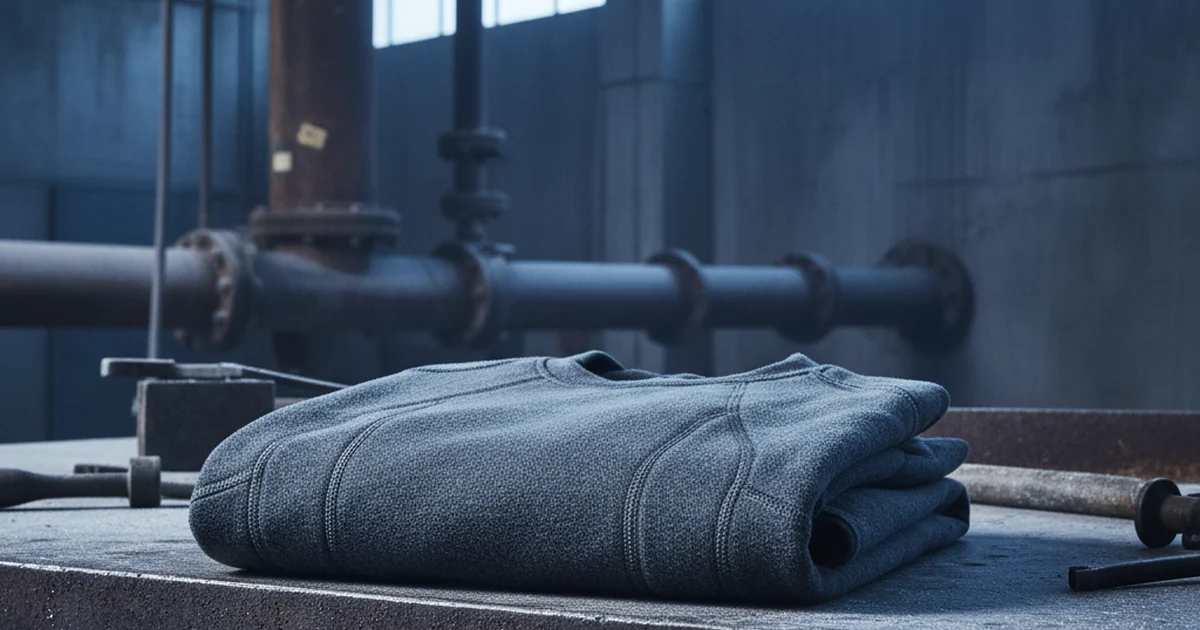
Dragonwear FR is premium inherent flame-resistant outerwear — built around a proprietary Super Fleece fabric that won't melt, won't wash out, and carries a genuine CAT 4 / 40 cal/cm² arc rating on the flagship jackets. Short answer: if you work cold-weather arc-flash or flash-fire jobs and want one jacket that's both warm and protective, it's one of the few that actually delivers — but you're paying $375 and up for outerwear, not a head-to-toe FR wardrobe. Inherent FR means the flame resistance is built into the fiber itself, so it can't wash out — unlike a chemical FR finish applied to cotton.
Key Takeaways
- It's true inherent FR: the Super Fleece fabric is flame-resistant at the fiber level, so the protection can't be laundered out the way a treated finish theoretically can. That's the core value here.
- The flagship jackets are dual-hazard rated: the Exxtreme and Alpha are listed as certified to NFPA 70E and NFPA 2112, with a 40 cal/cm² arc rating (CAT 4) per their product pages — that's the top arc-flash category.
- It's expensive and outerwear-heavy: Super Fleece jackets run ~$375-$450. Dragonwear is a layering line, not a full wardrobe — you still need FR shirts, pants and base layers from somewhere.
- FR is not fireproof: even a CAT 4 jacket self-extinguishes and resists ignition — it does not make you immune to a sustained fire. Match the rating to your real hazard.
What is Dragonwear, and who's it actually for?
Dragonwear is the FR outerwear line from True North Gear, aimed squarely at utility/lineman and oil & gas crews who work outside in the cold. The whole pitch is built on one fabric: a proprietary inherently flame-resistant tri-blend they call Super Fleece. Where most affordable FR outerwear is treated cotton (FR engineered in as a chemical finish), Dragonwear's fleece is FR at the fiber level — the same principle as aramid or modacrylic garments, where the resistance can't wash out over the garment's life.
That matters most for one buyer: the worker who needs warmth and arc/flash protection in the same layer. A treated-cotton hoodie can be FR, but it isn't wind-blocking fleece, and a regular fleece will melt onto your skin in an arc event. Dragonwear's whole reason to exist is filling that gap — wind-resistant warmth that's also dual-hazard certified. If you're a summer welder or you just need a basic FR work shirt, this isn't your brand. If you're a lineman pulling a winter shift with an arc-flash hazard, it's one of a very short list worth looking at.
Does the protection actually hold up?
By the spec sheets, yes — and Dragonwear is unusually clear about it. The flagship Super Fleece jackets are listed as dual-hazard certified to NFPA 70E and NFPA 2112, with an arc rating of 40 cal/cm², which is CAT 4 — the highest arc-flash PPE category in NFPA 70E. A quick translation, because the marketing math trips people up:
- NFPA 2112 is the flash-fire garment standard (oil & gas) — it certifies the garment survives a manikin flash-fire test.
- NFPA 70E is the electrical-safety standard that defines arc-flash PPE categories CAT 1-4.
- The arc rating (in cal/cm²) is the energy the garment can take before a second-degree burn becomes likely. CAT 4 means ≥40 cal/cm² — the top tier.
So a jacket carrying both standards plus a 40 cal arc rating is doing real, certified double duty, and Dragonwear states it on the listing rather than burying it. That's exactly what I want to see on a safety garment: the number named, the standard cited. One honest caveat — these ratings are for the jacket. Your overall protection is only as good as your worst layer, so a CAT 4 shell over an un-rated cotton tee under a real arc hazard is a false sense of security. Layer FR over FR.
Comfort, warmth, and the real trade-off
The thing tradespeople consistently like about the Super Fleece is that it doesn't feel like FR penance — it's warm, the fleece has some wind resistance built in, and it doesn't have the stiff, plasticky hand that a lot of cheaper treated-cotton FR outerwear has after a few washes. Inherent fabrics generally win on long-term hand-feel and durability because there's no finish to break down. For a worker who's going to live in this jacket all winter, that's worth something.
Here's the blunt trade-off, though: price and scope. A flagship Super Fleece jacket is ~$375-$450. That's two to four times what a treated-cotton FR jacket costs, and Dragonwear is an outerwear-and-layering brand — you can't dress head-to-toe in it. You're buying the warm, protective top layer and sourcing your FR shirts, pants and base layers elsewhere (Bulwark, Carhartt FR, Rasco, and the rest). For the buyer who genuinely needs inherent FR warmth, the cost-per-wear over years of winters can justify it. For someone who wants "an FR jacket" and isn't working a real arc/flash hazard in the cold, it's a lot of money for capability you won't use.
The Dragonwear pieces worth buying
I'd rank these by how clearly they earn the premium. Specs below are read off each garment's live listing — where a number isn't stated, I leave it out rather than guess.
| Pick | Fabric | Rating (per listing) | Best for | Price |
|---|---|---|---|---|
| Exxtreme FR Jacket | Inherent tri-blend Super Fleece | NFPA 70E + 2112, 40 cal / CAT 4 | Cold arc/flash work | $399.95-$449.95 |
| Alpha Jacket | 12.7 oz inherent Super Fleece | NFPA 70E + 2112, 40 cal / CAT 4 | Slightly lighter shell | $374.95-$419.95 |
| Alpha Vest | 12.7 oz inherent Super Fleece | NFPA 70E + 2112, 40 cal / CAT 4 | Core warmth, milder cold | ~$285-$320 |
1. DragonWear Exxtreme FR Jacket — the flagship, and the reason to buy
This is the one that justifies the brand. Inherent Super Fleece, certified to NFPA 70E and NFPA 2112, with a 40 cal/cm² (CAT 4) arc rating per the listing — warm, wind-resistant, and rated for the top arc-flash category. If you work cold-weather electrical or oilfield jobs with a real arc/flash hazard, this is exactly the garment that gap was waiting for.
- Pros: True inherent FR (won't wash out, won't melt/drip); genuine CAT 4 / 40 cal dual-hazard rating; warm and wind-blocking; the standards are named on the listing.
- Cons: Expensive ($400+); it's a top layer, so it's part of a system, not a complete FR kit; heavier/bulkier than the Alpha if you run hot.
2. DragonWear Alpha Jacket — same protection, less jacket
The Alpha is the move if the Exxtreme feels like overkill on bulk. It's a 12.7 oz inherent Super Fleece shell with the same listed NFPA 70E + 2112 certification and 40 cal/cm² (CAT 4) arc rating, just in a trimmer, slightly lighter package. For most people working in moderate cold rather than deep winter, this is the more wearable of the two — you lose almost nothing on protection.
- Pros: Same CAT 4 / 40 cal rating as the Exxtreme; less bulky and easier to move/work in; inherent FR fabric.
- Cons: Still ~$375+; a single fleece shell, so in serious cold you may want the heavier Exxtreme or added FR layers.
3. DragonWear Alpha Vest — the cheapest way into the fabric
The vest is how I'd dip a toe in. Same inherent Super Fleece (12.7 oz/sq yd), same listed NFPA 70E + 2112 / CAT 4 / 40 cal rating, but as a core-warmth layer for shoulder-season cold — and at a noticeably lower price than the jackets. The honest catch is coverage: a vest leaves your arms exposed, so under a real flash-fire or arc hazard you still need FR sleeves underneath. As a layering piece over FR shirting, it's a smart, lower-cost entry to the line.
- Pros: Most affordable Super Fleece piece; great core-warmth layer; same inherent fabric and rating as the jackets.
- Cons: No arm coverage — not standalone hazard protection; pricing varies a lot by reseller, so shop it.
Better alternatives — when I'd skip Dragonwear
Honest ranking means naming where another brand wins. Dragonwear is the right answer for warm, inherent, top-category arc outerwear. It is the wrong answer for almost everything else:
- If you want broad, affordable FR coverage: Bulwark is the volume default — huge catalog at accessible prices, with treated Excel FR cotton on the budget end and inherent Nomex on the premium end. You'll get a full wardrobe for what one Dragonwear jacket costs (most affordable Bulwark styles sit around CAT 1, so step up the fabric if you need a higher arc rating).
- If you want a recognizable, easy-to-find name: Carhartt FR has the broadest retail availability and rugged duck outerwear — mostly treated cotton, so it's FR-as-finish, but easy to fit, return, and buy in big-and-tall.
- If you want inherent-or-treated flexibility under one roof at a value price: Rasco FR spans treated-cotton basics up to premium inherent fabrics (DH Air, GlenGuard) — just read each SKU's spec, because the catalog mixes both and they aren't interchangeable on feel or durability.
- If you want made-in-USA inherent options: Benchmark FR (Santa Ana, CA, est. 2002) manufactures domestically and is UL-classified to NFPA 2112, with arc-rated styles — a smaller catalog, but a real alternative if domestic manufacturing matters to you.
None of those beat Dragonwear at its one job — warm, wind-blocking, inherent, CAT 4 outerwear. They just cover the 90% of your wardrobe Dragonwear doesn't make.
The verdict
Dragonwear is a narrow brand that's excellent at the narrow thing it does. If your job is cold-weather work with a genuine arc-flash or flash-fire hazard, the Super Fleece jackets buy you real, certified, inherent protection in a layer you'll actually want to wear — and that's rare enough to justify the price for the right buyer. If you're not working a real hazard in the cold, or you need an affordable head-to-toe FR wardrobe, your money goes further with Bulwark, Carhartt FR or Rasco, and you should treat Dragonwear as the specialist outer layer you add later, not your first FR purchase.
Frequently Asked Questions
Is Dragonwear inherent or treated FR?
Dragonwear's Super Fleece is inherent FR — the flame resistance is built into the fiber, not applied as a chemical finish to cotton. That means the protection can't wash out over the garment's life, which is the brand's main advantage over treated-cotton FR outerwear. It also won't melt or drip the way regular polyester fleece would.
Is Dragonwear arc-rated?
Yes — the flagship Super Fleece jackets (Exxtreme, Alpha) are listed as certified to NFPA 70E and NFPA 2112 with a 40 cal/cm² arc rating, which is CAT 4, the highest arc-flash PPE category. Remember that all arc-rated clothing is FR, but not all FR is arc-rated, so always confirm the cal/cm² rating on the specific garment's tag, not just that it says "FR."
Why is Dragonwear so expensive?
Two reasons: it's inherent FR (the flame resistance is engineered into the fiber, which costs more than a chemical finish on cotton), and the flagship pieces are top-category CAT 4 / 40 cal outerwear. Flagship Super Fleece jackets run roughly $375-$450. For a worker who needs warm, inherent, arc-rated outerwear, the cost-per-wear over years can justify it; for casual use, it's a lot of capability you won't use.
Is Dragonwear fireproof?
No FR clothing is fireproof, including Dragonwear. Flame-resistant means the fabric resists ignition, self-extinguishes when the flame source is removed, and won't melt onto your skin — it does not make you immune to a sustained fire. Even a CAT 4 / 40 cal jacket is rated for a specific energy level; match the garment's arc rating to your job's actual hazard.
How do I wash Dragonwear to keep it protective?
Because Super Fleece is inherent FR, the protection won't launder out — but care still matters. Across FR garments, avoid chlorine bleach, fabric softener, and starch, and never wear FR that's saturated with grease or oil, which is itself a fire hazard. Always follow the garment's own tag. See our full FR washing guide for the step-by-step.
Why Trust This Guide
This guide is written and reviewed by Wes Calder, an independent flame-resistant-workwear reviewer. Every recommendation is built on the published standards (NFPA 2112, NFPA 70E, ASTM F1506), manufacturer spec sheets and garment tags, hands-on handling, and what tradespeople actually report — and we tell you when a number is a manufacturer claim versus an independent standard, and when a garment is FR but not arc-rated. We earn an affiliate commission if you buy through some of our links, at no extra cost to you, and we never rank by commission over safety — see our affiliate disclosure.