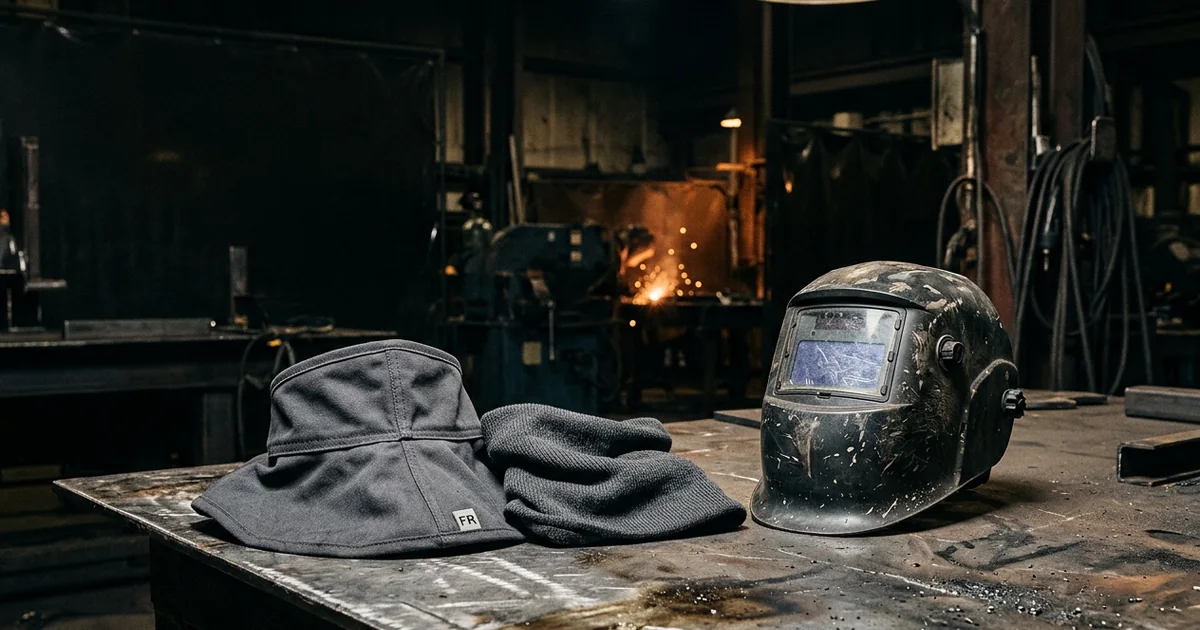

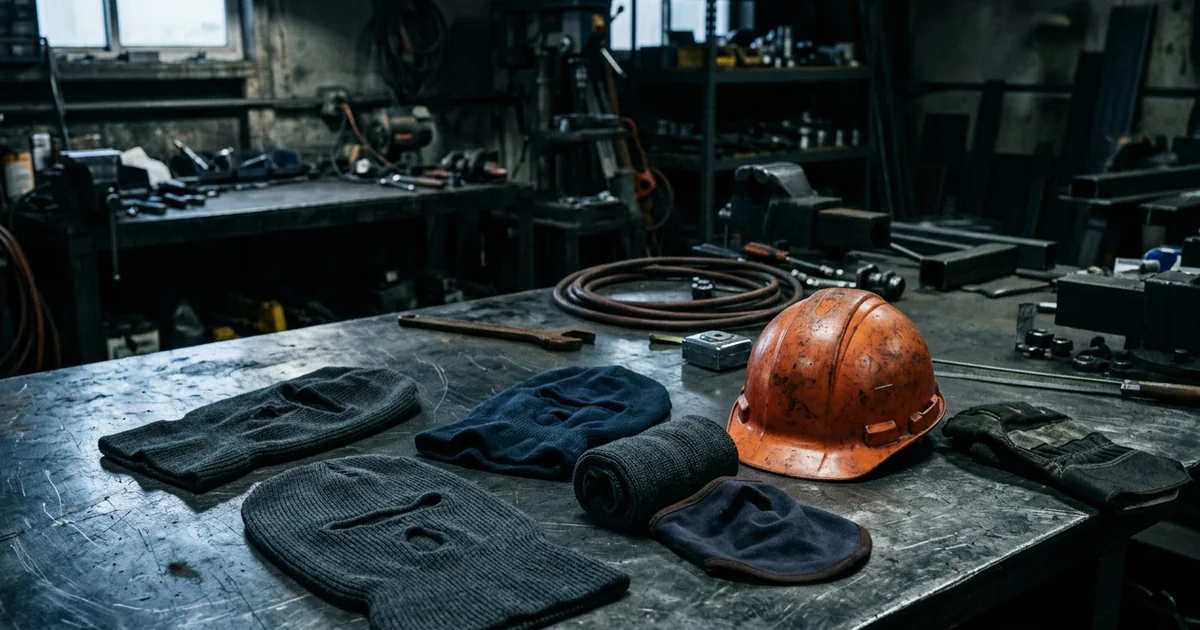
If you want the short answer, my top pick is the PIP 9100 HDFR12 AR/FR UltraSoft balaclava — it's the only full balaclava here that actually publishes an arc rating (ATPV 12.1 cal/cm², HRC2) alongside ASTM F1506 and NFPA 70E. But "best" depends on the hazard: arc flash, flash fire, or just cold-weather warmth under a hard hat. FR clothing is fabric that resists ignition, self-extinguishes when the flame source is removed, and won't melt onto skin — it is not "fireproof." A balaclava is the layer closest to your face and neck, so the spec sheet matters more than the price tag. Below I rank five real options by what their listings actually state — and I flag every place a number is missing.
Key Takeaways
- Arc rating and flash-fire rating are not the same thing. NFPA 2112 covers flash fire; an arc rating (cal/cm², ATPV) is a separate test — see arc-rated vs. flame-resistant before you buy.
- Only one full balaclava here publishes an arc number. The PIP states 12.1 cal/cm²; a tube liner and a neck gaiter also publish arc numbers but don't cover the full head, and the other balaclavas omit it.
- Inherent FR-knit beats treated cotton on flash fire. Modacrylic/aramid knits (Carhartt FR, Ariat) won't wash the FR out; treated AR-cotton (PIP UltraSoft) is built for arc rating instead.
- Coverage varies a lot. Two of these are face/neck pieces, not full head coverage — pair them with a proper FR hood if you need the crown protected.
- Single vs. double layer matters for heat. Most picks here are single-layer; layer thickness drives both warmth and how the garment is rated.
How I ranked these (protection first, not commission)
I rank on documented protection first, then value, then fit — never on what pays the most. The rule I hold myself to: I only quote a spec when the product listing actually states it. If a listing doesn't publish an arc rating, a fabric weight, or whether the FR is inherent or treated, I write "not stated" or "—" rather than borrow a number from a different model. That's especially important here because NFPA 2112 (flash fire) and an arc rating in cal/cm² are separate claims — a garment can carry one and not the other. For reference, CAT/HRC thresholds are: CAT 1 ≥ 4, CAT 2 ≥ 8, CAT 3 ≥ 25, CAT 4 ≥ 40 cal/cm². Where a listing gives a cal number, I report it; where it doesn't, you'll see a dash, and you should ask the seller for the spec sheet before you rely on it.
| Pick | Fabric / weight | Arc rating (if stated) | Best for | Price |
|---|---|---|---|---|
| 1. PIP 9100 HDFR12 | 86% cotton / 12% nylon / 2% spandex; single layer 6.5 oz | ATPV 12.1 cal/cm² (HRC2) | Arc flash / documented cal number | $49.99 |
| 2. Carhartt FR Force | 45% modacrylic / 35% lyocell / 20% aramid; 6.75 oz pique knit | — | Flash fire / best value | $42.99 |
| 3. Ariat FR Polartec | 43% rayon / 39% modacrylic / 14% aramid / 4% spandex; — oz | — | Cold-weather warmth | $54.95 |
| 4. OccuNomix LK910 NFR | Modacrylic rib knit + 9.5 oz Nomex thread (full-face tube liner) | 11.6 cal/cm² (CAT 1) | Documented face/neck arc protection | $40.93 |
| 5. Ariat FR Gaiter | 45% rayon / 40% modacrylic / 15% aramid; 6.5 oz (neck/face gaiter) | 9.5 CAL (CAT 2) | Hi-vis neck/lower-face cover; budget | $31.46 |
1. PIP 9100 HDFR12 — best for documented arc protection
This is the only full balaclava in the set that publishes an arc rating, and that's why it's first. The listing states an ATPV of 12.1 cal/cm² (HRC2), meets NFPA 70E and ASTM F1506, and is a single-layer 6.5 oz UltraSoft blend (86% cotton / 12% high-tenacity nylon / 2% spandex). The honest trade-off: UltraSoft is a treated arc-rated cotton blend, not an inherent modacrylic or Nomex knit, and it's single-layer — so it's the right pick for arc-flash electrical work where you need a cal number on file, less so as a heavy flash-fire knit. NFPA 2112 is not stated on this listing.
- Pros: Stated ATPV 12.1 cal/cm² and HRC2; ASTM F1506 and NFPA 70E both stated; soft single-layer cotton blend breathes well in warm conditions.
- Cons: Treated AR-cotton, not inherent FR-knit; NFPA 2112 (flash fire) not stated; single layer means less warmth.
Check price at Working Person's Store →
2. Carhartt FR Force — best for flash fire and overall value
If your hazard is flash fire and you want a genuine inherent-FR knit, this is my default. The fabric is a 6.75 oz pique knit of 45% modacrylic / 35% lyocell / 20% aramid (the listing spells it "modacryclic") — a blend that's inherently flame-resistant, so it won't wash out — and it meets NFPA 70E and is UL classified to NFPA 2112. The catch for electrical workers: the listing does not state an ATPV cal/cm² number, so if your job hazard analysis needs a documented arc rating, spec the PIP instead. For oilfield and general flash-fire layering at a fair price, this is the one I reach for.
- Pros: True inherent FR-knit (modacrylic/lyocell/aramid); NFPA 70E and UL classified to NFPA 2112 both stated; comfortable 6.75 oz pique; best value of the group.
- Cons: No arc rating (cal/cm²) stated; ASTM F1506 not stated; "inherent" not used verbatim on the page (the blend is inherent FR by fiber type).
Check price at Working Person's Store →
3. Ariat FR Polartec — best for cold-weather warmth
When the job is genuinely cold, the Polartec Power Grid construction here traps more heat than a flat knit, and the 43% rayon / 39% modacrylic / 14% aramid / 4% spandex blend is inherently flame-resistant. I like it for warmth — but I'm marking it down because the product page does not state NFPA 2112, NFPA 70E, ASTM F1506, or any arc rating, and the fabric weight isn't listed either. For a safety purchase, "warm and FR-fibered" is not the same as documented compliance. If you work a regulated site, confirm the spec sheet with the seller before you rely on it.
- Pros: Warmest construction (Polartec Power Grid); inherent-FR fiber blend; spandex adds a snug, comfortable fit.
- Cons: No compliance standard stated (NFPA 2112 / 70E / ASTM F1506 all absent); no arc rating stated; fabric weight not stated; most expensive pick.
Check price at Working Person's Store →
4. OccuNomix LK910 NFR — best documented protection in a face liner
This one isn't a head-covering balaclava — it's a full-face tube liner — but it earns a high spot because it publishes its numbers. The listing states an arc rating of 11.6 cal/cm² with CAT 1, plus ASTM F1506 and NFPA 70E. The materials are right too: a quick-drying modacrylic soft rib knit (inherent FR) sewn with 9.5 oz Nomex thread, which is inherently flame-resistant. Buy it if you want documented arc protection for the face and neck and you'll wear a separate FR hood or hard-hat liner on the crown; skip it if you need full one-piece head coverage.
- Pros: Stated 11.6 cal/cm² arc rating and CAT 1; ASTM F1506 and NFPA 70E both stated; inherent-FR modacrylic knit with Nomex thread; quick-drying.
- Cons: Full-face tube liner, not a crown-covering balaclava; NFPA 2112 not stated; needs a separate top-of-head layer.
Check price at Working Person's Store →
5. Ariat FR Gaiter — best budget hi-vis neck/face cover
Last on coverage, but a smart grab for the right need. This is a neck/face gaiter — it covers the neck and lower face, not the crown — so it isn't a full balaclava, and that's why it ranks fifth. What it does have is documented protection: the listing states a 9.5 CAL rating (the specs table also lists "CAL 8+"), CAT 2, and meets NFPA 2112 and NFPA 70E, in a 6.5 oz blend of 45% rayon / 40% modacrylic / 15% aramid. It's high-vis yellow and currently on closeout. If your real need is a hi-vis FR neck and lower-face cover and you've got head protection handled separately, the price is hard to beat.
- Pros: NFPA 2112 and NFPA 70E both stated; 9.5 CAL / CAT 2 documented; high-vis yellow; cheapest pick (closeout).
- Cons: Neck/lower-face gaiter only — no crown coverage, not a true balaclava; ASTM F1506 not stated; closeout means limited availability.
Check price at Working Person's Store →
Inherent FR-knit or treated AR-cotton — which do you need?
This is the decision that should drive your pick. Inherent FR fibers — modacrylic, aramid (Nomex is an aramid) — are flame-resistant by chemistry, so the protection can't wash out or wear off; the Carhartt FR, both Ariat pieces, and the OccuNomix liner are inherent-fiber knits. Treated AR-cotton like PIP's UltraSoft starts as a comfortable cotton blend and is engineered to hit a specific arc rating; that's why the PIP is the one with a published 12.1 cal/cm² number. Neither is universally "better." For flash fire and long garment life, lean inherent knit. For a documented arc-flash cal number at a soft, breathable weight, the treated AR-cotton balaclava is the practical answer. And remember a single-layer piece breathes and packs better, while extra layers add warmth and can change how a garment is rated.
Frequently Asked Questions
Which FR balaclava has the highest stated arc rating?
Among full balaclavas here, the PIP 9100 HDFR12 has the highest stated arc rating at ATPV 12.1 cal/cm² (HRC2). The OccuNomix face liner states 11.6 cal/cm², and the Ariat gaiter states 9.5 CAL — but those are a tube liner and a neck/face gaiter, not full head-covering balaclavas. The Carhartt FR and Ariat Polartec balaclavas do not state an arc rating.
Is NFPA 2112 the same as an arc rating?
No. NFPA 2112 certifies a garment for flash-fire exposure, while an arc rating (measured in cal/cm² as ATPV) covers electrical arc-flash energy — they're separate tests. A balaclava can carry one and not the other, so check exactly which your job requires and confirm the listing states it.
Is inherent FR better than treated FR for a balaclava?
For flash fire and garment longevity, inherent FR-knit (modacrylic or aramid) is generally preferred because the protection can't wash out. Treated AR-cotton like UltraSoft is engineered to hit a specific arc rating and can be softer and more breathable. Choose based on your primary hazard rather than assuming one is always better.
What's the difference between an FR balaclava and an FR gaiter?
A balaclava covers the crown of the head, face opening, and neck in one piece, while a gaiter or tube liner covers only the neck and lower face. Two products in this guide — the OccuNomix liner and the Ariat gaiter — are not full balaclavas, so pair them with a separate FR hood or hard-hat liner if you need the top of your head protected.
Does a single-layer FR balaclava protect as well as a double layer?
Layer count affects warmth and how a garment is rated, not whether it's flame-resistant. A single-layer balaclava like the PIP breathes better and packs smaller; additional layers add insulation and can change the rated protection. Always go by the stated rating for your hazard rather than layer count alone.
Why Trust This Guide
This guide was written and reviewed by Wes Calder, an independent flame-resistant-workwear reviewer. I rank on documented protection first, then value and fit — and I only quote a spec when the product listing actually states it, marking "—" everywhere a number is missing rather than inventing one. FR is safety gear, so I won't imply an arc rating a listing doesn't publish or borrow one model's cal number for another. We earn a commission on some links, but we never rank by commission over safety — see our affiliate disclosure.