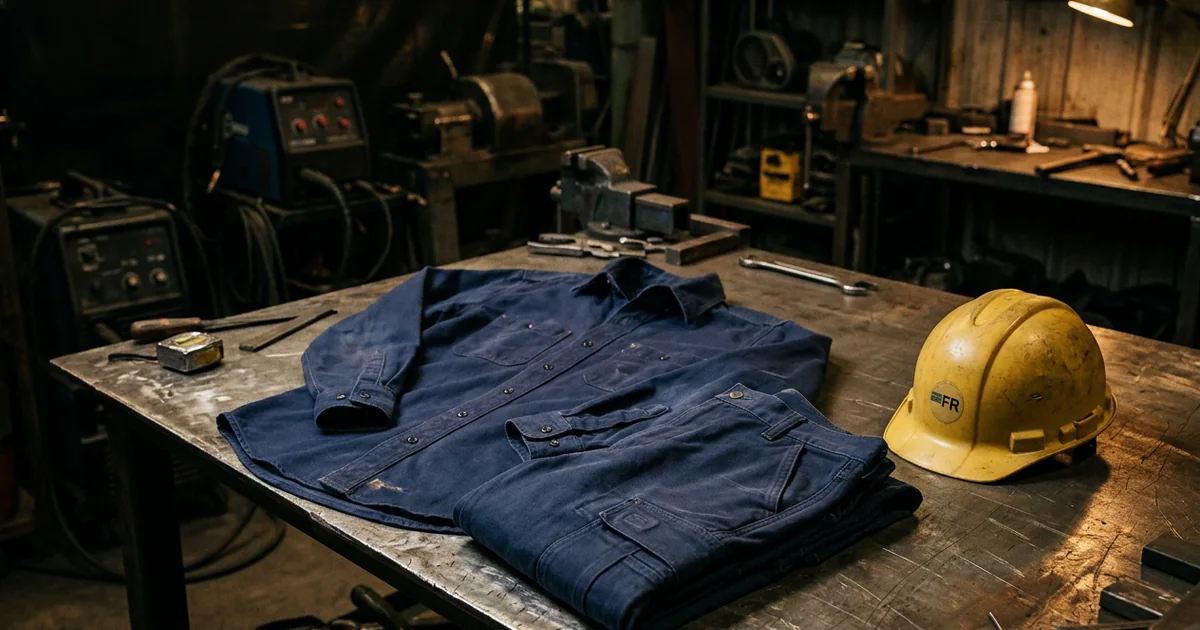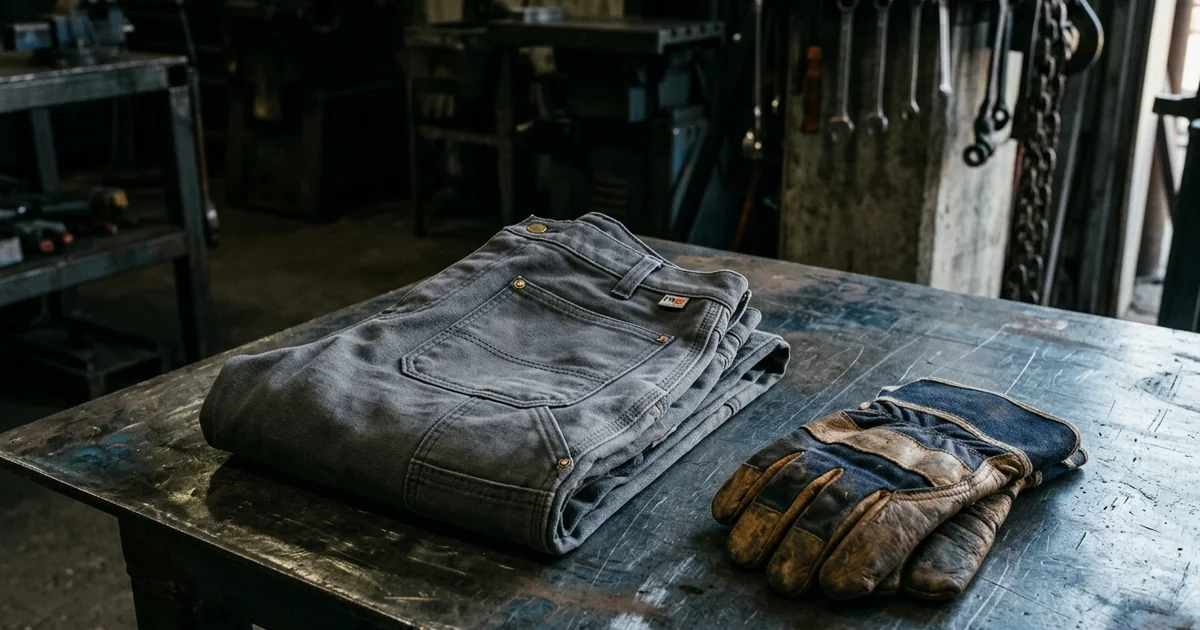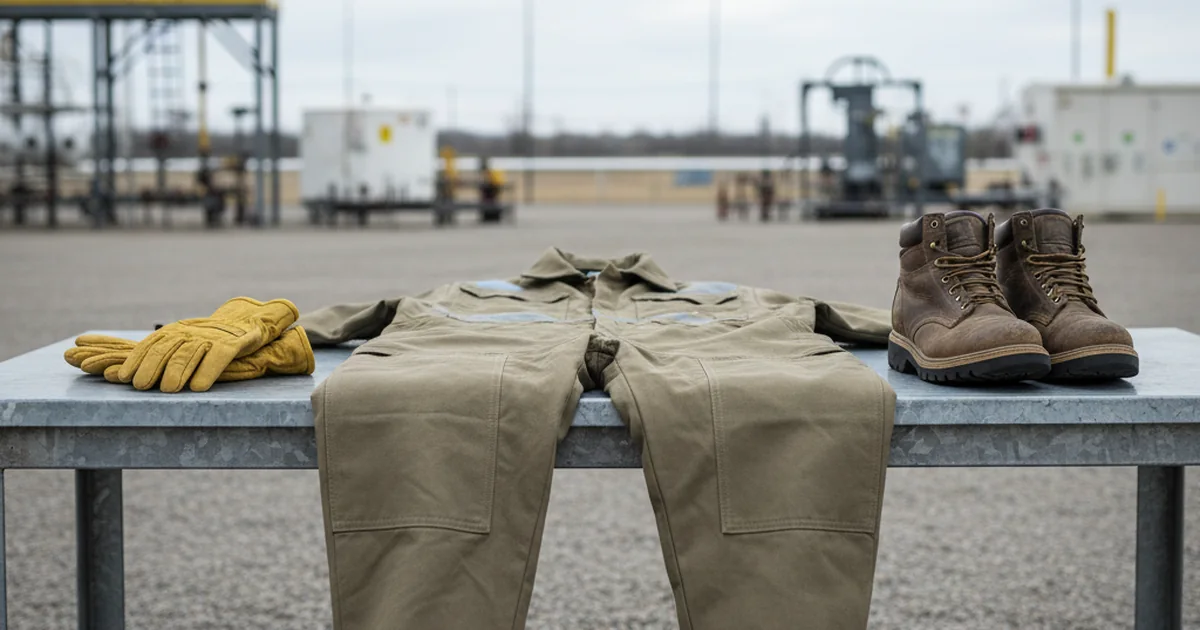

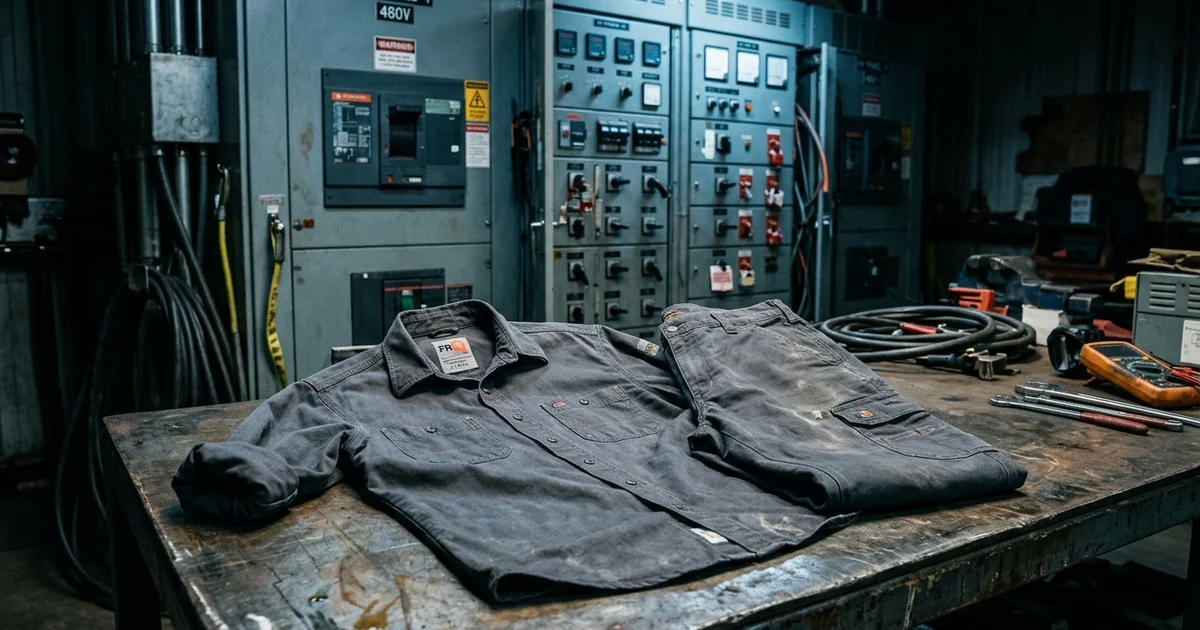
If you want arc-rated CAT 2 clothing you can actually buy today, my top pick is the Carhartt Force Men's 100235 FR long-sleeve T-shirt — its listing publishes a real ATPV of 8.9 cal/cm² (CAT 2), it's a comfortable all-shift knit, and it's in stock. But "best" depends on what you need: a shirt, pants, or full-body coverage, and whether you care about the highest stated number or the one you can order right now. FR clothing is fabric engineered to resist ignition, self-extinguish once the flame source is gone, and not melt onto your skin — it is not "fireproof." The one rule I held to across this whole guide: a garment only earns a spot if its listing actually states a cal/cm² figure of 8 or higher. No implied ratings, no borrowed numbers.
Key Takeaways
- CAT 2 means a published ATPV of at least 8 cal/cm². That number comes from an arc-rating test, which is separate from flash-fire compliance — see how ATPV / arc rating works.
- NFPA 2112 is not an arc rating. Plenty of FR garments pass flash-fire standards but never publish a cal/cm² figure; for arc-flash work you need the stated number — read arc-rated vs flame-resistant.
- My top in-stock pick is the Carhartt Force FR long-sleeve at a stated 8.9 cal/cm². Best full-body in-stock option is the Bulwark CLD4 navy coverall at a stated 8.7 cal/cm².
- "CAT 2" and "HRC 2" describe the same protection tier. The terminology shifted but the cal/cm² band is the same — see FR CAT / HRC levels explained.
- Two of the highest-rated garments here are discontinued. The Walls shirt (9.6 cal/cm²) and Bulwark CEB2OR coverall (11.2 cal/cm²) publish bigger numbers but are out of stock, so I ranked them last.
How I ranked these (protection first, not commission)
I ranked these on protection first, then value, then fit — not on what pays the most. Here's the discipline I held to: I only quote a spec when the product listing actually states it. Where a listing doesn't publish a fabric weight, an inherent-vs-treated note, or an explicit ASTM F1506 number, you'll see "not stated" or "—" rather than a guess. I never carry one model's cal/cm² number over to another, and I never imply an arc rating a listing doesn't print. For a CAT 2 guide that means every pick below has a stated ATPV of 8 cal/cm² or higher on its own page. Availability was a tiebreaker: a garment you can't order can't protect you, so two discontinued picks with higher published numbers still landed at the bottom.
| Pick | Fabric / weight | Arc rating (if stated) | Best for | Price |
|---|---|---|---|---|
| 1. Carhartt Force FR LS tee | 100% cotton FR knit / 6.75 oz | 8.9 cal/cm² (CAT 2) | Everyday in-stock shirt | $77.99 |
| 2. Bulwark CLD4 navy coverall | 88/12 cotton-nylon / 6 oz | 8.7 cal/cm² (CAT 2 / HRC 2) | Full-body, in stock | $113.99 |
| 3. Ariat 10013513 plaid twill | 88/12 cotton-nylon twill / 6.5 oz | 8.9 cal/cm² (CAT 2) | Button-up work shirt | $109.95 |
| 4. MCR Safety PT2N pants | 88/12 cotton-nylon / — | 8.6 cal/cm² (CAT 2) | The pants for the ensemble | $106.99 |
| 5. Walls FRO56915 shirt | 88/12 cotton-nylon / 7 oz | 9.6 cal/cm² (CAT 2) | Reference (discontinued) | — |
| 6. Bulwark CEB2OR coverall | 100% cotton twill, treated / 9 oz | 11.2 cal/cm² (CAT 2) | Reference (discontinued) | — |
1. Carhartt Force Men's 100235 FR Long-Sleeve T-Shirt — best for everyday in-stock wear
This is the one I'd put on most shifts. It's a 6.75 oz 100% cotton FR jersey knit, and its listing states an ATPV of 8.9 cal/cm² — a legitimate CAT 2 number on a shirt that wears like a normal long-sleeve tee. It's the most comfortable thing here for an all-day base or mid layer, and it's in stock at a fair price. The honest trade-off: it's a shirt, not full coverage, and the listing doesn't say whether the FR is inherent or treated — which matters for how the protection holds up over many washes.
- Pros: Stated 8.9 cal/cm² (CAT 2); soft cotton knit that's comfortable all shift; in stock; lowest price of the in-stock picks; listing notes NFPA 2112 / 70E compliance.
- Cons: Base/mid layer only, not full-body; inherent-vs-treated not stated; no explicit ASTM F1506 number cited; 100% cotton knit is less abrasion-tough than a twill.
Check price at Working Person's Store →
2. Bulwark CLD4 Navy Coverall — best for full-body coverage you can buy
When you want one garment that covers torso, arms, and legs, this is my in-stock pick. It's a 6 oz 88/12 cotton-nylon blend, and the listing states an ATPV of 8.7 cal/cm² (it labels it HRC 2 / CAT 2). That arc rating applies across the whole coverall, not just a shirt, which is why I rank it above the button-up and the pants. The trade-off is comfort and detail: a coverall runs warmer than a shirt-and-pants combo in summer, the page lists ASTM as "Yes" without citing an explicit F1506 number, and it doesn't state inherent vs treated.
- Pros: Stated 8.7 cal/cm² (CAT 2 / HRC 2) over the whole garment; one-and-done coverage; durable 88/12 blend; in stock; listing notes NFPA 2112 / 70E.
- Cons: Warmer than separates in heat; no explicit F1506 number; inherent-vs-treated not stated; highest price of the in-stock picks.
Check price at Working Person's Store →
3. Ariat 10013513 Plaid Twill Work Shirt — best for a button-up shirt
If you'd rather wear a button-up than a knit tee, this is the one. It's a 6.5 oz 88/12 cotton-nylon twill, and its listing states an ATPV of 8.9 cal/cm² (CAT 2) — the same headline number as my top pick, in a tougher woven fabric that looks like an ordinary work shirt. It's a strong choice for anyone who wants a collared, pocketed shirt over a knit base layer. The honest trade-off: it costs more than the Carhartt knit, twill feels stiffer on day one, and the listing doesn't cite an explicit F1506 figure or say inherent vs treated.
- Pros: Stated 8.9 cal/cm² (CAT 2); rugged 88/12 twill; looks like a normal work shirt; in stock; listing notes NFPA 2112 / 70E.
- Cons: Pricier than the Carhartt knit; twill is stiffer until broken in; no explicit F1506 number; inherent-vs-treated not stated.
Check price at Working Person's Store →
4. MCR Safety PT2N FR Work Pants — best for completing the ensemble
This is the only pair of pants in the lineup that publishes an arc rating. It's a premium 88/12 cotton-nylon blend, and the listing states an ATPV of 8.6 cal/cm² (CAT 2), with a note that the garment is UL-certified and carries a lifetime FR guarantee. Pair it with a CAT 2 shirt above and you've got a full head-to-legs ensemble that breathes better than a single coverall in hot weather. The trade-off: the listing doesn't state fabric weight or an explicit F1506 number, and you do have to buy a matching FR top separately to actually be covered.
- Pros: Stated 8.6 cal/cm² (CAT 2); the only arc-rated pants here; UL-certified with a lifetime FR-guarantee note; cooler than a coverall when paired with a shirt; live and orderable.
- Cons: Pants only — needs a matching CAT 2 top; fabric weight not stated; no explicit F1506 number; inherent-vs-treated not stated.
Check price at Working Person's Store →
5. Walls FRO56915 Light Blue Work Shirt — highest shirt number, but discontinued
On paper this has the strongest stated rating of any shirt here. It's a 7 oz 88/12 cotton-nylon (88% cotton, 12% high-tenacity nylon), and its listing states an ATPV of 9.6 cal/cm² — labeled HRC Level 2 / CAT 2. That's a genuinely high published number for a single shirt. The catch is simple and decisive: the page shows it as currently out of stock and discontinued by the manufacturer, with no price stated. I'm keeping it on the list for reference because the rating is legitimate, but I can't recommend buying something you can't reliably get.
- Pros: Highest stated shirt rating here at 9.6 cal/cm² (CAT 2); sturdy 7 oz 88/12 with high-tenacity nylon; listing notes NFPA 2112 / 70E.
- Cons: Out of stock / discontinued; no price stated; can't be reliably ordered; no explicit F1506 number; inherent-vs-treated not stated.
Check price at Working Person's Store →
6. Bulwark CEB2OR Orange Coverall — highest stated number overall, but discontinued and treated
This coverall carries the biggest published figure in the guide. It's a 9 oz 100% cotton twill with an ammonia-cure FR finish, and its listing states an ATPV of 11.2 cal/cm² (CAL 8+ / CAT 2). Two honest caveats keep it at the bottom. First, it's a treated garment — the FR comes from a finish on cotton, not from the fiber itself, and treated FR can lose protection if it's laundered improperly over its life. Second, it's discontinued and out of stock, with no price, and this particular page doesn't even state NFPA 2112 or 70E. Reference only.
- Pros: Highest stated rating in this guide at 11.2 cal/cm² (CAT 2); heavyweight 9 oz cotton twill; full-body coverage.
- Cons: Discontinued / out of stock; treated (ammonia-cure) FR, not inherent; NFPA 2112 / 70E / F1506 not stated on this page; no price stated.
Check price at Working Person's Store →
Why does a published cal/cm² number actually matter?
Because for arc-flash work, the cal/cm² figure is the whole point. Your site's arc-flash study assigns each task an incident-energy level, and your clothing has to meet or beat it. A garment can be perfectly flame-resistant and pass NFPA 2112's flash-fire test while never publishing an arc rating at all — those are two different hazards measured two different ways. If a listing only says "flame resistant" or "NFPA 2112" with no ATPV, you have no idea where it lands on the CAT scale, so you can't match it to a task. CAT 1 starts at 4 cal/cm², CAT 2 at 8, CAT 3 at 25, and CAT 4 at 40. Every pick above prints a number at or above 8 — that's the bar for CAT 2, and it's why I refused to include anything that leaves the figure blank.
Frequently Asked Questions
What does arc-rated CAT 2 FR clothing mean?
CAT 2 means the garment has a published arc rating (ATPV) of at least 8 cal/cm². It's the second of four arc-flash protection tiers: CAT 1 is 4 cal/cm² and up, CAT 2 is 8 and up, CAT 3 is 25 and up, and CAT 4 is 40 and up. Every pick in this guide states an ATPV of 8 cal/cm² or higher on its own listing.
Is NFPA 2112 the same as an arc rating?
No. NFPA 2112 is a flash-fire standard, while an arc rating (ATPV in cal/cm²) measures protection against an electric arc — two different hazards. A garment can be NFPA 2112 compliant and still not publish any cal/cm² figure. For CAT 2 arc-flash work you specifically need the stated arc rating, which is why I only included garments that publish one.
Is CAT 2 the same as HRC 2?
Yes, for practical purposes. The term changed from HRC (Hazard/Risk Category) to CAT (Arc Flash PPE Category), but the protection band is the same: an arc rating of at least 8 cal/cm². Some of the listings here label it CAT 2, others HRC 2 or HRC Level 2 — they describe the same tier.
Which CAT 2 garment should I buy first?
If you want something in stock today, the Carhartt Force FR long-sleeve T-shirt is my top pick at a stated 8.9 cal/cm². If you need full-body coverage you can order, the Bulwark CLD4 navy coverall states 8.7 cal/cm². The discontinued Walls shirt and Bulwark CEB2OR coverall publish higher numbers but are out of stock.
Does it matter whether the FR is inherent or treated?
It can. Inherent FR is built into the fiber and doesn't wash out; treated FR comes from a chemical finish that can lose protection if the garment is laundered improperly over its life. Most listings in this guide don't state which type they are — only the discontinued Bulwark CEB2OR is explicitly treated (an ammonia-cure finish on cotton). When a listing doesn't say, I marked it "not stated" rather than guessing.
Why Trust This Guide
This guide was written and reviewed by Wes Calder, an independent flame-resistant-workwear reviewer. I rank garments on protection first, then value and fit, and I only quote a spec a product listing actually states — where a cal/cm² figure, fabric weight, or inherent-vs-treated note is missing, I write "not stated" instead of inventing one. FR is safety gear, so I'd rather under-claim than imply protection that isn't on the page. We earn a commission on some links, but we never rank by commission over safety — see our affiliate disclosure.