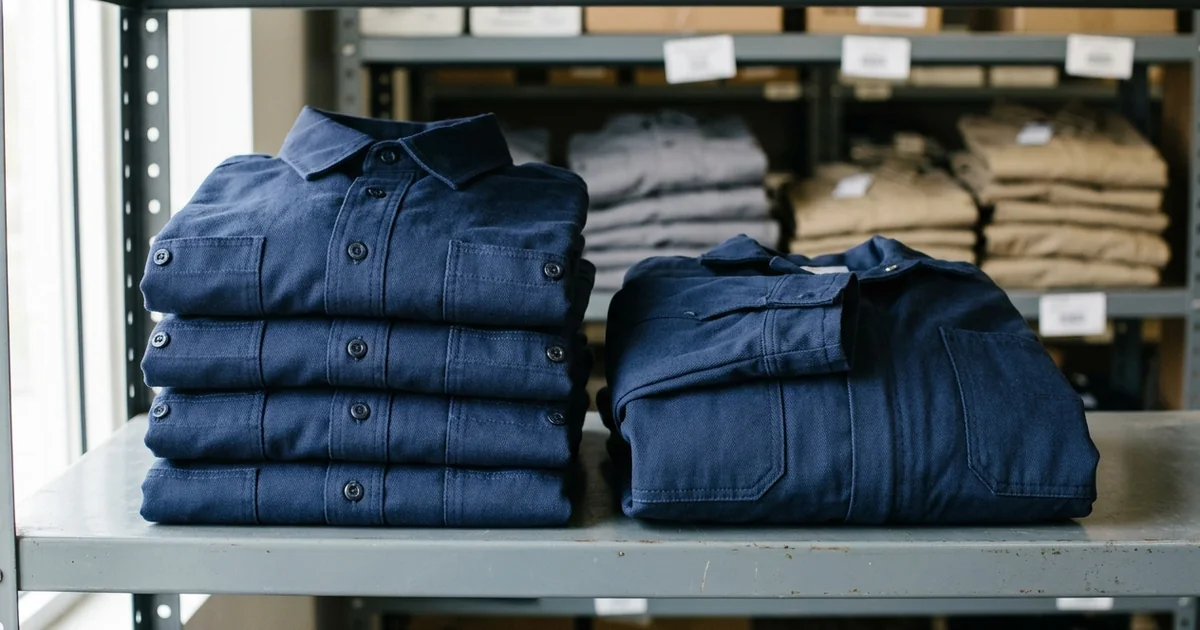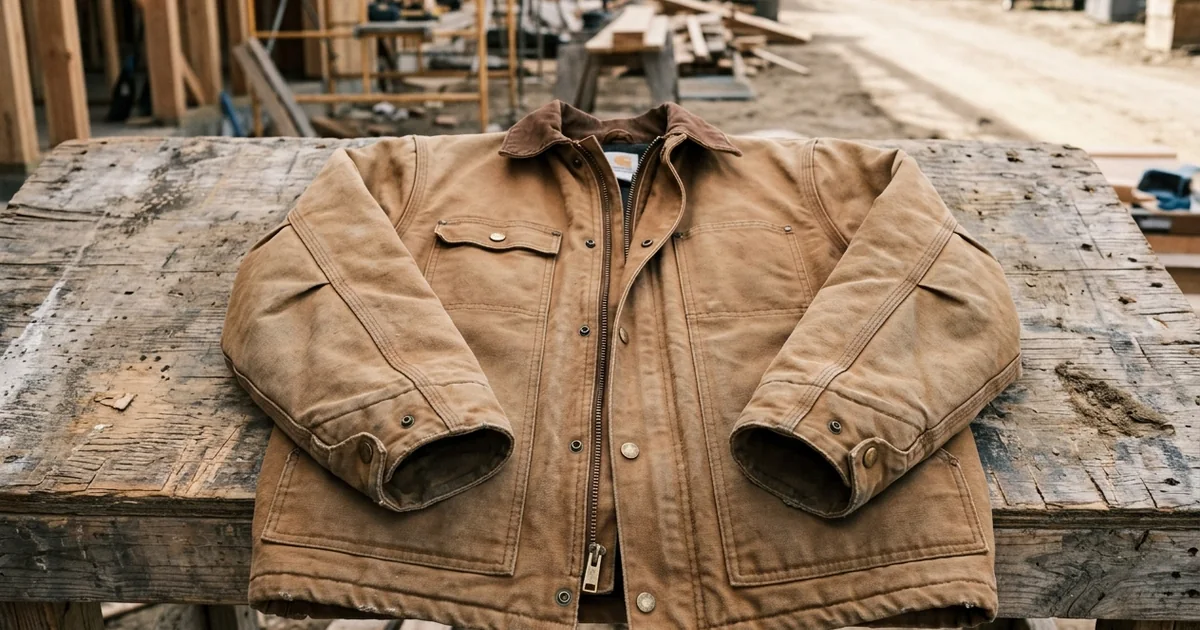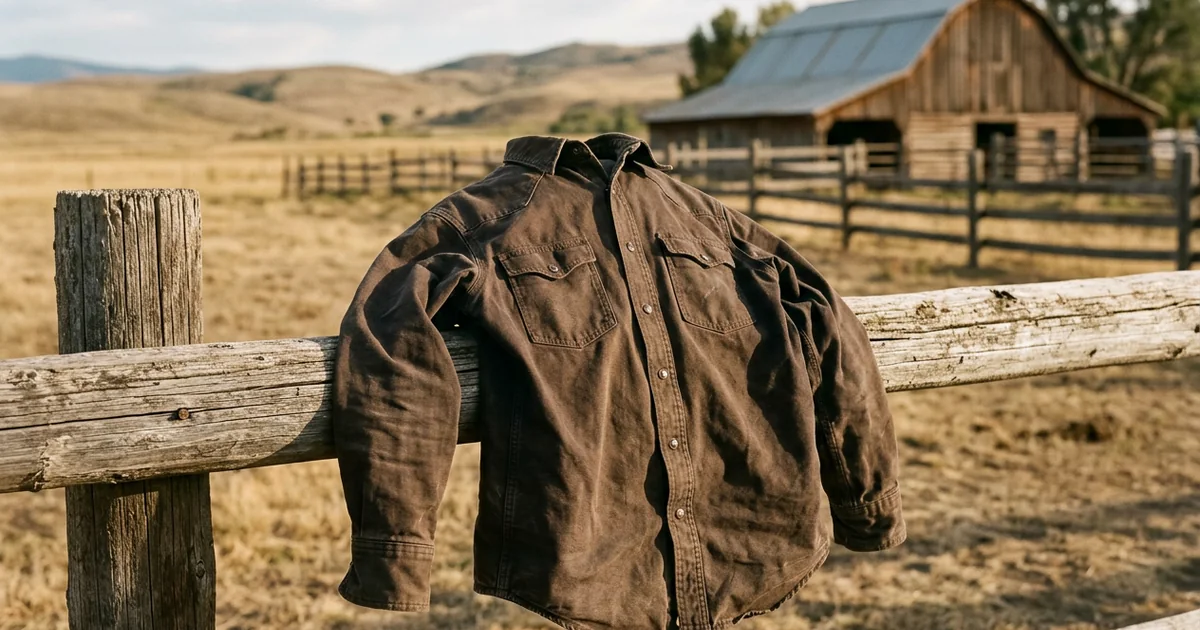

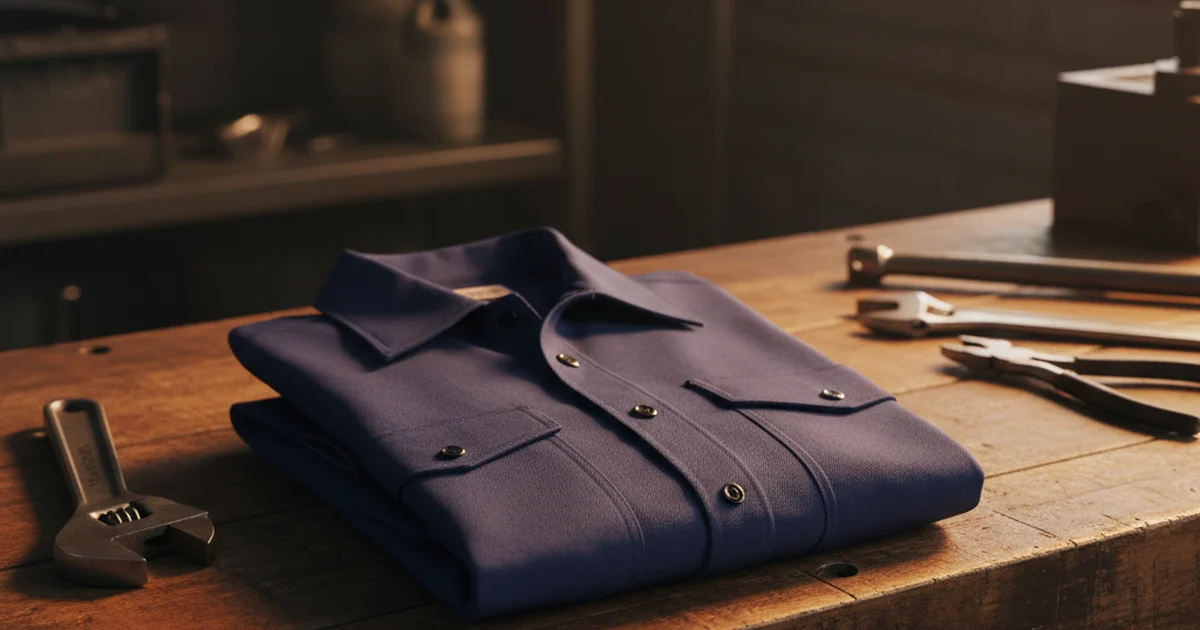
Benchmark FR is one of the few flame-resistant clothing brands that genuinely manufactures in the United States — Santa Ana, California, founded in 2002 — and it prices like it. If you want verified Made-in-USA FR that's UL-classified to NFPA 2112, Benchmark delivers; if you mostly need certified protection at the lowest cost, you'll find it cheaper elsewhere. This review is where that premium is worth paying and where it isn't. Flame-resistant (FR) clothing resists ignition, self-extinguishes, and won't melt onto skin — it is not "fireproof."
Key Takeaways
- The headline claim checks out: Benchmark FR really is Made in USA (Santa Ana, CA, est. 2002) and UL-classified to NFPA 2112 — unlike most FR suppliers, who import.
- You pay for it: shirts run roughly $78–$149 and pants $94–$138, well above value brands. The catalog is smaller and sold mainly direct, so fewer fitting and return options.
- Fabric is mixed: some garments are treated 88/12 FR cotton/nylon (Arapaho), others are inherent aramid/Kevlar blends (e.g. "Silver Bullet"). Inherent doesn't wash out; treated lasts the garment's life only if you launder it right.
- FR is not always arc-rated: Benchmark's arc-rated pieces (CAT 2, ATPV 9 cal/cm² on the Silver Bullet) are for electrical work; plain NFPA 2112 garments are flash-fire rated, not arc-rated. Match the garment to your hazard.
- Honest alternative: if Made-in-USA isn't a requirement, Bulwark covers more garment types cheaper and Rasco gives you a strong price-to-protection ratio.
Is Benchmark FR really Made in USA?
Yes — and this is the part of the brand's marketing I can stand behind without a caveat. Benchmark FR manufactures domestically in Santa Ana, California, and has since it was founded in 2002. In an FR market where the overwhelming majority of suppliers import their garments, an actually US-made line is genuinely uncommon. The brand leans on this hard in its messaging, and for once the claim holds up.
Why does that matter beyond a flag on the tag? Two practical reasons. First, domestic manufacturing tends to mean tighter quality control and a shorter supply chain, which is part of why Benchmark backs its garments with an FR-for-the-life-of-the-garment commitment. Second, if buying American is a procurement requirement on your site — and on a lot of utility, government, and defense-adjacent jobs it is — Benchmark is one of the few FR brands that clears that bar without an asterisk. If your job has a Berry Amendment or buy-American clause, that alone can justify the price gap.
One thing I won't overstate: "Made in USA" is not itself a safety spec. It doesn't change the cal rating or the NFPA classification. A treated-cotton Benchmark shirt and an imported treated-cotton shirt certified to the same standard protect you the same way in a flash fire. So treat the US-made label as a quality-and-procurement feature, not a protection upgrade.
How protective is Benchmark FR, really?
Benchmark's garments are UL Classified to NFPA 2112 — the flash-fire garment standard tested with the ASTM F1930 manikin — and its arc-rated pieces also meet ASTM F1506 with a stated cal/cm² rating. That's the right paperwork, and the third-party UL classification is exactly what you should be looking for on any FR tag. A garment that just says "FR" with no named standard is a red flag; Benchmark doesn't do that.
The fabric story is mixed, and you need to read the spec before you buy. Some garments — like the welding pants — use Arapaho, a treated 88% FR cotton / 12% nylon blend. Others, like the "Silver Bullet" shirt, use an inherent aramid/viscose/Kevlar blend where the flame resistance is built into the fiber and can't wash out. Both can be legitimately NFPA 2112; the difference is durability, hand-feel, and cost. Inherent fabric is lighter and more forgiving if your laundry habits aren't perfect, but it costs more. Treated cotton is cheaper and often heavier, and it stays FR for the garment's life only if you keep chlorine bleach, fabric softener, and grease saturation away from it.
On arc ratings: the Silver Bullet is listed at ATPV 9 cal/cm², which lands it in CAT 2 under NFPA 70E. That's appropriate for many electrical tasks, but remember the rule — all arc-rated clothing is FR, but not all FR is arc-rated. Benchmark's plain NFPA 2112 garments are flash-fire rated for oil, gas, and welding exposure; they are not arc-rated. If you're working an arc-flash hazard, buy the rated piece and confirm the cal/cm² number on the listing, not the brand's general FR marketing.
Benchmark FR products worth buying
Benchmark's catalog is smaller than the mass brands but covers shirts, pants, coveralls, welding gear, and accessories. Here are the pieces I'd actually point a buyer at, with the trade-offs spelled out. Note that Benchmark sells mostly through its own site rather than the big workwear retailers, so most links go direct.
| Pick | Fabric / type | Rating (if stated) | Real-world catch | Price |
|---|---|---|---|---|
| "Silver Bullet" FR Shirt | Inherent aramid/Kevlar blend, hi-vis | CAT 2 / ATPV 9 cal/cm² | Premium price for a shirt | from $134.99 |
| FR Welding Pants | Arapaho 88/12 treated FR cotton/nylon | UL Classified NFPA 2112-2018 | Treated — laundering matters | $94.63 |
| Featherweight Coveralls | Lightweight FR (confirm weight) | NFPA 2112 (verify on listing) | Specs vary by colorway | $149.99 |
| FR Balaclava | FR, Made in USA | Confirm standard on tag | Price not shown | — |
1. "Silver Bullet" FR Shirt — best for hi-vis electrical work
This is the SKU that justifies the brand for me. It's an inherent aramid/Kevlar blend (so the FR can't wash out), it's arc-rated CAT 2 at ATPV 9 cal/cm² per the listing, and it carries YSY reflective striping for visibility — and it's US-made. Finding all four of those in one shirt is rare. If you're a tradesperson who needs arc protection and hi-vis on the same garment, this earns its place.
- Pros: inherent FR won't launder out; real arc rating (CAT 2 / ATPV 9) for electrical hazards; built-in hi-vis striping; genuinely Made in USA.
- Cons: from $134.99 (and $148.99 in 4XL–5XL) it's expensive for a work shirt; sold mainly direct, so fitting and returns are less flexible than a big-box brand.
2. FR Welding Pants — best value in the lineup
If you want into the brand without the shirt's sticker shock, the welding pants are where Benchmark is most competitive. They're Arapaho 88% FR cotton / 12% nylon — treated FR, not inherent — and UL Classified to NFPA 2112-2018 per the listing. Under $95 for US-made, UL-classified NFPA 2112 welding pants is a fair deal by this brand's standards.
- Pros: reasonably priced for Benchmark; UL Classified NFPA 2112-2018; welding-appropriate cut; US-made.
- Cons: treated cotton means the FR depends on correct laundering and avoiding grease saturation; heavier and less breathable than an inherent fabric.
3. Featherweight Coveralls — best for hot-climate crews
Standard FR coveralls cook you in summer oilfield heat, so a featherweight version is the right idea. At $149.99 it's mid-pack for a US-made FR coverall. I'd buy it for hot-weather work specifically — just confirm the exact fabric weight and the NFPA 2112 classification on the live listing, because coverall specs can shift by colorway and I won't quote a number the listing doesn't state.
- Pros: lightweight build aimed at heat; full-coverage coverall; US-made at a mid-range price.
- Cons: verify the fabric weight and cert before buying; a lighter coverall is a comfort trade, not a higher protection rating.
4. FR Balaclava — cheapest way to try the brand
If you're curious about Benchmark's quality but not ready to spend $135 on a shirt, the Made-in-USA FR balaclava is a low-risk sample. Fair warning: when I checked in July 2026 it was out of stock at Benchmark and on Amazon alike — if it still is, their FR face masks and mufflers are the in-stock version of the same idea. Confirm the stated FR standard on the listing — a face layer near a flash-fire hazard should meet a real spec, not just carry the letters "FR."
- Pros: low-ticket entry to the brand; Made in USA; useful cold-weather FR layer.
- Cons: it's an accessory, not head-to-toe protection; confirm the listed standard before relying on it near heat.
Where Benchmark FR falls short — and better alternatives
The honest weaknesses are structural, not safety-related. The catalog is smaller than the mass brands, per-garment pricing is higher, and because Benchmark sells mainly direct rather than across the big workwear retailers, you get fewer in-person fitting and return options. None of that makes the garments less protective — but it does mean Benchmark isn't always the smart buy.
If Made-in-USA isn't a requirement and you mostly want certified protection at the best price or selection, here's where I'd send you honestly:
- Bulwark is the volume default in industrial FR — an enormous range across every garment type, carried by nearly every retailer, with entry shirts starting around $62. Most affordable styles are treated Excel FR cotton at lower arc ratings (around CAT 1), so you trade Benchmark's premium build and US origin for selection and price.
- Rasco FR gives you the strongest price-to-protection ratio I've seen — a genuinely wide fabric range under one brand, from budget treated cotton up to lighter inherent DH Air and GlenGuard. Read the spec carefully, because Rasco mixes treated and inherent SKUs under similar styling. Note: Rasco's country-of-origin isn't publicly disclosed, so if US-made is the deciding factor, that's a point for Benchmark.
- Dragonwear beats Benchmark on premium cold-weather outerwear specifically — its inherent Super Fleece jackets hit CAT 4 / 40 cal/cm² and run $375–$450. If you need a high-cal arc-rated winter layer, that's the specialist.
Where Benchmark wins outright: when you specifically need verified Made-in-USA FR — for a procurement requirement or because you simply prefer to buy domestic — and you're willing to pay for it. That's a real, defensible niche, and Benchmark owns it more honestly than almost anyone in this category.
Frequently Asked Questions
Is Benchmark FR actually made in the USA?
Yes. Benchmark FR manufactures domestically in Santa Ana, California, and has since it was founded in 2002. That's verified and uncommon in this category, where most FR suppliers import. The US-made label is a genuine quality and procurement feature — but it doesn't by itself change a garment's NFPA 2112 classification or arc rating.
Is Benchmark FR clothing NFPA 2112 certified?
Benchmark's garments are UL Classified to NFPA 2112, the flash-fire garment standard tested with the ASTM F1930 manikin. Its arc-rated pieces also meet ASTM F1506 with a stated cal/cm² rating, such as ATPV 9 (CAT 2) on the Silver Bullet shirt. Always read the specific garment's tag — plain NFPA 2112 pieces are flash-fire rated, not arc-rated.
Is Benchmark FR inherent or treated?
Both, depending on the garment. Some use treated 88% FR cotton / 12% nylon (Arapaho), where the flame resistance is a chemical finish on cotton. Others use inherent aramid/Kevlar blends, like the Silver Bullet, where FR is built into the fiber and can't wash out. Inherent costs more but is more forgiving; treated is cheaper but depends on correct laundering. Check the spec per SKU.
Is Benchmark FR worth the premium price?
It's worth it if you specifically need verified Made-in-USA FR — for a buy-American procurement rule or by preference — and want UL-classified NFPA 2112 protection with strong quality control. If you just want certified protection at the lowest cost or widest selection, Bulwark and Rasco deliver comparable safety for less money, since US origin isn't a protection upgrade.
Where can you buy Benchmark FR?
Benchmark FR sells mostly direct through benchmarkfr.com, with a smaller selection of items such as the FR balaclava available on Amazon. Because it isn't carried across the big workwear retailers like the mass brands are, you get fewer in-person fitting and return options — worth factoring in if sizing certainty matters to you.
Why Trust This Guide
This guide is written and reviewed by Wes Calder, an independent flame-resistant-workwear reviewer. Every recommendation is built on the published standards (NFPA 2112, NFPA 70E, ASTM F1506), manufacturer spec sheets and garment tags, hands-on handling, and what tradespeople actually report — and we tell you when a number is a manufacturer claim versus an independent standard, and when a garment is FR but not arc-rated. We earn an affiliate commission if you buy through some of our links, at no extra cost to you, and we never rank by commission over safety — see our affiliate disclosure.