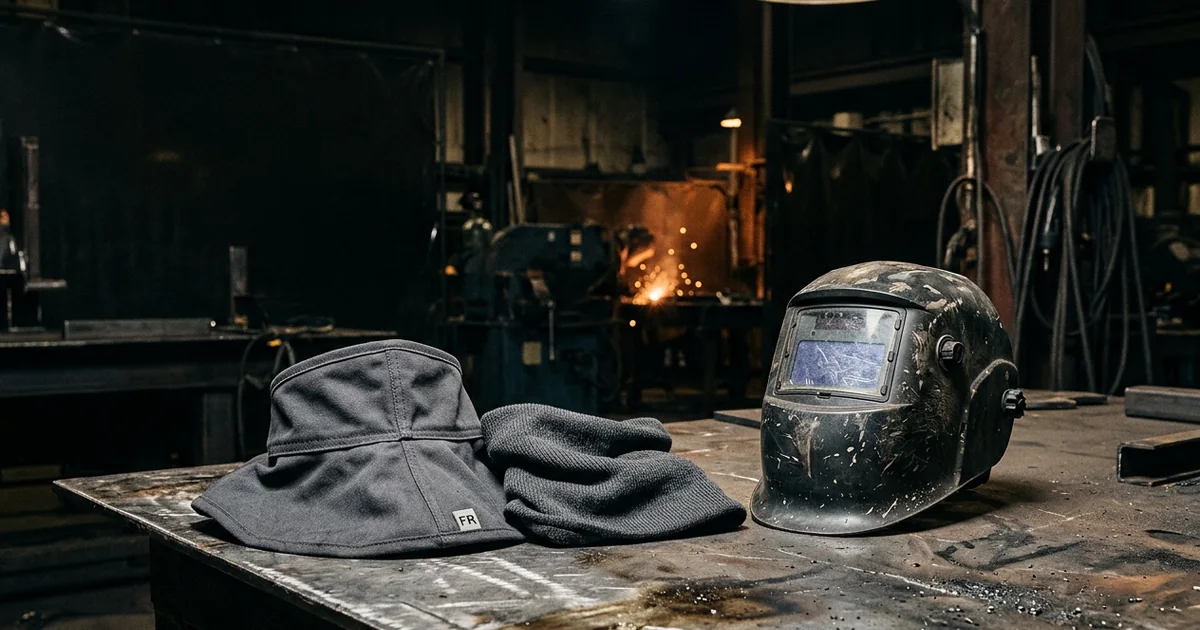

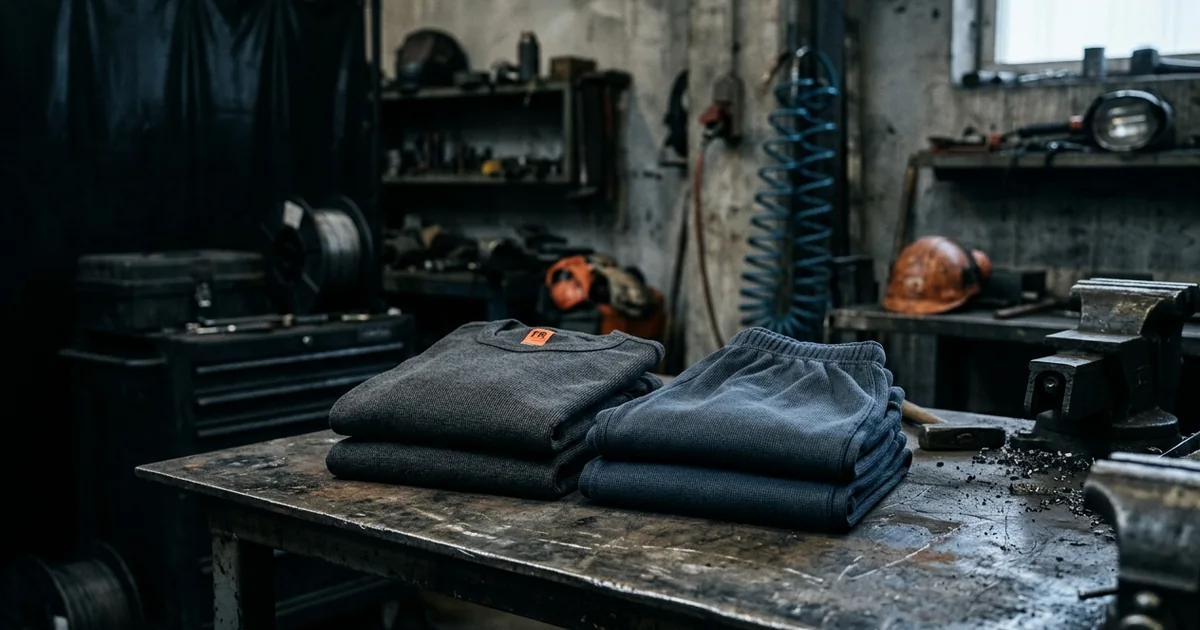
If you want one FR base layer that actually fits like a base layer, my top pick is the Carhartt 102904 Flame-Resistant Force Long-Sleeve T-Shirt — 93% cotton / 7% spandex, 6 oz, and the only pick here with real stretch. But "best" depends on your hazard: if you need the most published protection, the Carhartt 100237 FR Force Henley carries a stated 8.9 cal/cm² CAT 2 rating. The non-negotiable rule first: FR clothing is fabric that resists ignition, self-extinguishes, and won't melt onto skin — it is not "fireproof." A regular polyester or nylon base layer worn under FR is a melt hazard, full stop. Heat soaks through, the synthetic melts, and it fuses to your skin inside the gear meant to protect you. Your base layer has to be FR too.
Key Takeaways
- Your base layer must be FR. A non-FR synthetic next to skin can melt under flash fire or arc flash even if your outer shirt holds — see what FR clothing actually means.
- NFPA 2112 ≠ an arc rating. 2112 is flash-fire certification; arc rating (cal/cm², ATPV) is separate and only some listings publish it. Don't assume a number that isn't printed.
- CAT 2 needs ≥ 8 cal/cm². Three picks here state 8.9 cal/cm²; the two lightest list CAT 1 or "8+" without a precise figure, which I treat as not stated.
- Cotton FR breathes and won't melt. Every pick is cotton-based FR knit — the right fiber against skin. One Ariat listing doesn't state its blend, and I dock it for that.
- Wash it right or it fails. Inherent or treated, FR base layers need correct laundering — follow how to wash FR clothing to keep the rating.
How I ranked these (protection first, not commission)
I rank on protection first, then value, then fit — never on what pays best. The hard rule on this page: I only quote a spec when the product listing actually states it. Where a listing doesn't publish an ATPV cal/cm² number, a fabric blend, or an inherent-vs-treated note, you'll see "—" or "not stated" instead of a number I made up. I never borrow one model's 8.9 cal/cm² and pin it on another. NFPA 2112 means a garment is certified for flash fire; an arc rating is a separate test, and plenty of solid FR knits simply don't publish a cal/cm² figure. That's not a knock — it just means you size that piece to its stated category (CAT 1 ≥ 4, CAT 2 ≥ 8, CAT 3 ≥ 25, CAT 4 ≥ 40 cal/cm²) and your job's hazard analysis, not to a number that isn't on the label.
| Pick | Fabric / weight | Arc rating (if stated) | Best for | Price |
|---|---|---|---|---|
| 1. Carhartt 102904 FR Force Tee | 93% cotton / 7% spandex, 6 oz | CAT 1 — ATPV not stated | True stretch base layer, lighter hazard | $77.99 |
| 2. Carhartt 100237 FR Force Henley | 100% cotton, 6.75 oz | CAT 2 — 8.9 cal/cm² | Most stated protection | $82.99 |
| 3. Carhartt 100235 FR Force Tee | 100% cotton, 6.75 oz | CAT 2 — 8.9 cal/cm² | Same protection, plain crew, cheaper | $77.99 |
| 4. Ariat 10022599 FR Air Henley | 100% cotton, 6 oz | CAT 2 — "CAL 8+" (precise ATPV not stated) | Lightweight layering in heat | $79.95 |
| 5. Ariat 10013519 FR Henley | 7.2 oz (blend not stated) | HRC 2 — 8.9 cal/cm² | Warmest / heaviest base | $84.95 |
1. Carhartt 102904 FR Force Long-Sleeve T-Shirt — best for a true base-layer fit
This is the only pick that fits like an actual base layer. The 7% spandex gives it stretch and a close, non-bunching fit under outer FR that the 100%-cotton knits can't match, and at 6 oz it's the lightest here. The honest trade-off: it's UL classified to NFPA 2112 and meets NFPA 70E at CAT 1, and the listing does not state an ATPV cal/cm² number. CAT 1 means lighter-hazard or layering duty — not your sole arc protection on a high-incident-energy task.
- Pros: Only pick with real stretch (7% spandex); lightest at 6 oz; closest base-layer fit; NFPA 2112 + 70E.
- Cons: CAT 1 and no published cal/cm² number; not for high arc-flash exposure on its own.
Check price at Working Person's Store →
2. Carhartt 100237 FR Force Henley — best for stated protection
If your hazard analysis wants a published arc rating on the layer itself, this is the pick. It's 100% cotton FR jersey at 6.75 oz, NFPA 2112 compliant, and arc-rated NFPA 70E CAT 2 with a stated ATPV of 8.9 cal/cm². The henley placket vents better than a crew when you're working hot. The trade-off is weight and fit: at 6.75 oz with no spandex, it layers a touch bulkier than the 102904.
- Pros: Highest stated protection of the group — CAT 2, 8.9 cal/cm² ATPV; henley placket vents; 100% cotton next to skin.
- Cons: Heavier (6.75 oz) and no stretch; pricier than the plain-crew version with identical specs.
Check price at Working Person's Store →
3. Carhartt 100235 FR Force Tee — best value at CAT 2
Same fabric, same 6.75 oz weight, same stated 8.9 cal/cm² CAT 2 rating as the henley above — but a plain crew neck and a few dollars cheaper at $77.99. If you don't care about a buttoned placket, this is the better-value way to get the higher rating. Both list NFPA 2112 and 70E. The only thing you give up versus the henley is the placket venting; in colder conditions, a closed crew neck is arguably the better call anyway.
- Pros: Identical CAT 2 / 8.9 cal/cm² protection to pick #2; cheaper; closed crew traps more warmth.
- Cons: No placket venting when you're working hot; 6.75 oz, no stretch.
Check price at Working Person's Store →
4. Ariat 10022599 FR Air Henley — best lightweight layer for heat
Ariat's "Air" line is built to move heat, and this 6 oz 100% cotton henley is the one I'd reach for layering on a hot day. It lists NFPA 2112 and NFPA 70E and is CAT 2. The catch on specs: the listing says "CAL 8+" rather than a precise ATPV figure, so I treat the exact arc rating as not stated — "8+" tells you the category but not the tested number. Buy it for the lightweight cotton breathability, and size your protection to CAT 2 plus your own hazard analysis, not to a number the page doesn't print.
- Pros: Lightweight 6 oz cotton built to vent heat; NFPA 2112 + 70E; CAT 2.
- Cons: Lists "CAL 8+" instead of a precise ATPV — exact cal/cm² not stated.
Check price at Working Person's Store →
5. Ariat 10013519 FR Henley — best for warmth
The heaviest pick at 7.2 oz jersey, so it's the warmest base layer of the five — a reasonable choice when you're layering for cold rather than venting heat. It meets both NFPA 2112 and 70E, carries an HRC 2 rating, and states an ATPV of 8.9 cal/cm². My one real reservation: the listing doesn't state the fiber blend. For a layer worn directly against skin, I want to know it's cotton (or another FR-safe fiber), and "not stated" keeps this off the top spot despite the solid rating.
- Pros: Warmest at 7.2 oz; stated 8.9 cal/cm² HRC 2; meets NFPA 2112 + 70E.
- Cons: Fiber blend not stated; heaviest and least breathable for hot work.
Check price at Working Person's Store →
Why is a regular base layer under FR so dangerous?
Because flame-resistant outerwear slows heat — it doesn't make you a heat sink. In a flash fire or arc-flash event, enough thermal energy can pass through your FR shell to reach the layer underneath. If that layer is ordinary polyester, nylon, or a poly-blend, it can ignite or melt at temperatures the FR fabric is engineered to survive. Melted synthetic doesn't just burn; it liquefies and bonds to skin, turning a survivable incident into a graft-and-skin-loss injury. That's the entire reason every pick on this page is FR cotton, not a moisture-wicking gym shirt. If you wick, wick with FR fabric. When in doubt about what qualifies, read our FR clothing standards explainer before you trust a base layer near your skin.
Frequently Asked Questions
Can I wear a regular synthetic base layer under my FR shirt?
No. A non-FR synthetic base layer can melt onto your skin during a flash fire or arc flash even if your outer FR layer holds. Your base layer must be FR — cotton FR knit is the safe choice next to skin.
Does NFPA 2112 mean my base layer has an arc rating?
No. NFPA 2112 certifies a garment for flash fire. An arc rating (ATPV in cal/cm²) is a separate test, and only some listings publish a number. On this page, three picks state 8.9 cal/cm²; the others list a CAT/HRC category without a precise figure.
What's the difference between CAT 1 and CAT 2 for a base layer?
CAT (or HRC) is an arc-flash protection category. CAT 1 requires at least 4 cal/cm² and CAT 2 at least 8 cal/cm². A higher category means more arc protection — match it to your job's incident-energy analysis, not to convenience.
Is FR cotton or FR synthetic better against skin?
For a base layer worn on skin, FR cotton is the comfortable, breathable, non-melting choice and is what every pick here uses. FR synthetics exist, but a non-FR synthetic must never go under FR. The fiber being FR matters more than cotton-versus-synthetic.
Does washing ruin the FR rating on a base layer?
Improper washing can degrade FR performance — fabric softener, bleach, and high-heat additives are common culprits. Follow the garment's care label and our FR laundering guide to keep the rating through the life of the shirt.
Why Trust This Guide
This guide was written and reviewed by Wes Calder, an independent flame-resistant-workwear reviewer. I rank on protection, value, and fit — in that order — and I only quote a spec when the product listing actually states it, marking everything else "not stated" rather than inventing a number. FR is safety gear, so I will not borrow one model's arc rating for another or imply a certification a listing doesn't carry. FR Gear Lab earns a commission on some links, but we never rank by commission over safety — see our affiliate disclosure.