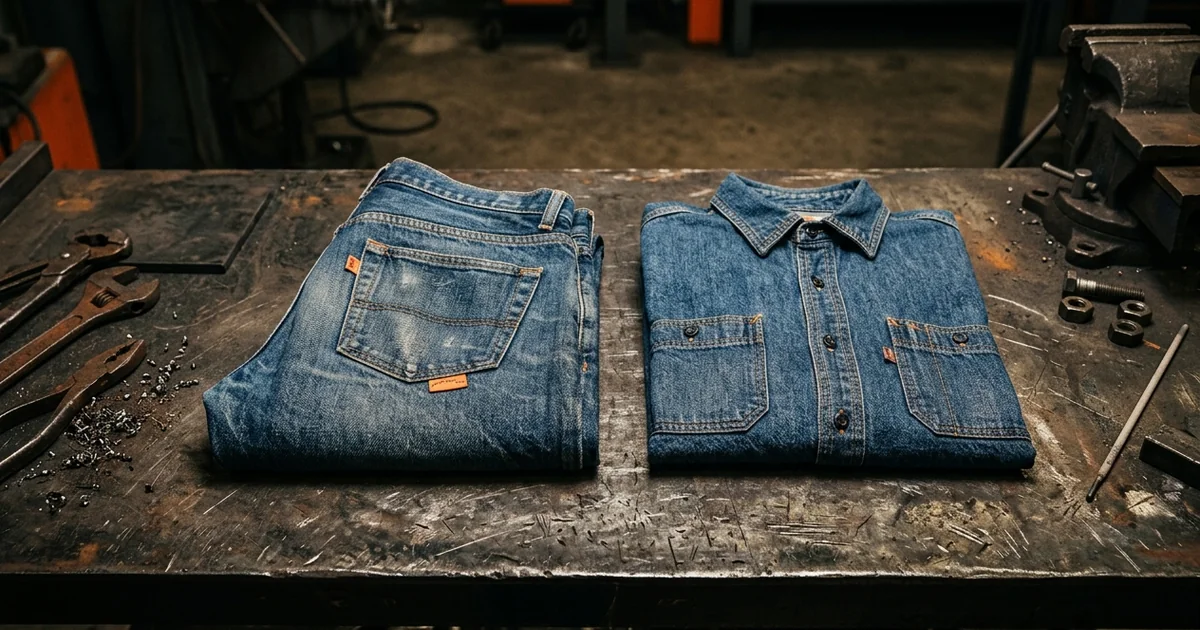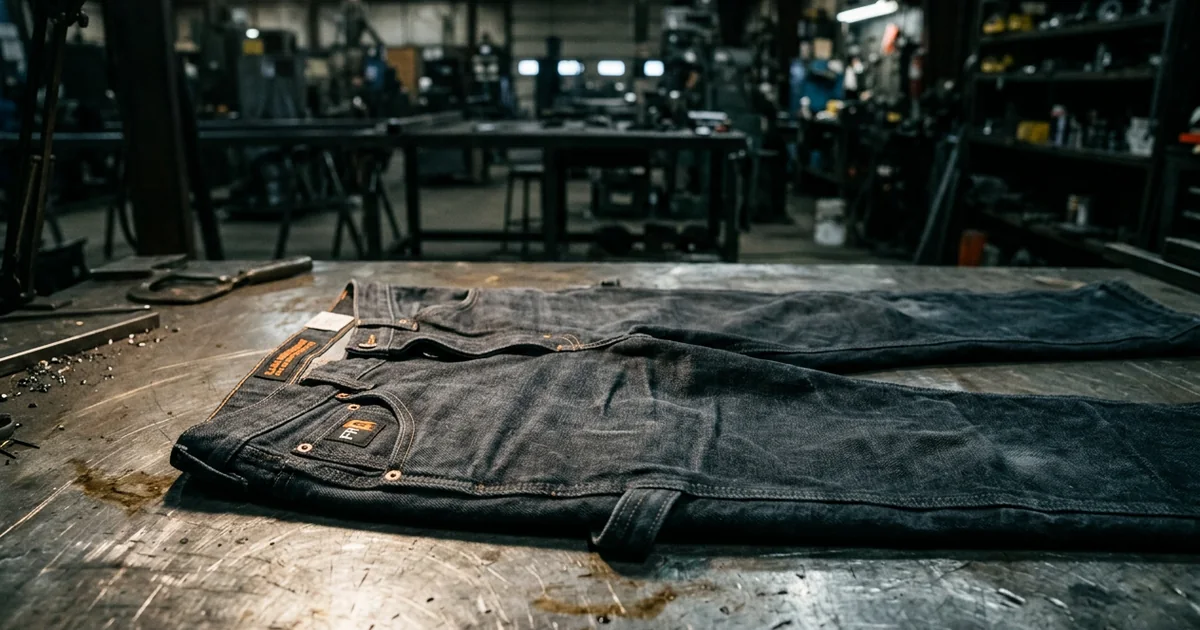

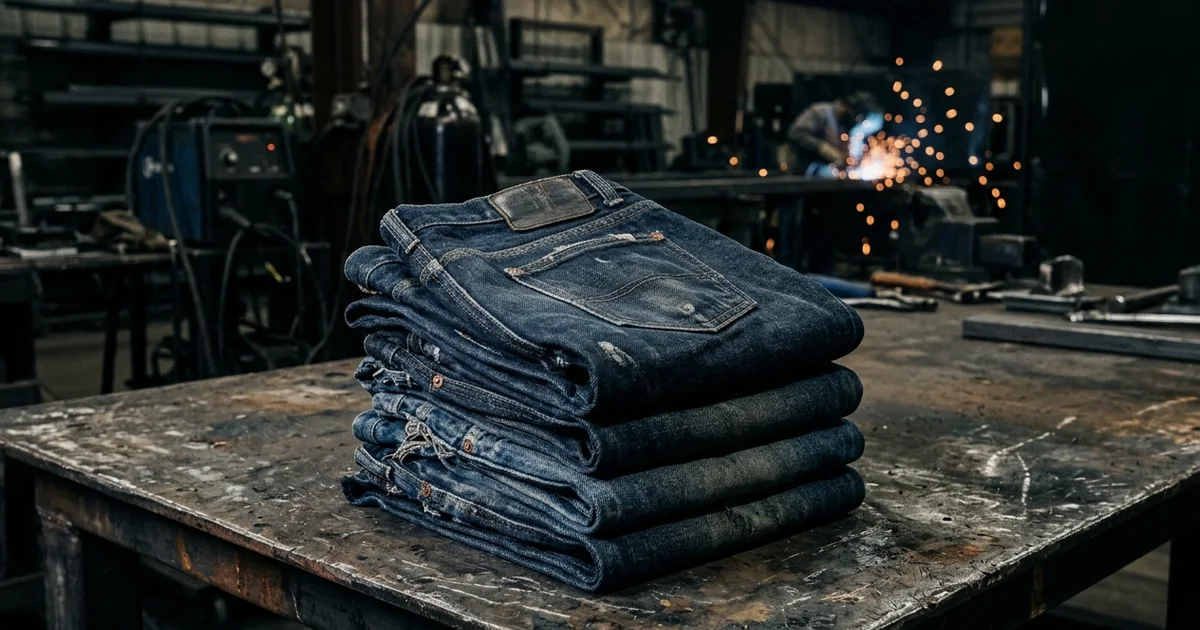
The best FR jeans hit a real arc rating you can verify, survive washing, and break in soft instead of staying board-stiff — and for most tradespeople that's heavyweight treated-cotton denim like the Wrangler RIGGS FR3W020 at 14.5 oz and 23.7 cal/cm2. FR jeans are flame-resistant denim that resists ignition, self-extinguishes, and won't melt onto your skin in a flash fire or arc flash — regular blue jeans do none of that and keep burning. Below are six FR jeans worth buying in 2026, ranked on protection and durability, not on what pays me.
Key Takeaways
- Regular denim is not FR. Ordinary blue jeans ignite and keep burning — FR denim is either inherently FR fiber or, far more commonly here, FR-treated 100% cotton that self-extinguishes.
- Most FR jeans are treated cotton, and that's fine. The treatment lasts the garment's life and is what lets all-cotton denim certify to NFPA 2112 — it also means the denim softens and breaks in like real jeans.
- Heavier denim = higher arc rating, but it runs hot. The 14.5–14.75 oz cotton jeans here post the highest cal numbers (20.7–23.8 cal/cm2); the lighter 11.75–12.5 oz options breathe better but rate lower.
- Arc-flash work needs a number, not just "FR." If you're under NFPA 70E, you need a stated ATPV in cal/cm2 and a CAT level — a couple of comfortable picks here don't publish one. All arc-rated denim is FR; not all FR denim is arc-rated.
- Stretch often costs documentation. The 2% spandex jeans break in softest, but one (Carhartt 105079) lists no cal/cm2 rating.
What actually makes a jean flame-resistant?
Two paths get you to FR denim. Inherent FR uses fibers that are flame-resistant by chemistry — the protection can't wash out. Treated FR takes ordinary 100% cotton and applies a flame-resistant finish engineered to last the garment's usable life. Nearly every jean here is treated cotton, and that's not a knock: it's exactly how brands certify heavyweight denim to NFPA 2112 while keeping the look and break-in of real blue jeans. For the full breakdown, see inherent vs treated FR; for denim specifically, treated is the norm and it works.
What treated FR demands back is correct care. Bleach, fabric softener, and starch can compromise the finish, and grease saturation turns any FR garment into a fire hazard regardless of its rating. Wash it right and the protection lasts; abuse it and you've bought expensive normal jeans. Here's how to wash FR clothing without killing the FR.
FR jeans compared at a glance
| Jean | Weight / fiber | Arc rating (stated) | NFPA 2112 | Price |
|---|---|---|---|---|
| Wrangler RIGGS FR3W020 | 14.5 oz, 100% cotton (treated) | ATPV 23.7 cal/cm2, CAT 2 | Yes | $77.99 |
| Wrangler FR13MWZ | 14.75 oz, 100% cotton (treated) | ATPV 23.8 cal/cm2, CAT 2 | Yes | $80.99 |
| Bulwark PEJ8 | 14.75 oz, 100% cotton | ATPV 20.7 cal/cm2, HRC 2 | Yes | $85.99 |
| Carhartt 105079 Rugged Flex | 12.5 oz, 98% cotton / 2% spandex | — (not stated) | Yes (UL) | $119.99 |
| Ariat M5 Truckee | — oz, 98% cotton / 2% spandex | ATPV 20 cal/cm2, CAT 2 | Yes | $129.95 |
| Carhartt FRB100 | 11.75 oz, 100% cotton (treated) | ATPV 8+ cal/cm2, CAT 2 | Yes | $89.99 |
Every spec above is read off that jean's current retailer listing; a dash means the listing doesn't state it, and I won't borrow a number from another model.
1. Wrangler RIGGS FR3W020 — best overall FR jean
This is the one I'd put on my own back for general jobsite work. It's a 14.5 oz, 100% cotton FR carpenter jean with FR Nomex thread in the seams, and the listing documents four standards — NFPA 2112, NFPA 70E, ASTM F1506, and OSHA 1910.269 — exactly the coverage a lineman or oilfield hand wants spelled out. The arc rating is 23.7 cal/cm2 (CAT 2), among the highest here, with a hammer loop and tool pockets for guys who carry tools. The kicker is price: $77.99 is the cheapest jean in this guide, and it's the most protective one.
- Pros: Highest-tier arc rating (23.7 cal/cm2) and four-standard compliance documented on the page; carpenter utility pockets and hammer loop; lowest price here; treated cotton breaks in soft.
- Cons: 14.5 oz all-cotton runs hot in summer and is stiff before break-in; no stretch; carpenter cut, not a slim casual jean.
Who it's for: anyone who needs real arc protection and tool-carrying utility without overpaying. If your shop runs hot in July, look at the FRB100 below.
Check price at Working Person's Store →
2. Wrangler FR13MWZ — best classic blue-jean look
If you want FR denim that still passes as a normal pair of jeans, this is it. The FR13MWZ is a 14.75 oz, 100% cotton original-fit 5-pocket jean, prewashed so it's not concrete-stiff on day one, with FR Nomex thread in the seams and zipper tape. It posts the single highest published arc rating in this guide — ATPV 23.8 cal/cm2, CAT 2 — and carries the same NFPA 2112 / 70E / ASTM F1506 / 1910.269 coverage as the RIGGS, for a couple bucks more.
- Pros: Highest stated arc rating here (23.8 cal/cm2); classic prewashed 5-pocket blue-jean look; four-standard coverage; sub-$85.
- Cons: Original fit is slim/straight through the seat and thigh — not relaxed; rigid 14.75 oz cotton, no spandex; runs warm.
Who it's for: the welder or electrician who wants protection that doesn't announce itself as workwear. Heads-up — if "original fit" sounds tight, the relaxed FR31MWZ is the same fabric and rating with more room in the seat and thigh.
Check price at Working Person's Store →
3. Bulwark PEJ8 — best for industrial laundering / durability
If your FR jeans get sent out to a uniform service instead of your own washer, you need denim built to survive commercial laundering — that's the Bulwark PEJ8 dungaree. It's a 14.75 oz, 100% cotton heavyweight made for repeated industrial wash cycles that chew up lesser FR garments, and it still holds a 20.7 cal/cm2 HRC 2 rating with NFPA 2112. At roughly $86 it's the durability play here.
- Pros: Heavyweight 14.75 oz built specifically for industrial laundering; solid 20.7 cal/cm2 HRC 2 and NFPA 2112; mid price.
- Cons: Heavy all-cotton, no stretch — hot and stiff; plain dungaree styling, less of a casual-jean look.
Who it's for: facilities where FR goes through a managed laundry program, or anyone who wears their jeans hard enough that wash-cycle survival matters more than a fashion cut.
Check price at Working Person's Store →
4. Carhartt 105079 Rugged Flex — best for comfort and stretch
This is the jean for guys who hate how stiff all-cotton FR denim feels. The Carhartt 105079 is a 98% cotton / 2% spandex Rugged Flex denim — that 2% spandex gives genuine stretch on every squat and ladder climb — and at 12.5 oz it's lighter and cooler than the 14-plus-oz Wranglers and Bulwark. Clean midnight-indigo 5-pocket jean, UL classified to NFPA 2112.
- Pros: Real 2% spandex stretch; lighter 12.5 oz fabric breathes better than the heavyweights; clean indigo 5-pocket look; UL classified to NFPA 2112.
- Cons: The listing does not state a cal/cm2 arc rating, so arc-flash buyers can't confirm the CAT level; priciest relaxed jean here at $119.99.
Who it's for: flash-fire and general NFPA 2112 work where mobility matters and you're not depending on a documented cal number. If you're under NFPA 70E and need a known arc value, this isn't your jean — the page doesn't publish one, so pick an arc-documented jean above for electrical work.
Check price at Working Person's Store →
5. Ariat M5 Truckee — best stretch jean with a documented arc rating
The Ariat M5 DuraStretch Truckee solves the problem the Carhartt above leaves open: 2% spandex stretch comfort AND a published number — ATPV 20 cal/cm2, CAT 2, with NFPA 2112 and 70E. It's a slim, stackable straight-leg cut made to break over a boot, the most modern-looking jean here. Stretch plus a stated arc rating is genuinely uncommon.
- Pros: 2% DuraStretch comfort with a documented 20 cal/cm2 CAT 2 rating and NFPA 2112 / 70E; modern slim/stackable cut for boots.
- Cons: Most expensive jean here at $129.95; the listing does not state fabric weight, so abrasion durability and heat are hard to predict; slim cut won't suit everyone.
Who it's for: a tradesperson who wants arc-flash documentation, stretch, and a sharper fit, and will pay for all three. If the missing weight worries you for a rough-abrasion job, the heavyweight Wranglers tell you exactly what you're getting.
Check price at Working Person's Store →
6. Carhartt FRB100 — best lightweight FR jean for summer heat
When you're working an August shift and the 14-plus-oz jeans feel like a sauna, weight is the spec that matters most. At 11.75 oz the Carhartt FRB100 is the lightest jean in this guide, which makes it the most bearable in real heat — and it still meets NFPA 2112 and 70E at CAT 2. It's a relaxed-fit 100% cotton treated FR denim.
- Pros: Lightest jean here at 11.75 oz — the most comfortable in summer heat; relaxed fit; meets NFPA 2112 and 70E, CAT 2.
- Cons: Listing states only ATPV 8+ cal/cm2, the lowest arc rating of this group; lighter denim is less abrasion-durable than 14-plus-oz fabric, so it wears through faster.
Who it's for: heat-belt workers at the lower end of CAT 2 who'll trade some arc margin and abrasion life for a jean they can stand to wear in July. If your job demands maximum arc protection, climb back to the RIGGS or FR13MWZ — heavier denim is the price of the higher cal number.
Check price at Working Person's Store →
How to choose: weight vs. arc rating vs. break-in
Strip away the brand names and FR jeans come down to a three-way trade. Heavier denim protects more — the 14.5–14.75 oz all-cotton jeans post 20.7–23.8 cal/cm2; the 11.75 oz Carhartt drops to 8+. But heavier denim runs hotter and stiffer, so go heavy for a cold shop or max arc margin, lighter for Gulf-coast heat. Stretch buys comfort but sometimes costs documentation — the two spandex jeans break in softest, but only the Ariat publishes a cal number.
The non-negotiable: under NFPA 70E arc-flash rules you need a jean with a stated ATPV in cal/cm2 and a CAT level that meets your hazard — "flame-resistant" alone isn't enough. For flash fire under NFPA 2112, any certified jean here qualifies and you choose on weight and fit. Not sure which applies? Start with NFPA 2112 vs NFPA 70E.
Frequently Asked Questions
Are FR jeans automatically arc-rated?
No. All arc-rated denim is flame-resistant, but not all FR denim is arc-rated. NFPA 2112 certifies a garment against flash fire; an arc rating (an ATPV in cal/cm2 with a CAT level) is a separate test under ASTM F1506 for electrical arc-flash. Several jeans here state both, but at least one comfortable pick lists NFPA 2112 with no published cal number — so if you're under NFPA 70E, look for the stated cal/cm2, not just the words "flame-resistant."
Is treated FR denim worse than inherent?
For jeans, not really. Most FR denim is treated 100% cotton, because a flame-resistant finish on heavyweight cotton is how brands hit NFPA 2112 while keeping the look and break-in of real denim. The treatment is engineered to last the garment's usable life, and it doesn't wash out if you care for it correctly. Inherent FR fiber can't wash out at all, but it's rare in denim. The catch with treated FR is care: no bleach, softener, or starch, and never let it get grease-saturated.
Will regular blue jeans protect me in a flash fire?
No. Ordinary denim is not flame-resistant — it ignites and keeps burning, and a poly-blend jean can melt onto your skin. FR jeans are built to resist ignition and self-extinguish once the flame source is gone. If your job has a flash-fire or arc-flash hazard, regular jeans aren't PPE no matter how heavy the denim is. FR denim is the only denim that counts as protection.
Do heavier FR jeans protect better?
Generally yes within the same fiber type. The heavyweight 14.5–14.75 oz all-cotton jeans here post the highest arc ratings (20.7–23.8 cal/cm2), while the lighter 11.75 oz jean rates 8+ cal/cm2. The trade-off is heat and stiffness — heavier denim runs hot and takes longer to break in. Match weight to your hazard and climate: heavy for high arc margin or cold shops, lighter for summer heat at lower CAT 2.
How do I wash FR jeans without ruining the FR?
Skip bleach, fabric softener, hydrogen peroxide, and starch — all of them can compromise a treated FR finish. Wash in warm water with regular detergent and dry per the tag. Most important: keep them out of grease saturation, because oil-soaked fabric is a fire hazard regardless of the FR rating. Treated cotton FR holds up well to home laundering when you follow these rules; abuse it and you've turned protective denim back into ordinary jeans.
Why Trust This Guide
This guide is written and reviewed by Wes Calder, an independent flame-resistant-workwear reviewer. Every recommendation is built on the published standards (NFPA 2112, NFPA 70E, ASTM F1506), manufacturer spec sheets and garment tags, hands-on handling, and what tradespeople actually report — and we tell you when a number is a manufacturer claim versus an independent standard, and when a garment is FR but not arc-rated. We earn an affiliate commission if you buy through some of our links, at no extra cost to you, and we never rank by commission over safety — see our affiliate disclosure.