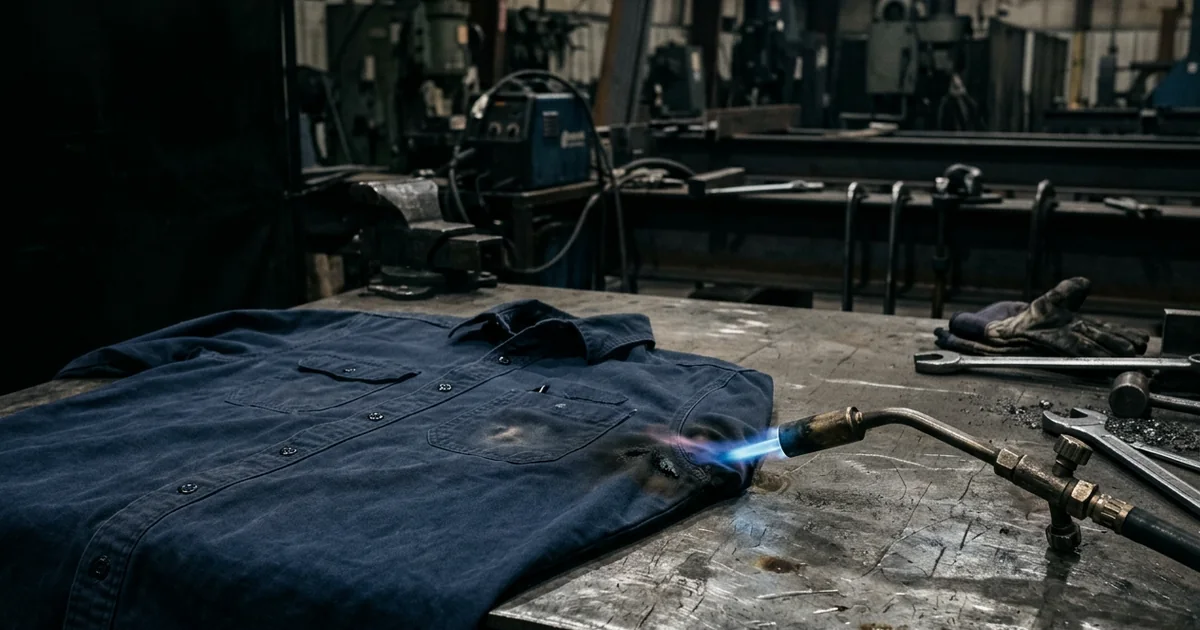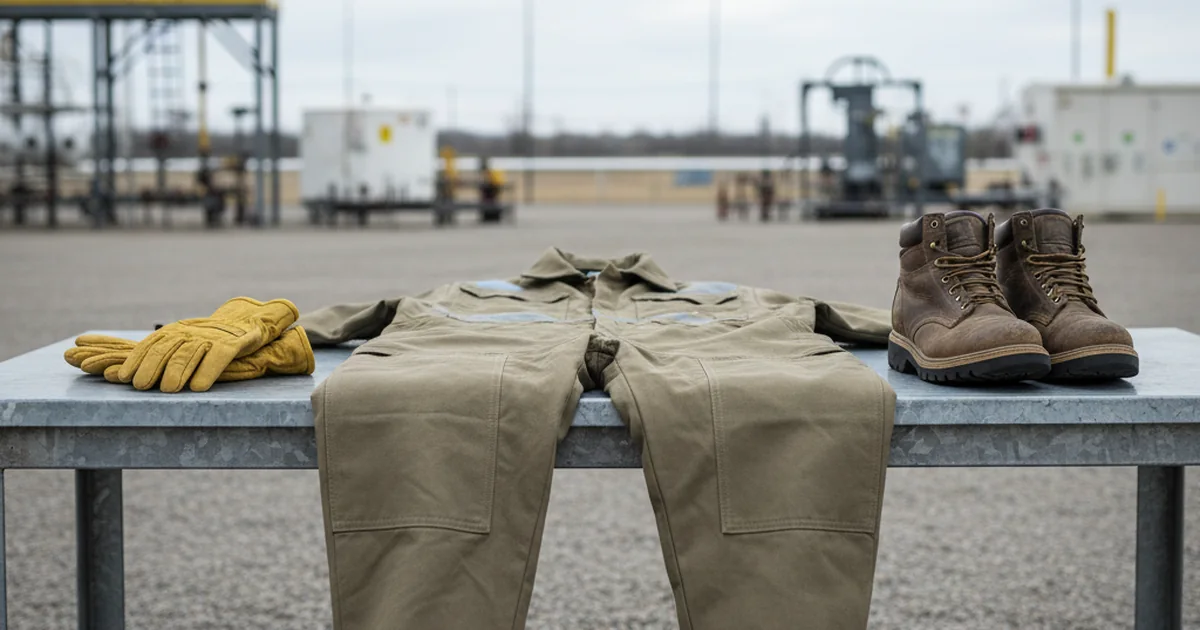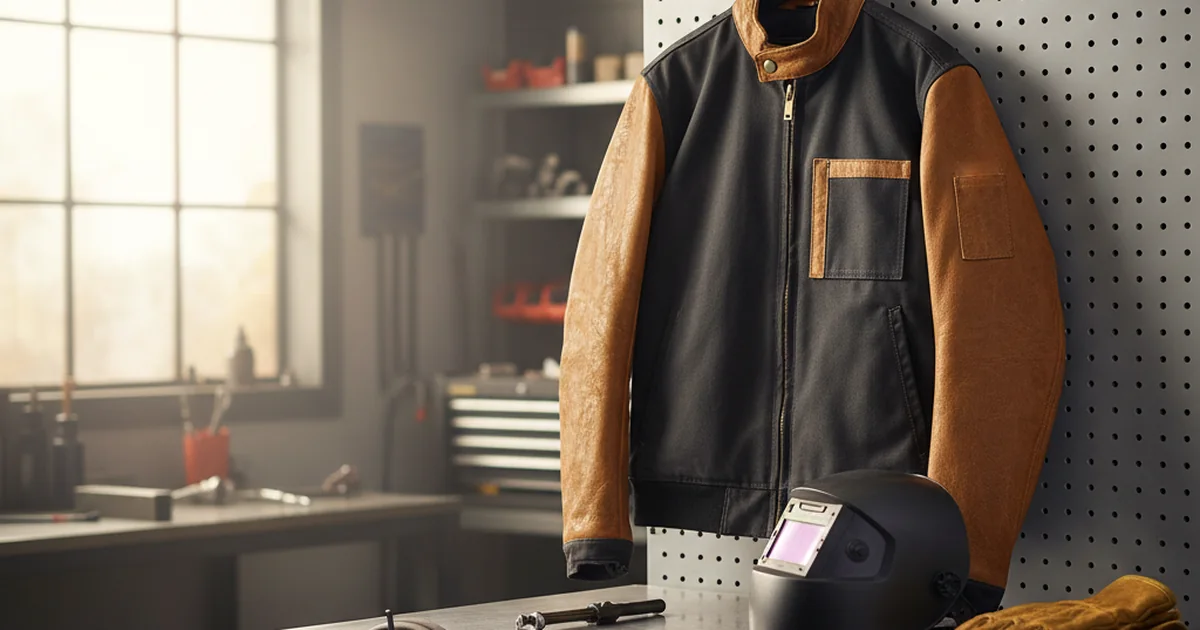

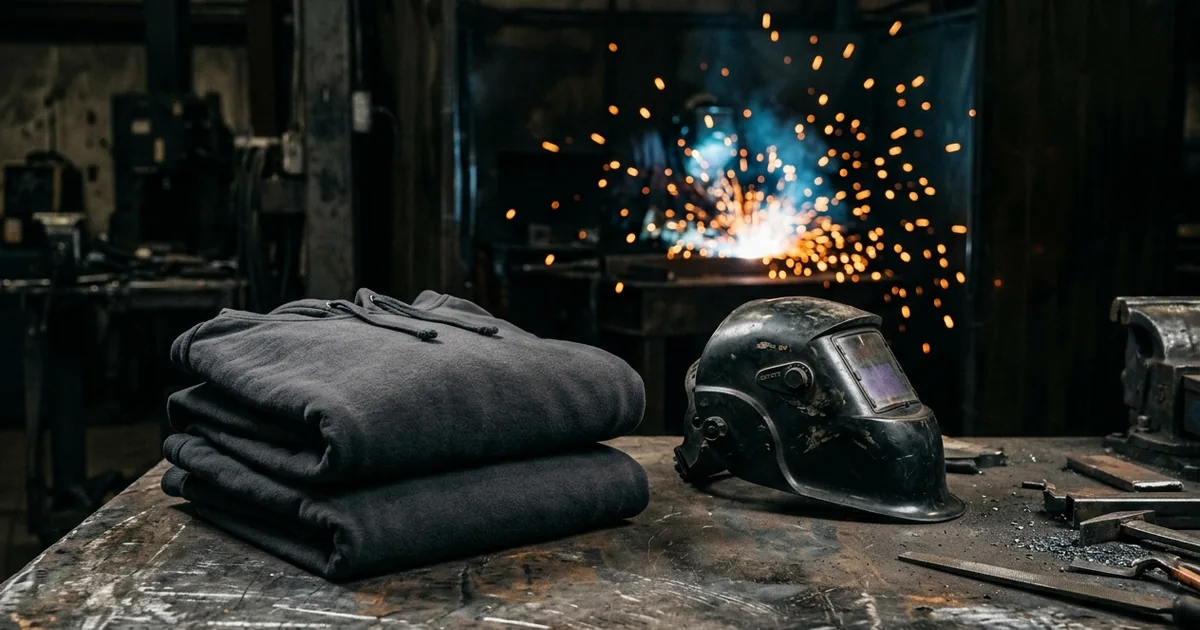
If you want one FR hooded sweatshirt for welding and the bays you wander into, the Carhartt Force 104983 pullover is my top pick: a 10.5 oz modacrylic/aramid blend that's inherent-FR by composition, UL classified to NFPA 2112, and labeled CAT 3 — light enough to actually wear all shift. But "best" depends on what you're protecting against. FR clothing is fabric engineered to resist ignition, self-extinguish when the flame source is removed, and not melt onto skin — it is not "fireproof." A hoodie is a comfortable FR layer; it is not a substitute for a leather or treated welding jacket when sparks and spatter are flying off heavy work.
Key Takeaways
- Top pick: Carhartt 104983 pullover. Inherent-by-composition fleece, NFPA 2112 + 70E + ASTM F1506, CAT 3 label, and the lightest at 10.5 oz. A pullover means no zipper to catch spatter. See more options in my best FR hoodies guide.
- Two publish a measured arc rating. The Wolverine FireZerO states ATPV 20.9 cal/cm² (CAT 2) and the Bulwark SEH4 states 17.0 cal/cm² (CAT 2). The two Carhartts and the Walls list NFPA 2112 but no measured cal/cm² number — I mark those "—" rather than invent one.
- A hoodie is a layer, not a jacket. For stick, MIG, or any heavy spatter, wear it under or alongside a proper welding jacket — see FR clothing for welders.
- NFPA 2112 ≠ arc rating. 2112 certifies flash-fire performance; arc rating (cal/cm²) is a separate test only some garments publish. Don't assume one from the other.
- Weight is comfort. These run 10 to 12.5 oz. Lighter (Carhartt, Walls) breathes better; heavier (Bulwark, Wolverine) runs warm for cold work.
How I ranked these (protection first, not commission)
I rank on protection first, then value, then fit and weight — never on what pays best. The hard rule on a safety category: I quote a spec only when the product listing actually states it. If a listing doesn't publish an ATPV cal/cm² number, a fabric weight, or whether the FR is inherent versus treated, you'll see "—" or "not stated" — I do not borrow one model's arc rating for another, and I never make a number up. NFPA 2112 means the garment is certified for flash-fire performance; an arc rating (ATPV, in cal/cm²) is a separate test, and here the Wolverine and the Bulwark publish one. CAT/HRC labels (CAT 1 ≥4, CAT 2 ≥8, CAT 3 ≥25, CAT 4 ≥40 cal/cm²) are category labels printed on the garment — I report them as labels, not as a measured ATPV for that specific hoodie. Where a piece is out of stock or discontinued, I say so and rank it lower because you may not be able to buy it.
| Pick | Fabric / weight | Arc rating (if stated) | Best for | Price |
|---|---|---|---|---|
| 1. Carhartt 104983 pullover | 40% cotton / 35% modacrylic / 15% viscose / 8% aramid / 2% AS · 10.5 oz | — (NFPA 2112; CAT 3 label) | Lightest all-around layer | $154.99 |
| 2. Carhartt 104982 zip-front | Same blend (Nomex FR tape on zipper) · 10.5 oz | — (NFPA 2112; CAT 3 label) | Zip on/off over a base layer | $164.99 |
| 3. Wolverine FireZerO | 405 g 100% FR cotton fleece knit (treated) · aramid thread | ATPV 20.9 cal/cm² (CAT 2) | Stated arc rating, value | $144.75 ($130.28 closeout) |
| 4. Bulwark SEH4 | 95% cotton / 5% spandex brushed fleece · 12.5 oz | ATPV 17.0 cal/cm² (CAT 2) | Warmest / coldest work | $201.99 |
| 5. Walls FRO37355 | 75% modacrylic / 25% cotton fleece · 10 oz (340 gsm) | — (NFPA 2112; HRC 2) | Lightest blend (if restocked) | Out of stock |
1. Carhartt Force 104983 Pullover — best all-around FR welding hoodie
This is the one I'd hand most welders looking for a daily FR layer. The fabric is a 40% cotton / 35% modacrylic / 15% viscose / 8% aramid / 2% anti-static fleece — a modacrylic and aramid blend that is inherent-FR by composition (though, to be precise, the listing itself doesn't print the words "inherent" or "treated"). It's UL classified to NFPA 2112, meets NFPA 70E and ASTM F1506, and carries a CAT 3 label. At 10.5 oz it's the lightest of the two Carhartts, and being a pullover, there's no front zipper for hot spatter to lodge against.
- Pros: Inherent-by-composition blend; NFPA 2112 + 70E + ASTM F1506 all stated; CAT 3 label; lightest pullover here; no front zipper to catch spatter.
- Cons: No measured ATPV cal/cm² stated on the listing; pullover is harder to vent than a zip; pricey versus a non-FR hoodie (as all real FR is).
Check price at Working Person's Store →
2. Carhartt Force 104982 Zip-Front — best if you want a zipper
Mechanically this is the same protective package as the 104983 — identical 10.5 oz FR fleece blend, UL classified to NFPA 2112, meets NFPA 70E and ASTM F1506 — but in a full-zip layout with Nomex FR tape on the zipper and NFPA 2112/CAT 3 labels sewn onto the left pocket. The zip makes it far easier to pull on and off over a base layer or to dump heat fast. The trade-off is the zipper itself: a small spatter consideration a pullover doesn't have, and it costs about ten dollars more.
- Pros: Same FR blend and ratings as the 104983; Nomex FR tape on the zipper; easy on/off and easy to vent; sewn-in NFPA 2112/CAT 3 labels.
- Cons: Zipper is a spatter consideration versus a pullover; no measured ATPV cal/cm² stated; slightly more expensive than the pullover.
Check price at Working Person's Store →
3. Wolverine FireZerO — best if you need a stated arc rating
This is the hoodie with the highest stated arc rating in the set: ATPV 20.9 cal/cm², rated HRC 2 (the Bulwark SEH4 also publishes one, at 17.0). It's a heavy 405-gram 100% FR cotton fleece knit with aramid thread, and it meets NFPA 2112, NFPA 70E and ASTM F1506. The honest catch is that its FR is treated, not inherent — the listing states the 100% cotton fleece is made flame-resistant by a double-dip treatment process. Treated cotton can lose FR performance if it's laundered with the wrong detergents or bleach over a garment's life, so follow the care label. The fleece also runs warm and bulky.
- Pros: Only hoodie here with a stated ATPV (20.9 cal/cm², CAT 2); NFPA 2112 + 70E + ASTM F1506; frequently the cheapest, especially on closeout.
- Cons: Treated FR (double-dipped cotton), not inherent — care matters; heavy knit runs warm and bulky; closeout availability can be hit or miss.
Check price at Working Person's Store →
4. Bulwark SEH4 Zip-Up — best for cold-weather work
If you work cold, this is the warmest option here: a 425-gram / 12.5 oz brushed-fleece zip-up, the heaviest in this comparison. It's 95% cotton / 5% spandex, UL-certified to NFPA 2112, and it publishes an ATPV of 17.0 cal/cm² (HRC/CAT 2). Two honesty notes: the 95% cotton base implies treated FR, but the listing doesn't actually say inherent or treated; and the listing does not state NFPA 70E, and marks ASTM as "Yes" without printing an F1506 number. If those standards matter for your job's compliance, confirm before buying. It's also the most expensive hoodie on the list.
- Pros: Warmest and heaviest (12.5 oz brushed fleece); stated ATPV 17.0 cal/cm²; UL-certified NFPA 2112; bit of stretch from the spandex; in stock.
- Cons: NFPA 70E and an ASTM F1506 number are not stated; inherent-vs-treated not stated; heaviest to wear in heat; highest price here.
Check price at Working Person's Store →
5. Walls FRO37355 — lightest blend, but discontinued
On paper this is the most welder-friendly fabric of the bunch: a 75% modacrylic / 25% cotton fleece, inherent-FR by composition, at just 10 oz (340 gsm) with a three-piece hood. It meets NFPA 2112, is listed for NFPA 70E, and is labeled HRC Level 2. The problem is availability — the page currently shows it out of stock and discontinued by the manufacturer, with no price displayed, so I can't recommend buying it today. No measured ATPV cal/cm² is stated. I'm including it as a reference point: if Walls or a retailer brings it back, a light, breathable, modacrylic-dominant hoodie is a genuinely good welding layer.
- Pros: Lightest at 10 oz; modacrylic-dominant blend (inherent-FR by composition); NFPA 2112 + listed 70E; breathable for warm work.
- Cons: Out of stock / discontinued — may not be buyable; no price; no stated ATPV cal/cm²; inherent-vs-treated not explicitly labeled.
Check price at Working Person's Store →
Is an FR hoodie enough for welding on its own?
No — and I want to be direct about it, because it's a safety question. An FR hooded sweatshirt is a comfortable, certified layer: great for warmth, for grinding and light tasks, and for arc-flash layering where it carries the right rating. But for stick, MIG, or any work throwing real spatter, hot slag will sit on a soft knit and can burn through given time, and a knit hood is no replacement for a welding hood or proper PPE. Treat these hoodies as the layer you wear under or alongside a leather or treated FR welding jacket, not instead of one. For the full layering picture, see my guide to FR clothing for welders, and if you want a button-front option, my best FR welding shirts roundup.
Frequently Asked Questions
Is NFPA 2112 the same as an arc rating?
No. NFPA 2112 certifies a garment for flash-fire performance, while an arc rating — the ATPV in cal/cm² — comes from a separate test and reflects arc-flash protection. A hoodie can be NFPA 2112 certified without publishing an arc rating; in this guide, the Wolverine FireZerO (20.9 cal/cm²) and the Bulwark SEH4 (17.0 cal/cm²) state one.
Is inherent FR better than treated FR?
Inherent-FR fabrics (modacrylic, aramid blends) get their flame resistance from the fibers themselves, so it doesn't wash out. Treated FR — like the Wolverine's double-dipped cotton — is flame-resistant cotton, which can degrade if it's washed improperly over its life. Both are legitimate when certified; just follow the care label, and never use bleach or fabric softener on FR.
What does CAT 3 mean in cal/cm²?
CAT (or HRC) is a category label tied to a minimum arc rating: CAT 1 is at least 4 cal/cm², CAT 2 at least 8, CAT 3 at least 25, and CAT 4 at least 40 cal/cm². The Carhartt hoodies here carry a CAT 3 label, but their listings don't print a measured ATPV number, so I report CAT 3 as the label rather than a specific tested value.
How do I wash an FR welding hoodie without ruining it?
Follow the garment's care label, use a normal detergent, and avoid chlorine bleach, fabric softener, and starch — those can coat fibers or strip treated-FR cotton's protection. Wash off heavy soils and never wear an FR garment soaked in flammable contaminants like oil or solvents, which can ignite regardless of the FR rating.
Can an FR hoodie replace a welding jacket?
No. An FR hoodie is a layer for warmth and lighter work, not spatter armor. For stick or MIG welding and heavy spatter, wear a leather or treated FR welding jacket; the hoodie can go under or beside it as a base layer, not in place of it.
Why Trust This Guide
This guide was written and reviewed by Wes Calder, an independent flame-resistant-workwear reviewer. I rank on protection, value, and fit — never on payout — and I only quote a spec when the product's own listing states it, marking everything else "—" rather than guessing. FR is safety gear, so I'd rather under-claim than overstate an arc rating a manufacturer never published. FR Gear Lab earns a commission on some links, but we never rank by commission over safety — see our affiliate disclosure.