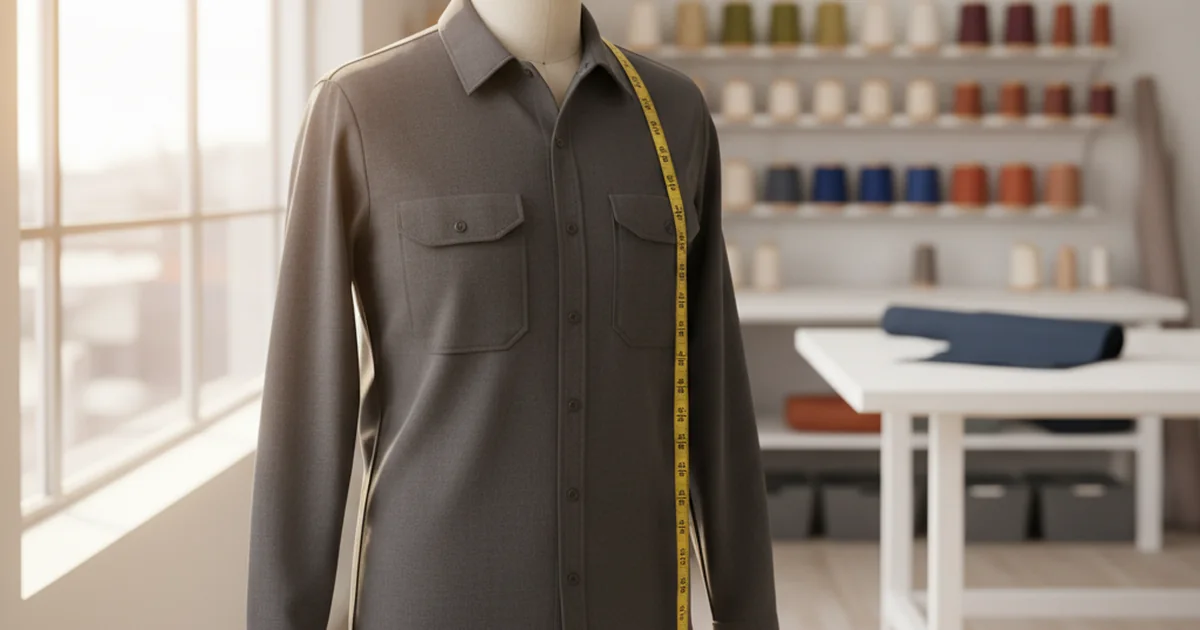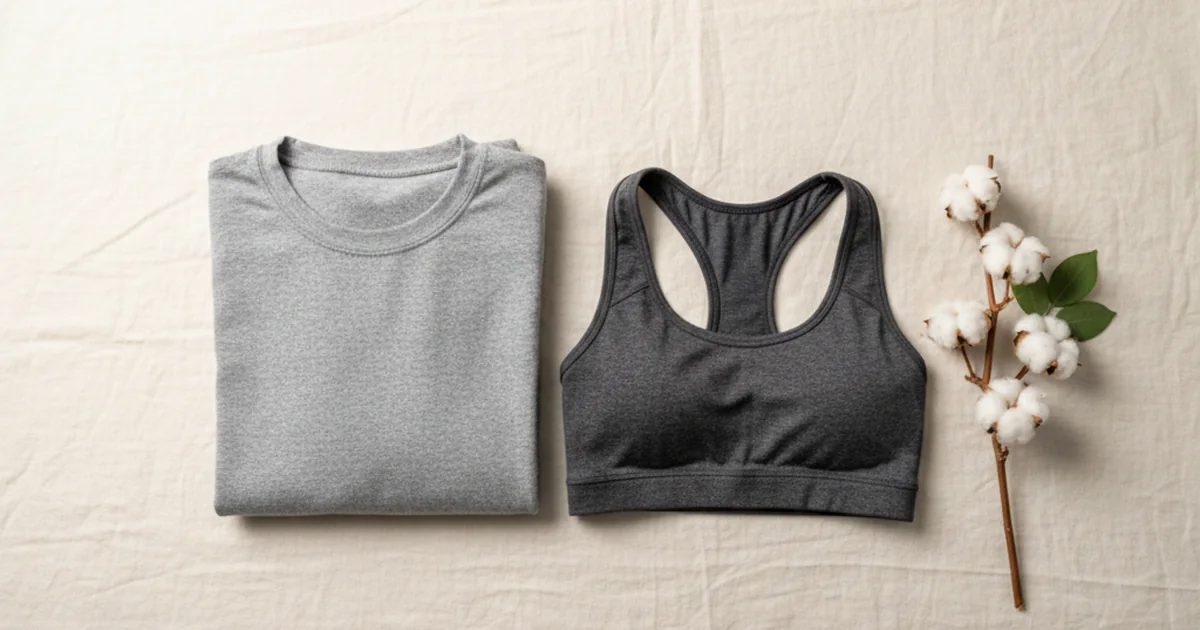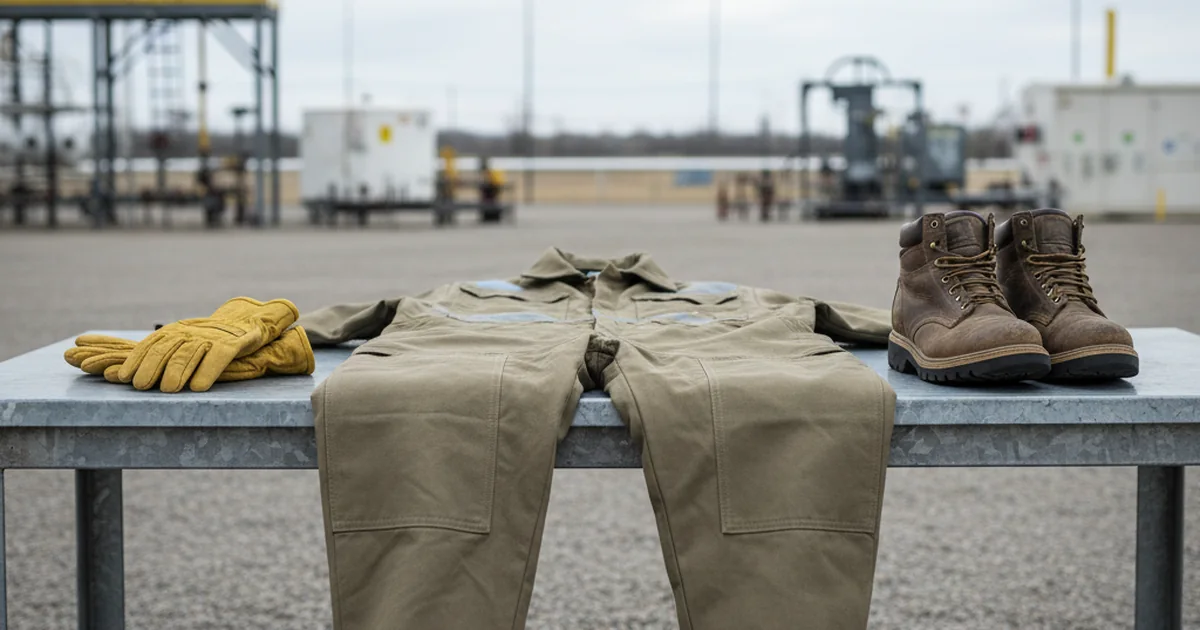
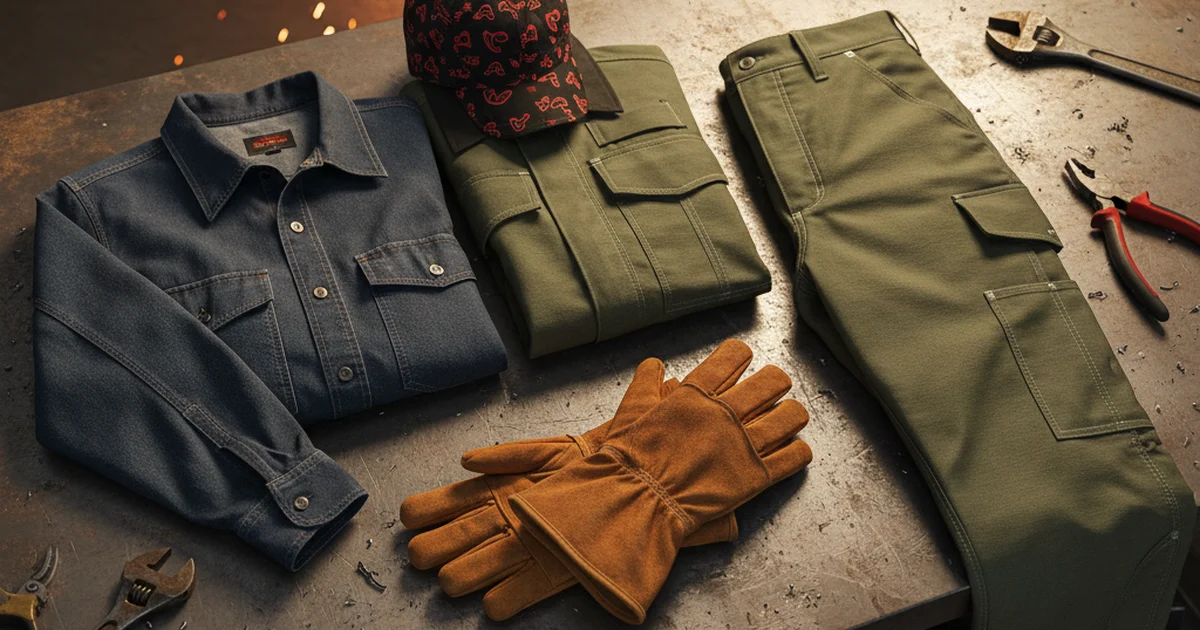
If you're new to the trade and your employer just handed you an FR mandate, here's the short answer: fire-retardant clothing for welders means an outer layer (and head cover) that resists ignition, self-extinguishes, and won't melt onto your skin — built around an NFPA 2112-certified FR shirt, with a welding jacket over it for spatter and an FR cap or balaclava under your hood. What is flame-resistant (FR) clothing? Fabric that resists ignition, self-extinguishes, and won't melt onto skin — it is not "fireproof." The trick most new welders miss: matching the garment to the hazard. Below I walk it head to toe, tell you what the tags actually mean, explain how I'd weigh one shirt against another, and say what to buy first on a budget.
Key Takeaways
- NFPA 2112 is your flash-fire / spatter baseline. It's a garment-level standard tested on a thermal manikin (ASTM F1930). For most welding, a 2112-certified FR shirt + welding jacket is the right outer layer.
- Arc rating is a different number for a different hazard. NFPA 70E (electrical) defines arc-flash PPE Categories CAT 1–4 by minimum cal/cm². All arc-rated clothing is FR, but not all FR clothing is arc-rated — if your job has an arc-flash hazard, "FR" alone isn't enough.
- Buy the shirt first. A UL NFPA 2112-certified, arc-rated FR welding shirt like the Black Stallion WF2110-ST ($44.99) is the cheapest pick here and the smartest first purchase.
- Inherent vs treated both certify. Inherent FR (modacrylic/aramid) won't wash out; treated FR (cotton with an FR finish) lasts the garment's useful life if you launder it right. Both can hit NFPA 2112.
- Weight is a comfort-vs-protection dial. 10 oz cotton resists spatter burn-through better but runs hot; 7 oz breathes for summer. Pick for your shop, not the spec sheet alone.
- Care is half the protection. Skip chlorine bleach and fabric softener, wash inside-out in warm water, and retire any garment saturated with grease or oil — oil-soaked FR is a fire hazard no matter what the tag says.
First: flash-fire FR vs arc-rated — which do you actually need?
This is the distinction that trips up every new hire, so get it straight before you spend a dollar. NFPA 2112 is a flash-fire garment standard — it certifies that a garment will protect you in a short, intense fire exposure (the kind welding spatter, grinding sparks, and oil-and-gas flash fires create). It's tested with the ASTM F1930 thermal-manikin test, and certification is at the garment level. For a welder in a typical shop, NFPA 2112 is the standard that matters.
NFPA 70E ("Electrical Safety in the Workplace") is a different animal. It covers arc-flash hazards — the electrical blast you face working on or near energized equipment — and it defines PPE Categories by minimum arc rating in cal/cm²: CAT 1 ≥ 4, CAT 2 ≥ 8, CAT 3 ≥ 25, CAT 4 ≥ 40. The garment's arc rating is reported as ATPV (Arc Thermal Performance Value) or EBT (Energy Breakopen Threshold), and the rating you go by is the lower of the two; the higher the number, the more protection. ASTM F1506 is the fabric/apparel spec that arc-rated electrical clothing is built to. One bit of vocabulary that confuses older welders reading newer tags: "HRC" (Hazard Risk Category) was renamed "PPE Category" in the 2015 edition of 70E, which also dropped the old HRC 0 tier — so you'll see CAT 1–4 on current garments where you once saw HRC 0–4.
Here's the rule that keeps you safe: all arc-rated clothing is flame-resistant, but not all FR clothing is arc-rated. If you only have a flash-fire hazard (most weld booths), a 2112 garment is appropriate. If your job puts you near an arc-flash hazard, "FR" alone isn't enough — you need a published arc rating in cal/cm² that meets your PPE Category. Match the garment to the hazard, not the marketing. When a job mixes both — say you weld and also work around energized panels — buy to the higher bar: a garment carrying both NFPA 2112 and a stated cal/cm² covers you for either exposure.
How I evaluated these picks — what to actually look for
I'm not a lab, and I won't pretend to be one. What I do is read the standards, pull each garment's spec sheet and tag, weigh that against what welders actually report on forums and retailer reviews, and handle the fabrics for fit and feel. When a listing doesn't publish a number, I say so rather than borrowing one from a similar model. Here are the seven things I weighed, in roughly the order they should drive your decision:
- The right certification for your hazard. First question, every time: flash-fire only, or arc-flash too? A 2112 cert covers spatter and flash; an arc job needs a published cal/cm² that clears your PPE Category. A garment that states a standard on its listing beats one that's vaguely "FR" — and I down-rank anything where the cert language is fuzzy.
- Fabric weight (oz). Heavier cotton resists spatter burn-through; lighter cotton breathes. This is the single biggest comfort lever, so I treat it as a dial set to your shop, not a "more is better" spec.
- Inherent vs treated FR. Inherent (modacrylic/aramid) is FR in the fiber and won't wash out; treated is an FR finish on cotton that lasts the garment's useful life if you launder it right. Both certify to 2112 — so I treat this as a budget/feel/durability question, not a safety tiebreaker. When a listing doesn't say which it is, that's a knock against it for a layering buyer.
- Fit and welding-specific design. A shirt that bunches at the forearms or gaps at the collar fights you all shift. I give real credit to features built for the job — heavier sleeve linings, a welder's collar, articulated knees on pants.
- Spatter durability. Where does hot metal actually land, and is the fabric reinforced there? Forearms and the chest take the most punishment.
- Breathability. An FR garment you peel off in July isn't protecting you. Weight, weave, and fiber all feed into this.
- Care and lifespan. FR you ruin in the wash isn't protective. I favor garments with clear, home-launderable care and a realistic service life — and I'll flag when an owner-reported lifespan figure is just that, an owner report, not a tested guarantee.
Price matters, but it's a tiebreaker, not a ranking. In a YMYL safety category I won't put a cheaper garment over a genuinely better-protecting one — the affiliate link rides on the pick regardless of where it lands.
The head-to-toe outfit, layer by layer
A welder's FR system is three layers from the top down: a cap or balaclava under the hood, the FR shirt as your core layer, and a welding jacket over it when spatter gets serious. Here's how each layer earns its place — and the specific products I'd put on the bench, with their sourced specs.
| Pick | Layer | Fabric / weight | Inherent / treated | Rating (if stated) | Price |
|---|---|---|---|---|---|
| Black Stallion WF2110-ST | Shirt | 7 oz FR cotton (% not stated) | Not stated | NFPA 2112 (UL); ATPV 8.7 cal, CAT 2 | $44.99 |
| LAPCO 10 oz Welding Shirt | Shirt | 10 oz 100% FR cotton twill | Treated | NFPA 2112 (UL); ATPV 12.5 cal, CAT 2 | $89.92 |
| Bulwark SWW2 | Shirt | 7 oz Excel FR cotton; 8.5 oz Tuffweld 60/40 rayon-aramid sleeve lining | Treated (body) | NFPA 2112 (stated); ATPV 7.7 cal, CAT 1 | $130.95 |
| Carhartt FRS160 | Shirt | 88% cotton / 12% nylon FR twill, 7 oz | Treated | NFPA 2112/CAT 2 (UL); no cal stated | $84.99 |
| PIP 9100-HDFR12 balaclava | Head | 86/12/2 cotton-nylon-spandex, 6.5 oz single layer | Inherent | ATPV 12.1 cal, CAT 2 | $49.99 |
| Carhartt FR Force balaclava | Head | 45% modacrylic / 35% lyocell / 20% aramid, 6.75 oz | Inherent | NFPA 2112 (UL); no arc rating stated | $42.99 |
| Black Stallion B9C BSX jacket | Outer | 9 oz FR cotton | Treated | NFPA 70E referenced; ATPV not stated | $36.99 |
1. Black Stallion WF2110-ST FR Shirt — buy this first
If you read nothing else, start here. A welder's core layer should be NFPA 2112-certified and, ideally, carry a real arc rating so it covers you whether the hazard is spatter or a low-level arc. The WF2110-ST does both: UL-certified to NFPA 2112, ATPV 8.7 cal/cm² (CAT 2), 7 oz FR cotton, at $44.99 from Working Person's Store. That it's the cheapest pick in this guide and the most sensible first buy is not an accident — it's where I'd tell a new welder to start.
Who it's for: the apprentice or new hire outfitting their first FR system on a tight budget, who wants one shirt that's certified for both flash-fire and a low-level arc without overthinking it. The real trade-off: the listing won't tell you the exact cotton percentage or whether the FR is inherent or treated. For most welders that's a shrug — it's certified, and that's what the jobsite cares about. But if you're a layering-system buyer trying to stack this under or over other rated pieces, you want to know the fiber content, and here you'll have to confirm it before you build around it. The pain it solves: the new welder's classic worry — "am I about to overpay for my first FR shirt?" The honest answer is no; the cheapest pick here is also the smartest, which almost never happens.
- Pros: UL NFPA 2112-certified and arc-rated (8.7 cal, CAT 2) at the lowest price here; 7 oz cotton breathes better than the 10 oz heavyweights.
- Cons: The listing doesn't state the exact cotton percentage or whether the FR is inherent or treated — confirm fiber content before you build a layering system around it.
Check price at Working Person's Store →
2. LAPCO 10 oz FR Welding Shirt — best for heavy spatter
When you're laying down heavy beads and spatter is constant, fabric weight is your friend. The LAPCO 10 oz 100% FR cotton twill gabardine is the heaviest shirt in this set and carries the highest arc rating — ATPV 12.5 cal/cm² (CAT 2), UL classified to NFPA 2112. Heavier cotton resists burn-through from hot metal better than a 6–7 oz shirt, full stop. The cost is comfort: at 10 oz it runs hot and stiff for all-day summer work, and at $89.92 brand-direct it's pricier than comparable 7 oz welding shirts.
Who it's for: stick and flux-core welders in a cold shop or at a heavy-spatter station, where burn-through protection beats breathability, and anyone who'd rather have one rugged shirt that lasts than two light ones. The real trade-off: this is the protection-vs-comfort dial pushed all the way to protection. The 12.5 cal and 10 oz cotton are doing exactly what you want when sparks are raining down — and exactly the wrong thing on a 95°F summer afternoon, where it'll feel like a canvas tarp. The pain it solves: the welder who's tired of pinholes and singed-through lightweight shirts after a hard week. As treated FR cotton it's durable, and the heavier weave shrugs off spatter that thinner shirts let through. Buy a separate 7 oz shirt for July; this is your cold-weather and heavy-station workhorse.
- Pros: Heaviest fabric (10 oz) and highest arc rating (12.5 cal) here; UL NFPA 2112 classified; treated FR cotton is durable.
- Cons: Runs hot and stiff for summer wear; $89.92 brand-direct is higher than comparable 7 oz welding shirts.
3. Bulwark SWW2 — best forearm/spatter design
Welding spatter doesn't hit you evenly — it lands on your forearms. Bulwark designed the SWW2 around that: a 7 oz Excel FR cotton body (treated, NFPA 2112-compliant) with a heavier 8.5 oz Tuffweld sleeve lining — 60% rayon / 40% aramid — doubled over the forearms where the sparks actually land. That's thoughtful, welding-specific engineering. The honest catch is the price-to-rating math: at $130.95 it's the most expensive shirt here and carries the lowest arc rating in the set (7.7 cal/cm², CAT 1).
Who it's for: the welder who's burned through the forearms of three ordinary FR shirts and is done with it — someone who values targeted durability over a headline cal number. The real trade-off: you're buying the sleeve lining, not the arc rating. The 7.7 cal CAT 1 is the lowest here, so this is not the shirt for a job that needs CAT 2; what you're paying for is the second layer of aramid-blend fabric exactly where spatter chews through a single-layer shirt. The pain it solves: the recurring cost and annoyance of forearm burn-through. If your hazard is purely flash-fire and spatter and your forearms are taking the brunt, the design is genuinely smart and the body is 2112-compliant. If you need the arc number, look at the LAPCO or the WF2110-ST instead and save yourself $40.
- Pros: Heavier Tuffweld rayon/aramid sleeve lining over the forearms (the spatter zone) on top of an NFPA 2112-compliant Excel FR cotton body.
- Cons: Most expensive shirt here ($130.95) and the lowest arc rating in the set (7.7 cal, CAT 1).
4. Carhartt FRS160 FR Twill Shirt — best familiar-brand daily driver
Plenty of welders want a brand they already trust on their back. The Carhartt FRS160 is an 88% cotton / 12% high-tenacity nylon FR twill (treated), 7 oz, UL classified to NFPA 2112 and CAT 2, at $84.99 and in stock. The cotton-nylon blend is durable — the nylon adds tear and abrasion resistance the way it does in Carhartt's non-FR duck — and the brand support is real.
Who it's for: the welder who lives in Carhartt already and wants an FR shirt that fits and wears like the gear they know, for everyday flash-fire protection. The real trade-off: two honest catches keep it out of the top spot. The page states NFPA 2112/CAT 2 but does not publish a cal/cm² arc rating, so for an arc-flash job you can't plan around a number you don't have — get the actual cal figure first. And Carhartt itself notes its FR garments are general-purpose, not built specifically for welding spatter; there's no forearm reinforcement like the Bulwark's. The pain it solves: brand trust and fit anxiety — for the welder who's been burned by a no-name FR shirt that fit like a sack. As a daily FR shirt it's solid and durable; just don't mistake "CAT 2" with no published cal for a documented arc-flash garment.
- Pros: Durable 88/12 cotton-nylon twill from a widely trusted FR brand; UL classified to NFPA 2112/CAT 2; in stock at $84.99.
- Cons: No cal/cm² arc rating published on the listing; Carhartt notes these are general-purpose FR, not welding-spatter-specific.
5. PIP 9100-HDFR12 Balaclava — best under-hood head cover
Your head goes under the hood, but your neck, ears, and jawline don't always — that's what a balaclava covers. The PIP 9100-HDFR12 is the under-hood layer I'd actually buy: 86% cotton / 12% high-tenacity nylon / 2% spandex (inherent FR), and genuinely arc-rated at ATPV 12.1 cal/cm² (CAT 2), at $49.99. Most "FR" head covers don't publish an arc rating; this one does, which is why it leads the head-layer picks.
Who it's for: the welder whose job mixes spatter with any arc-flash exposure, who wants a head cover with a number they can document — and anyone who runs hot under the hood and needs breathability against the skin. The real trade-off: the single-layer 6.5 oz build. It's comfortable and breathable, but it'll likely wear out faster than a multi-layer balaclava in heavy-duty daily use — think of it as the lightweight, rated option rather than the bombproof one. The pain it solves: the "is my head cover actually rated, or just FR?" question that the spec sheets usually dodge. With an inherent-FR blend that won't wash out and a published 12.1 cal, this answers it. If you grind through head covers fast, keep a spare in the locker.
- Pros: Genuinely arc-rated (ATPV 12.1 cal/cm², CAT 2) inherent-FR blend; next-to-skin comfort and breathability for daily wear.
- Cons: Single-layer 6.5 oz construction may wear faster than multi-layer options in heavy-duty use.
Check price at Working Person's Store →
6. Carhartt FR Force Balaclava — best inherent-FR flash-fire head cover
If your hazard is flash fire and spatter rather than arc flash, the Carhartt FR Force balaclava is a strong head layer: a 45% modacrylic / 35% lyocell / 20% aramid pique knit (6.75 oz, inherent FR), UL classified to NFPA 2112, with full-face coverage that runs below the neckline. Inherent FR means it won't wash out, and the modacrylic/aramid blend is the same fiber family you'll find in premium FR knits.
Who it's for: the welder with a pure flash-fire and spatter hazard (no arc-flash work) who wants full-face, below-the-neckline coverage from a trusted brand and a soft knit that won't degrade in the wash. The real trade-off: it's what's missing from the page — no stated arc rating. For straight flash-fire that's fine, because 2112 is the standard that matters there. But the moment you're under the hood on an arc-flash job, the PIP's published 12.1 cal is the one with a number you can plan around, and this one isn't. The pain it solves: drafty neck and jaw coverage gaps under the hood, plus the wash-out worry that dogs treated head covers — inherent FR sidesteps that. At $42.99 it's a comfortable, certified flash-fire pick; just know its lane.
- Pros: Inherent-FR modacrylic/aramid blend (won't wash out); UL classified to NFPA 2112; full-face coverage below the neckline.
- Cons: No arc rating (ATPV/CAT) stated on the listing — not the pick if you need a documented arc-flash number.
Check price at Working Person's Store →
7. Black Stallion B9C BSX Welding Jacket — best budget outer/spatter layer
Over your FR shirt, a welding jacket takes the brunt of heavy spatter and adds neck protection. The Black Stallion B9C BSX is the cheapest FR-cotton welding jacket here at $36.99, in 9 oz treated FR cotton, with a classic welder's collar that shields your neck from sparks.
Who it's for: the welder who wants an affordable top spatter layer to throw over an already-certified shirt when the job gets hot — and the budget builder rounding out a head-to-toe kit without spending another $100. The real trade-off: the arc data on the page is vague. It references NFPA 70E and lists "CAL 8+" but gives no precise ATPV or CAT, so I'd treat it as spatter protection, not a verified arc-flash garment — don't let the "70E" mention fool you into using it as your arc layer. The pain it solves: raw spatter and spark exposure on the shoulders, chest, and neck, where the welder's collar genuinely helps. Layered over a rated 2112 shirt, it's the right kind of cheap: it protects the expensive shirt underneath from the worst of the spatter and adds neck coverage your shirt collar doesn't. As the outer layer in a budget system, it earns its place — just don't ask it to be your arc rating.
- Pros: Classic welder's collar for neck/spark protection; lowest-price FR-cotton welding jacket here ($36.99).
- Cons: Arc/CAT data on the listing is vague (no precise ATPV) — treat as spatter protection, not a verified arc-flash garment.
Check price at Working Person's Store →
How to choose your FR welding kit
Step back from the individual picks for a second. Outfitting head to toe comes down to five decisions, in this order:
1. Pin down your hazard first. Everything flows from this. Flash-fire and spatter only? A 2112-certified shirt and jacket are right, and you can pick on weight and comfort. Any arc-flash exposure? Now you need a published cal/cm² that clears your PPE Category — and "FR" with no number won't cut it. If you're not sure, ask your safety lead for the hazard assessment before you buy; that document, not a product page, decides your minimum.
2. Set your fabric weight to your shop and season. If spatter is heavy and the shop runs cold, lean to 9–10 oz cotton for burn-through resistance. If you're fighting summer heat, a well-rated 7 oz shirt wins on wearability — the best protection is the one you keep buttoned all shift. Many welders end up with one of each and rotate by season.
3. Decide inherent vs treated for your wallet and feel, not your safety. Both certify to 2112, so this isn't a protection call. Inherent FR (modacrylic/aramid) won't wash out and often feels softer next to the skin — good for head covers and base layers — but usually costs more. Treated FR cotton is durable and economical, and lasts the garment's useful life if you launder it right. Pick on budget, hand-feel, and how you'll care for it.
4. Match the design to where you actually get hit. Forearms and chest take the most spatter, so reinforced sleeves (the Bulwark) or a jacket's welder's collar (the B9C) buy you real durability where it counts. A balaclava that runs below the neckline closes the gap your hood and collar leave.
5. Build the system over two or three paychecks, not one. Don't blow the budget on a single premium shirt and skip the head cover. A complete rated kit — shirt, jacket, balaclava — protects you better than one expensive piece and three bare spots. Start with the shirt, add the jacket, then the head cover.
A word on what FR isn't: it is not fireproof. It buys you escape time in a flash exposure; it does not let you stand in fire. And it only protects if it's intact and clean — which is the next section.
What to buy first on a budget
If you can only buy one piece this paycheck, buy the FR shirt — it's the layer against your skin and the foundation of the whole system. The Black Stallion WF2110-ST at $44.99 gets you NFPA 2112 certification and a real arc rating for under fifty bucks. Next paycheck, add the Black Stallion B9C BSX jacket ($36.99) for spatter and the PIP balaclava ($49.99) under your hood. That's a complete, certified head-to-toe FR system for roughly $130 — less than a single premium shirt. Build up from there; don't try to buy the whole rig at once and end up with nothing rated.
One more thing money can't fix: your FR is only as good as how you care for it. FR clothing is home-launderable, but the wrong routine strips the protection. Skip chlorine bleach, hydrogen-peroxide bleach, fabric softener, and starch — softener and starch leave flammable residue, and bleach attacks the fabric. Wash inside-out in warm water (around 140°F helps flush out welding oils), and always defer to the garment's own care label. Hard water leaves mineral deposits that reduce FR performance over time, so if your tap runs hard, an extra rinse helps. And retire any garment that's saturated with grease or oil — oil-soaked FR is a fire hazard no matter what the tag says; clean it or take it out of service. You'll see "18–30 month lifespan" thrown around online; treat that as what welders report, not a guarantee — your real lifespan depends on your work and your wash. See how to wash FR clothing for the full routine.
Frequently Asked Questions
Is FR clothing actually required for welding?
It depends on your employer's hazard assessment and the standards your worksite falls under. Many employers mandate NFPA 2112-certified FR for welders because of flash-fire and spatter exposure, and oil, gas, and electrical sites carry their own requirements under OSHA. Always follow your employer's PPE program — this guide explains the gear, not your specific legal obligation.
What's the difference between NFPA 2112 and NFPA 70E for welders?
NFPA 2112 is a flash-fire garment standard, tested on a thermal manikin (ASTM F1930), and it's the baseline for most welding. NFPA 70E is the electrical standard — it defines arc-flash PPE Categories (CAT 1–4) by minimum arc rating in cal/cm². They cover different hazards, so match the garment to your hazard. Most welders need 2112; arc-flash work also needs a cal/cm² rating.
Does a welder need arc-rated clothing, or is FR enough?
For pure welding spatter and flash fire, NFPA 2112-certified FR is appropriate. You need an arc rating (in cal/cm²) only when there's an arc-flash hazard — working on or near energized electrical equipment. Remember: all arc-rated clothing is FR, but not all FR clothing is arc-rated. If your job mixes welding and electrical work, get a garment with a published arc rating that meets your PPE Category.
Inherent vs treated FR — which is better for welding?
Both can certify to NFPA 2112, so neither is automatically "better." Inherent FR (modacrylic or aramid blends) is flame-resistant in the fiber itself and won't wash out. Treated FR is an FR finish on cotton, engineered to last the garment's useful life if you launder it correctly. The trade-off is cost, hand-feel, and durability — pick based on your budget, your hazard, and how the fabric feels for all-day wear.
Does FR shirt weight matter for welding?
Yes. Heavier fabric resists spatter burn-through better — a 10 oz cotton shirt like the LAPCO holds up to hot metal better than a 6–7 oz shirt. But weight is a comfort dial: heavier runs hotter and stiffer, which matters for all-day summer work. For heavy-spatter or cold-shop welding, go heavier; for summer heat, a well-rated 7 oz shirt usually wins on wearability.
What does "CAT 2" mean on an FR welding shirt?
CAT 2 is a PPE Category from NFPA 70E for arc-flash hazards — it means the garment is arc-rated to at least 8 cal/cm². "HRC" was the old name for the same thing before the 2015 edition renamed it PPE Category. A shirt can be NFPA 2112-certified for flash fire and also carry a CAT 2 arc rating, but some listings say "CAT 2" without publishing the actual cal/cm² number. For an arc-flash job, confirm the cal figure, not just the category label.
Can I wash FR welding clothing at home, and how?
Yes — FR clothing is home-launderable, but the routine matters. Wash inside-out in warm water (around 140°F helps flush welding oils) and avoid chlorine bleach, hydrogen-peroxide bleach, fabric softener, and starch, which can damage the fabric or leave flammable residue. Hard water can leave mineral deposits that reduce FR performance. Always follow the garment's own care label, and retire any piece saturated with grease or oil — it's a fire hazard.
How long does FR welding clothing last?
There's no fixed number — it depends on the fabric, how hard you work it, and how you care for it. Welders often report 18–30 months for a regularly worn FR garment, but treat that as an owner report, not a guarantee. What actually ends a garment's life is damage: holes, charred areas, or grease and oil saturation. Inspect before each shift, and retire anything compromised — FR only protects when it's intact and clean.
Why Trust This Guide
This guide is written and reviewed by Wes Calder, an independent flame-resistant-workwear reviewer. Every recommendation is built on the published standards (NFPA 2112, NFPA 70E, ASTM F1506), manufacturer spec sheets and garment tags, hands-on handling, and what tradespeople actually report — and we tell you when a number is a manufacturer claim versus an independent standard, and when a garment is FR but not arc-rated. We earn an affiliate commission if you buy through some of our links, at no extra cost to you, and we never rank by commission over safety — see our affiliate disclosure.