
Is polyester flame resistant? No. Regular polyester is not flame resistant — and the way it fails is the part that should worry you: under enough heat it melts, and molten polyester sticks to skin and keeps burning. So if your real question is "will my everyday clothes protect me in a flash fire or an arc flash," the honest answer is that a poly tee or a poly-blend hoodie does the opposite of help. Flame-resistant (FR) clothing is fabric that resists ignition, self-extinguishes when the flame source is removed, and won't melt onto skin — it is not "fireproof."
Key Takeaways
- Regular polyester is not FR: it melts, and molten synthetic fused to skin makes a burn injury worse, not better.
- Kevlar is different: aramid fibers like Kevlar are inherently flame-resistant and don't melt — but "fireproof" is still the wrong word.
- FR is a tag, not a vibe: a garment is genuinely FR only if its tag names a standard (NFPA 2112 or ASTM F1506) — looking thick or feeling tough proves nothing.
- FR ≠ arc-rated: all arc-rated clothing is FR, but not all FR clothing is arc-rated. Electrical work needs an arc rating in cal/cm².
- Care matters: grease- or oil-saturated fabric becomes a fire hazard even if the garment itself is certified FR.
Why regular polyester is the wrong thing to wear near heat
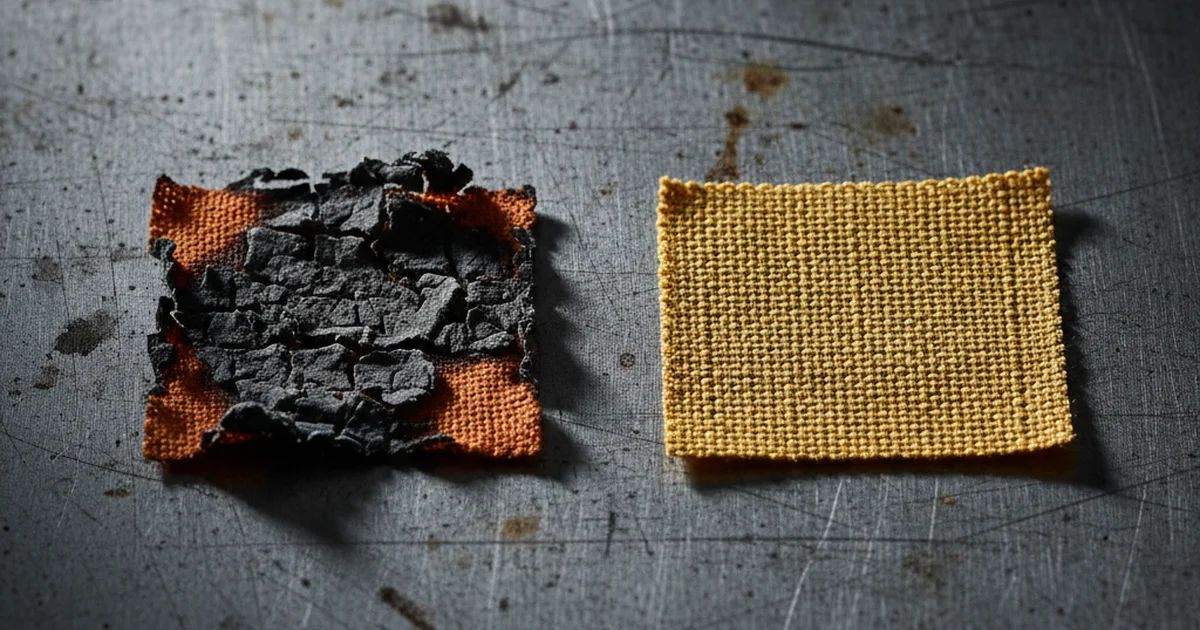
Polyester is a thermoplastic. That single fact drives everything I'd want you to understand here: thermoplastics soften and melt when they get hot enough, and polyester's failure mode is melting rather than charring. In a flash fire or an arc flash — the two events FR clothing is built for — the heat spike is brief and intense, and that's exactly the condition where melting becomes a skin injury. Molten material conducts heat straight into the burn and is miserable to remove from a wound.
This is why "it's a thick polyester work shirt, it'll be fine" is a dangerous instinct. Thickness, color, and how rugged a shirt feels in your hands tell you nothing about whether it resists ignition. A heavy poly garment can still melt; a light certified-FR garment won't. The property you care about is the fiber chemistry and the certification on the tag, not the heft.
One more thing welders and oilfield hands run into: a poly base layer under an FR outer shirt quietly defeats the system. The FR layer can do its job and the synthetic underneath can still melt against your skin. If you wear FR outerwear, your next-to-skin layer should be FR or natural fiber too — not the gym tee you grabbed off the floor.
Is Kevlar fire resistant? Yes — but read the fine print
Here's where the answer flips. Kevlar is an aramid, and aramids are inherently flame-resistant: the fire resistance is built into the fiber's molecular structure, so it doesn't wash out and the fabric doesn't melt the way polyester does. That puts Kevlar and its aramid cousins in a completely different category from your everyday synthetics. It's the reason aramids show up in firefighter gear and FR garment blends.
But I'll hold the line on the language: "fireproof" is wrong, even for Kevlar. Inherently flame-resistant means the fabric resists ignition and won't melt — not that it's immune to heat or that nothing will ever happen to it under a sustained, severe flame. FR is a self-extinguishing, won't-melt property, not an indestructible-shield property. Treat any garment that's marketed as "fireproof" with suspicion; that word is a tell that the seller isn't speaking the standards language.
The practical takeaway: the fiber matters enormously. Polyester (a meltable thermoplastic) and Kevlar (an inherent aramid) sit at opposite ends of the spectrum even though both are "synthetic." Don't let the word "synthetic" flatten that distinction.
Inherent FR vs treated FR — two honest ways to get there
There are two legitimate routes to a flame-resistant garment, and a good tag will tell you which one you're holding.
Inherent FR means the fire resistance lives in the fiber itself — modacrylic and aramids like Kevlar are the common examples. Because it's structural, it doesn't wash out over the life of the garment. Treated FR is a chemical finish applied to a fabric, usually cotton; done right and laundered right, that protection lasts the garment's usable life too. Both routes can earn an NFPA 2112 certification. The trade-offs are about cost, hand-feel, and durability — not about one being "real FR" and the other being fake. I dig into the practical differences in our inherent vs treated FR guide.
The reason this matters to the polyester question: people sometimes assume any non-cotton fabric is the meltable kind. It isn't. An inherent-FR fabric is engineered specifically not to melt. The category your fabric belongs to — meltable thermoplastic versus inherent FR versus treated cotton — is the thing that determines whether it protects you.
How to tell if a garment is genuinely FR
Don't trust looks, weight, or a "fire resistant" sticker. Read the tag, and look for three things:
- A named standard. For flash-fire (oil and gas) work, that's NFPA 2112 — the garment-level flash-fire standard validated with the ASTM F1930 manikin test. For electrical work, it's ASTM F1506, the FR-and-arc-rated fabric/apparel spec.
- A third-party / UL classification. A real certification is verified by an independent body, not self-asserted by the seller.
- For electrical work, an arc rating in cal/cm² (the ATPV or EBT). No cal number on the tag means it isn't arc-rated, full stop.
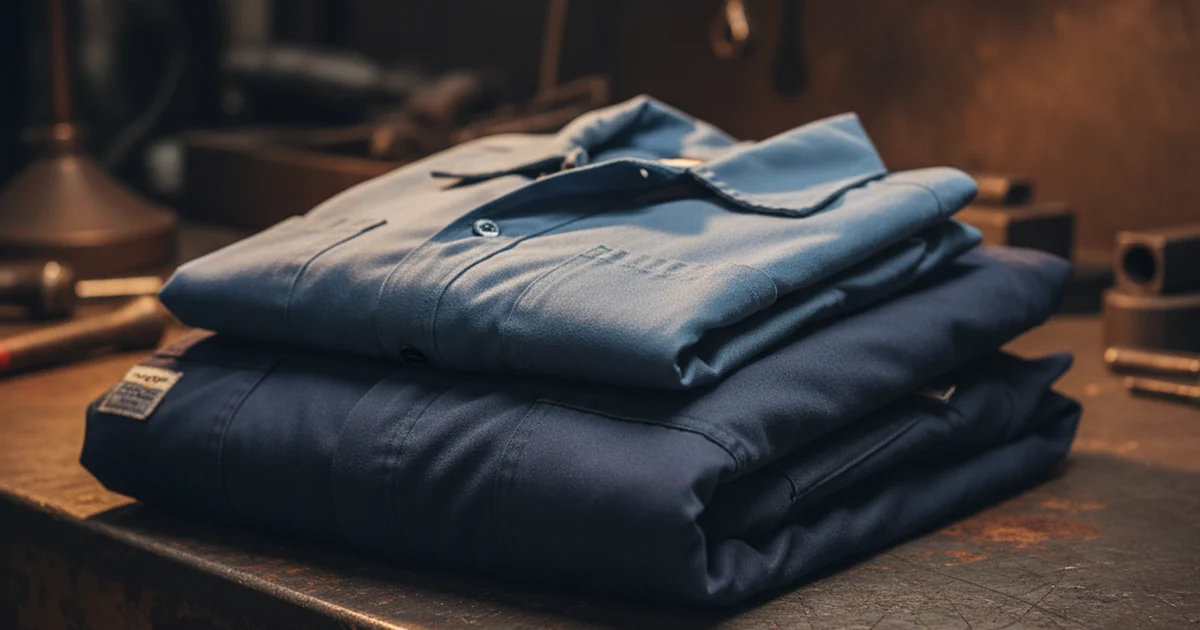
Be wary of "FR-look" garments — items that resemble work shirts but state no standard, no rating, and carry a price far below certified FR. That gap is the tell. Certified FR fabric and the testing behind it cost money; a bargain-bin "fire resistant" shirt with a blank spec section is almost always regular fabric with a marketing word on it. Our guide on how to spot fake FR clothing walks through the dodges in detail.
FR is not the same as arc-rated
This trips up a lot of buyers, so it's worth stating plainly: all arc-rated clothing is FR, but not all FR clothing is arc-rated. "FR" tells you the fabric resists ignition and won't melt. "Arc-rated" is a measured number — the cal/cm² your garment can take in an electrical arc-flash event — and a garment only carries it after specific testing under ASTM F1506.
So if your hazard is electrical, an FR-only garment that names NFPA 2112 but shows no cal/cm² rating is not enough. NFPA 70E is the electrical-safety standard that defines the arc-flash PPE Categories (CAT 1 through CAT 4), and your required category sets the minimum arc rating you need. We unpack that split in arc-rated vs flame-resistant and NFPA 2112 vs NFPA 70E.
Even real FR can be compromised by how you treat it
FR is not a permanent superpower you can abuse. A genuinely certified FR garment can still let you down if it's contaminated or laundered wrong. Grease and oil saturation is the big one: a shirt soaked with flammable contaminants can ignite and burn even though the base fabric is FR — the fuel is on the fabric, not in it. And FR-killing laundry habits matter too. Skip chlorine bleach, hydrogen-peroxide bleach, fabric softener, and starch — they can strip or coat treated FR finishes and undercut the protection you paid for. The full routine lives in our how to wash FR clothing guide.
Frequently Asked Questions
Is polyester flame resistant?
No. Regular polyester is not flame resistant. It's a thermoplastic, which means it melts when it gets hot enough, and molten polyester can fuse to skin and worsen a burn. A poly or poly-blend shirt is the wrong thing to wear near a flash-fire or arc-flash hazard — you need fabric that resists ignition and won't melt.
Is Kevlar fireproof?
No — "fireproof" is the wrong word. Kevlar is an aramid, and aramids are inherently flame-resistant: they resist ignition and don't melt, unlike polyester. That's a meaningful, structural property built into the fiber. But flame-resistant means self-extinguishing and non-melting, not immune to heat. Be skeptical of anything marketed as "fireproof."
Will my everyday clothes protect me from a flash fire or arc flash?
If they're regular polyester or poly blends, no — they can melt onto your skin and make an injury worse. Untreated cotton can ignite as well. Real protection comes from a garment that names an FR standard on its tag, such as NFPA 2112 for flash fire or ASTM F1506 for electrical arc-flash work. Looks and thickness don't count.
What's the difference between flame-resistant and fireproof?
Flame-resistant fabric resists ignition, self-extinguishes once the flame source is removed, and won't melt onto skin. "Fireproof" implies total immunity to fire, which no clothing fabric actually delivers. FR clothing buys you critical seconds to escape a flash fire or arc flash without the fabric itself adding to the injury — it does not make you invincible.
How do I verify a shirt is genuinely FR?
Read the tag, not the marketing. Look for a named standard (NFPA 2112 or ASTM F1506), a third-party or UL classification, and — for electrical work — an arc rating in cal/cm². If a "fire resistant" garment states no standard, no rating, and costs far less than certified FR, treat it as ordinary fabric with a marketing label, not real protection.
Why Trust This Guide
This guide is written and reviewed by Wes Calder, an independent flame-resistant-workwear reviewer. Every recommendation is built on the published standards (NFPA 2112, NFPA 70E, ASTM F1506), manufacturer spec sheets and garment tags, hands-on handling, and what tradespeople actually report — and we tell you when a number is a manufacturer claim versus an independent standard, and when a garment is FR but not arc-rated. We earn an affiliate commission if you buy through some of our links, at no extra cost to you, and we never rank by commission over safety — see our affiliate disclosure.