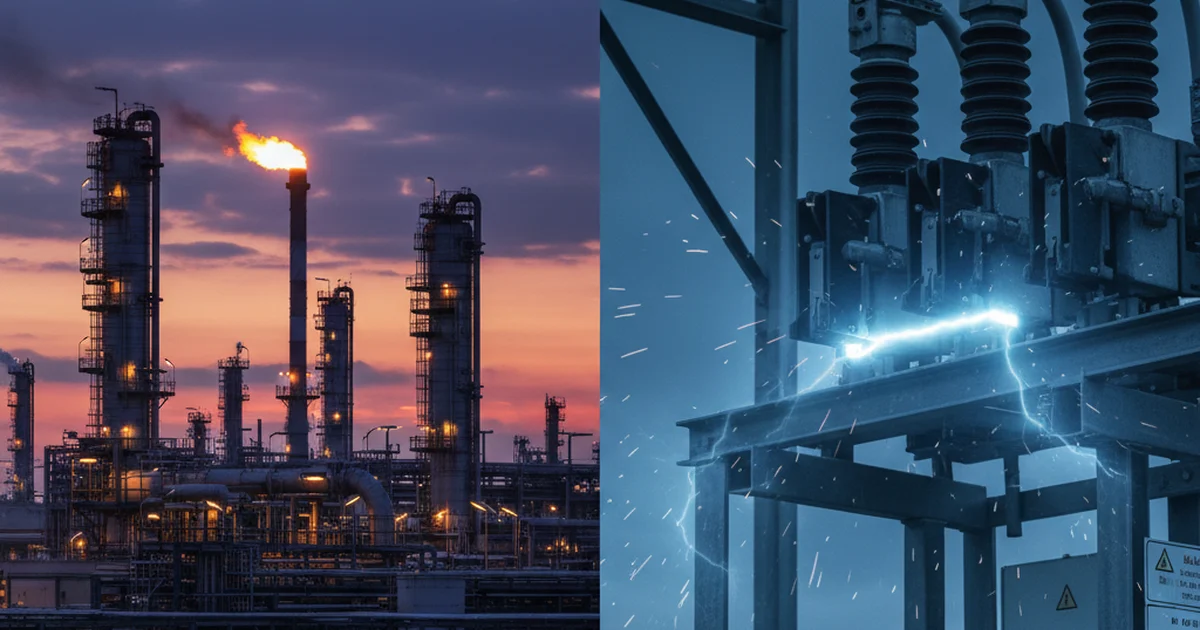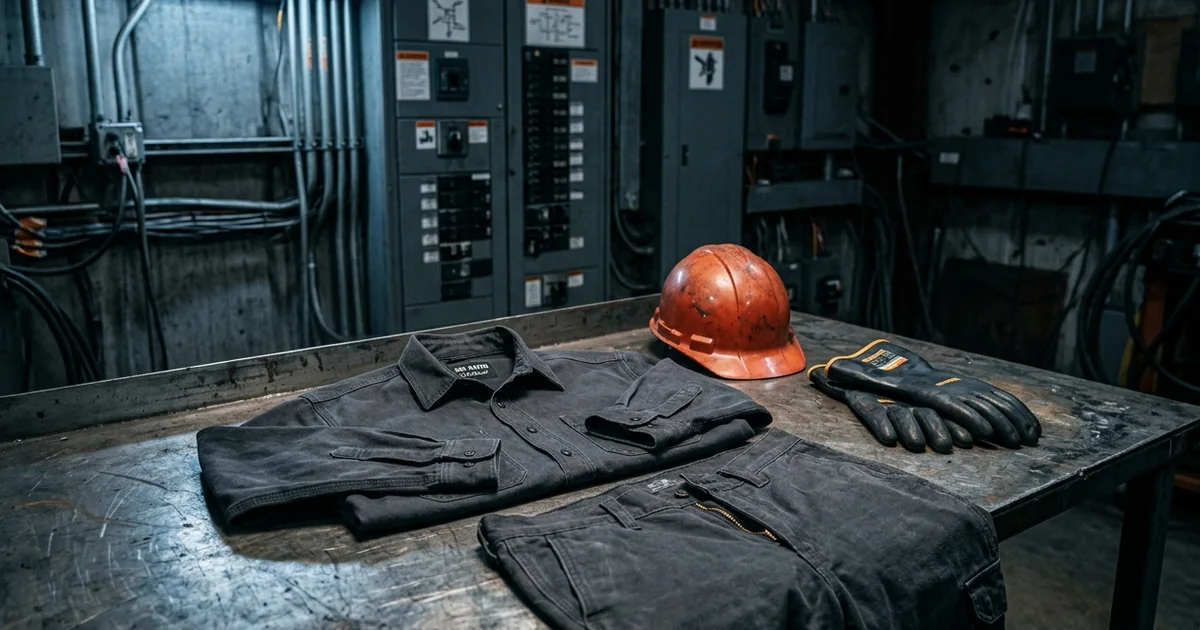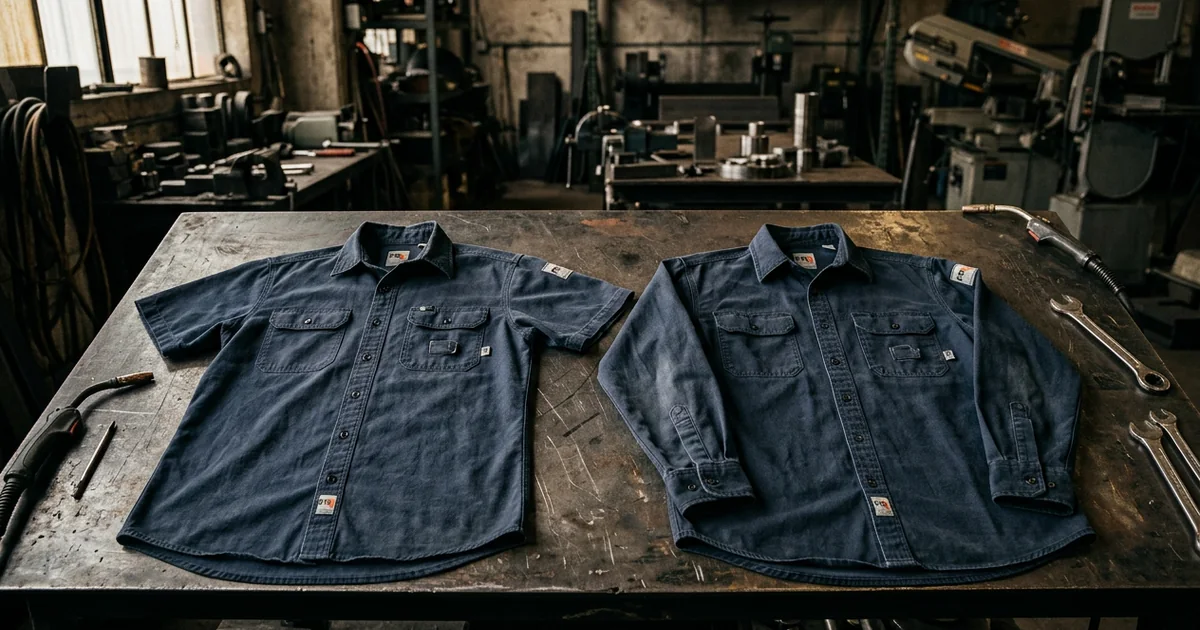

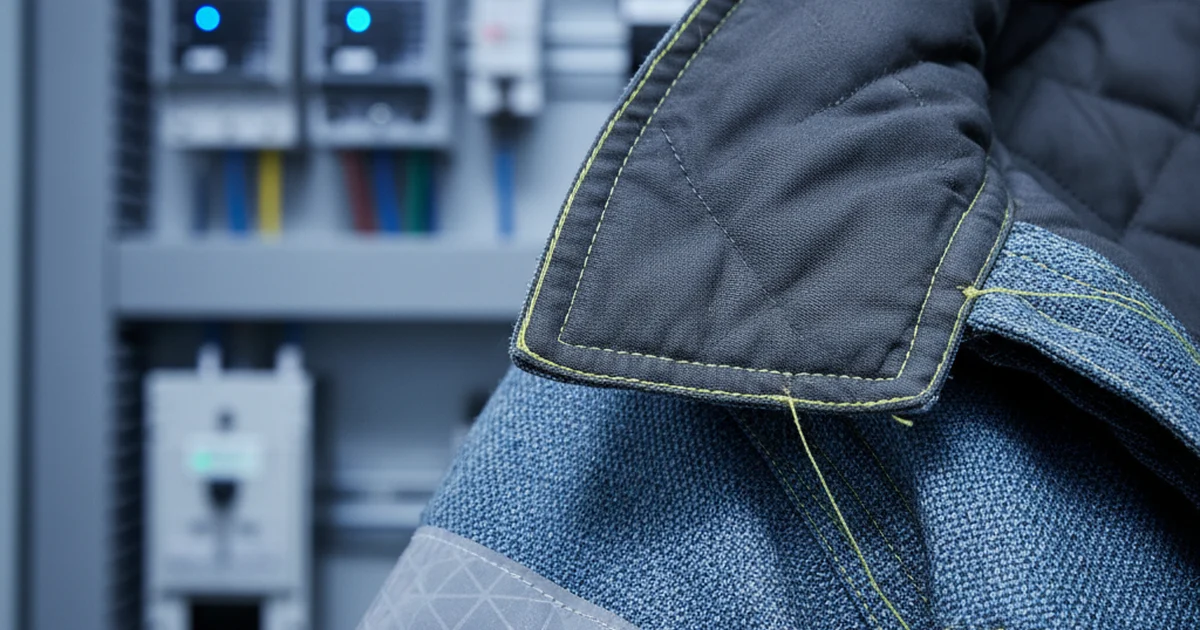
ATPV is the number that tells you how much arc-flash energy a piece of flame-resistant clothing can take before it stops protecting you, and it's printed on the tag in cal/cm² (calories per square centimeter). Short answer: ATPV stands for Arc Thermal Performance Value, higher is better, and if your job has an arc-flash hazard, "FR" alone on the label isn't enough — you need a cal/cm² arc rating. An arc rating is the amount of incident heat energy a garment blocks in an electric-arc test, reported in cal/cm²; the higher the number, the more protection.
Key Takeaways
- ATPV = the cal/cm² arc rating: Arc Thermal Performance Value, the incident energy a garment can stop before the onset of a second-degree skin burn becomes likely. Higher cal/cm² = more protection.
- Two ways to report it — ATPV or EBT: a garment's arc rating is given as ATPV or EBT (Energy Breakopen Threshold), both in cal/cm². When both are measured, the published arc rating is the lower of the two.
- It maps to NFPA 70E PPE Categories: CAT 1 needs ≥4 cal/cm², CAT 2 ≥8, CAT 3 ≥25, CAT 4 ≥40. You match the garment's rating to the category your arc-flash study calls for.
- FR ≠ arc-rated: all arc-rated clothing is flame-resistant, but not all FR clothing is arc-rated. An arc-flash hazard needs a number in cal/cm², not just the word "FR."
- "HRC" is the old name: the 2015 edition of NFPA 70E renamed Hazard/Risk Category (HRC) to PPE Category (CAT) and dropped the old HRC 0 — so you'll see both terms on tags and spec sheets.
- Care can erase the rating: the cal/cm² on the tag assumes a clean, intact garment. Hard-water minerals, the wrong laundry additives, and grease or oil saturation all degrade FR performance — care is part of the rating, not an afterthought.
What ATPV actually means on the tag
When you see something like "ATPV 8.7 cal/cm²" on an FR shirt, that number is the result of an arc-flash test on the fabric. ATPV — Arc Thermal Performance Value — is the incident energy level at which the heat passing through the garment reaches the threshold where a second-degree burn becomes likely. Below that energy, the fabric is doing its job; at or above it, the protection runs out.
The practical read: a 12.5 cal shirt withstands more arc energy than an 8.7 cal shirt before that burn threshold is reached. It is not a rating of how "fireproof" the garment is — FR clothing isn't fireproof at all. Flame-resistant fabric resists ignition, self-extinguishes when the heat source is removed, and won't melt onto skin — it is not "fireproof." ATPV is specifically an arc-flash number, measured in an electric-arc test, and it only describes how the garment performs against that one hazard.
Two things the number does not tell you, and both trip buyers up. First, it isn't a guarantee you walk away unhurt — it's the energy at which a second-degree burn becomes likely, which is why the whole point of an arc-flash study is to keep the incident energy you'll face below the rating, not at it. Second, the rating is a property of the assembled garment as tested. Cut the sleeves off, layer it wrong, leave it grease-soaked, or wash it in a way that strips the finish, and the printed cal/cm² no longer describes what you're wearing. The tag is a starting point, not a promise.
How I read an arc rating on a tag (my checklist)
I'm not running arc tests in a lab — nobody buying a shirt is. What I do is read the standards and the spec sheet the same way a careful buyer should, and over the FR tags I've handled a short checklist has earned its keep. Here's the order I work through, so you can do the same in the aisle or on a product page:
- Is there a cal/cm² number at all? This is the first gate. "FR," "NFPA 2112," "self-extinguishing" — none of those is an arc rating. If the listing never prints a cal/cm² figure, treat the garment as unrated for arc flash, full stop. Plenty of genuinely flame-resistant garments belong on a flash-fire job and have no business standing in for arc-rated PPE.
- Is it ATPV or EBT — and is it the governing number? Both are valid arc ratings in cal/cm². I note which one the tag is reporting (more on why below), and I take it at face value as the garment's rating rather than hunting for a friendlier figure elsewhere on the page.
- Does the rating clear the category my task needs? The cal/cm² has to meet or beat the PPE Category minimum your arc-flash study assigned — not "close to it," not "rounds up." A 7.7 cal shirt does not become a CAT 2 shirt because 8 is nearby.
- Is the standard claimed, or just implied? "Manufacturer-rated to NFPA 70E / ASTM F1506" should appear because the maker actually states it, not because a marketing paragraph waved at "compliance." When a listing is vague, I treat the certification as unconfirmed until the spec sheet says otherwise.
- What's the fabric weight, and inherent or treated? These don't set the cal number by themselves (see below), but they tell you about spatter resistance, heat, hand-feel, and how the FR holds up to laundering — all of which decide whether you'll actually keep the garment in service long enough to matter.
- Does the rating survive real-world care? A rating is only as good as the garment's condition. Before I trust a number long-term, I think about how the fabric is cleaned on that job — hard water, oil exposure, what gets thrown in the wash — because all three can quietly walk the protection back.
None of that requires a test rig. It requires reading the tag against the standard instead of against the brand's marketing — which, frankly, is the whole reason this site exists.
ATPV vs. EBT — and why the rating is the lower number
Here's the part the dealer blogs skip. A garment's arc rating can be reported two ways: as an ATPV or as an EBT (Energy Breakopen Threshold). Both are in cal/cm². They measure two different failure modes:
- ATPV — the energy at which enough heat passes through the fabric to cause the onset of a second-degree burn.
- EBT — the energy at which the fabric breaks open (forms a hole), letting heat reach skin directly.
Some fabrics break open before they transmit a burn's worth of heat; others transmit heat before they break open. The standard handles this cleanly: a garment's arc rating is the lower of its ATPV and EBT. So if a fabric tests at, say, an ATPV of 11 cal but breaks open at an EBT of 9 cal, its published arc rating is the EBT — the weaker link governs. When a tag lists only one of the two, that's the value the manufacturer is reporting as the rating. Either way, the cal/cm² number you compare against your job's requirement is that single governing figure — you don't add ATPV and EBT together, and you don't pick the friendlier one.
Why does it matter which letters are on the tag if you compare them the same way? Because the letter tells you how the fabric runs out of protection, and that's a quiet hint about construction. A tag reporting an EBT is telling you breakopen was the limiting mode — the heat barrier held, but the fabric itself tore through first. A tag reporting an ATPV is telling you the fabric stayed intact and heat transmission was the limit. Neither is "better" as a number — a 12 cal ATPV and a 12 cal EBT both clear CAT 2 — but if you're building a layering system or buying for a high-energy task, knowing the failure mode is useful context the bare number hides. The rule never changes, though: lower of the two governs, and a single printed value is the value you trust.
How many cal/cm² do I actually need?
You don't guess this from the catalog — it comes from your facility's arc-flash risk assessment, which assigns a PPE Category (or a calculated incident-energy value) to the task. NFPA 70E, the standard titled "Electrical Safety in the Workplace," defines those categories, and each one carries a minimum arc rating:
| PPE Category | Minimum arc rating | Plain read |
|---|---|---|
| CAT 1 | ≥ 4 cal/cm² | Entry-level arc-rated layer for lower-energy tasks. |
| CAT 2 | ≥ 8 cal/cm² | The most common everyday arc-rated daily-wear band. |
| CAT 3 | ≥ 25 cal/cm² | Higher-energy work — typically a layered arc-flash system. |
| CAT 4 | ≥ 40 cal/cm² | The highest category — heavy multi-layer arc-flash suits. |
So if your study puts a task at CAT 2, you need clothing rated at 8 cal/cm² or higher. A 12.1 cal balaclava or a 12.5 cal shirt clears CAT 2 with margin; a 7.7 cal shirt does not — it lands in CAT 1 territory. Match the rated garment to the category the study assigns; don't round up from a number that's close. And remember these are minimums — your assessment, not the tag, is the authority on what the task requires. For the full picture of when to use 70E versus the flash-fire standard, see our NFPA 2112 vs. NFPA 70E breakdown.
One nuance worth flagging, because it's where buyers either over- or under-spend: between CAT 2 (≥8) and CAT 3 (≥25) there's a wide gap, and a garment can land well inside it — a 14 cal pant, for instance, is a strong CAT 2 garment but is not a CAT 3 garment, because 14 falls short of the 25 cal CAT 3 minimum. The extra margin over 8 is real protection, but it does not promote the garment a category. Conversely, jumping straight to a CAT 4 suit for a CAT 2 task isn't "safer" in any useful sense — it's hotter, stiffer, more expensive, and more likely to get left in the truck, which is its own hazard. The right answer is almost always "meet the category the study assigns, with sensible margin," not "buy the biggest number on the rack."
How to choose an arc-rated garment (beyond the cal number)
The cal/cm² gets you over the safety threshold. Everything that decides whether the garment is actually worth wearing happens after that. Here's how I'd weigh the rest, roughly in priority order:
- Rating first, but only enough rating. Confirm the cal/cm² clears your assigned category, then stop chasing the number. A daily-wear arc-rated shirt or balaclava in the CAT 2 band is what most electrical work calls for; the multi-layer CAT 3/CAT 4 systems are for specific high-energy tasks, not everyday comfort.
- Inherent vs. treated, for the right reason. Inherent FR means the fiber itself is flame-resistant — modacrylic, aramid blends — and that property doesn't wash out. Treated FR is an FR chemical finish on (usually) cotton, engineered to last the garment's useful life if you launder it right. Neither is automatically safer — both can be arc-rated and both can certify to NFPA 2112. The choice is really about cost, hand-feel, and how forgiving the garment is over years of washing.
- Fabric weight matches the heat source. Heavier fabric (say a 10 oz cotton shirt) resists spatter burn-through and abrasion better than a 6–7 oz fabric, at the cost of running hotter and stiffer in summer. Lighter inherent-FR fabrics breathe and move better but won't shrug off molten metal the same way. There's no universally "right" weight — there's the right weight for your heat source and your climate.
- The right standard for the hazard. Arc flash needs an arc rating; flash fire (oil-and-gas, petrochemical) needs NFPA 2112 garment certification. Some garments carry both, some only one. Buy for the hazard you actually face — a strong NFPA 2112 garment with no cal number is the wrong tool for an arc-flash task, and vice versa.
- Fit and coverage are protection, not vanity. Gapping cuffs, a short hem that rides up when you reach, a balaclava that won't sit under the hood — every gap is unprotected skin. Arc-rated layers are meant to be worn closed and to overlap. A garment that fits badly enough that you roll the sleeves or leave it open has effectively de-rated itself.
- Durability and care realism. The honest question isn't "what's the rating new" — it's "what's the rating after a year on this jobsite." Hard water, oil exposure, and laundry shortcuts all erode FR performance. Pick a garment whose care requirements your shop or laundry can actually meet, and budget to retire it when it's saturated or worn, not when it falls apart.
"HRC" vs. "CAT" — same idea, renamed
You'll still see "HRC 2" stamped on tags and listed on spec sheets right next to "CAT 2." They refer to the same tiering system. The 2015 edition of NFPA 70E renamed Hazard/Risk Category (HRC) to PPE Category (CAT), and at the same time it eliminated the old HRC 0 — leaving the four categories CAT 1 through CAT 4 that we use today. So when a garment's spec reads "ATPV 12.1 cal/cm², HRC/CAT 2," it's telling you the same thing twice: the measured arc rating, and the category that rating qualifies for. Treat HRC and CAT as interchangeable labels for the same scale.
The one practical wrinkle from that 2015 change: the old HRC 0 is gone. Older spec sheets, training decks, and crusty jobsite signage may still reference an "HRC 0" tier for the lowest-energy tasks. The current framework starts at CAT 1 (≥4 cal/cm²), so if a document leans on HRC 0, you're reading something written against a pre-2015 edition — check it against your current arc-flash study rather than the legacy label.
Why "FR" on the label is not the same as an arc rating
This is the distinction that gets electricians hurt. All arc-rated (AR) clothing is flame-resistant, but not all flame-resistant clothing is arc-rated. A garment can be genuinely FR — it'll resist ignition and self-extinguish — and still carry no cal/cm² number, because nobody ran it through an arc-flash test. That garment may be perfectly appropriate for a flash-fire hazard (the world NFPA 2112 governs) and completely unproven for an arc flash.
NFPA 2112 (flash fire — think oil-and-gas and petrochemical) and NFPA 70E (arc flash — electrical work) cover different hazards. A flash-fire garment is certified at the garment level using the ASTM F1930 thermal-manikin test; an arc-flash garment is rated in cal/cm² and, for electrical apparel, built to the ASTM F1506 performance spec. So if your hazard is electrical, the only label that answers your question is an arc rating in cal/cm². "FR" by itself doesn't. When you're shopping, look for the ATPV or EBT value — if a listing only says "FR" or "NFPA 2112" with no cal number, it has not told you its arc-flash performance.
Where this bites in practice is the gear that lives near arc-rated clothing without being rated itself. Welding caps, jackets, and head covers are a classic trap: many are honest FR cotton built to shrug off spatter, which is exactly what a welder wants — but a welding jacket that references "FR" or a vague "cal" claim with no precise ATPV is spatter protection, not a verified arc-flash garment. If the task is electrical and the study calls for a category, the cap or cover under your hood needs a real cal/cm² number too. Don't let a genuinely good spatter garment quietly stand in for arc PPE it was never rated to provide. Our arc-rated vs. flame-resistant guide walks through the line in more depth.
Does inherent vs. treated FR change the ATPV?
Not in the way people assume. Inherent FR means the fiber itself is flame-resistant — modacrylic blends, aramids — and that property doesn't wash out. Treated FR is an FR chemical finish applied to (usually) cotton, engineered to last the garment's useful life if you launder it correctly. Both can be arc-rated, and both can certify to NFPA 2112; the construction doesn't dictate the cal number. A treated-cotton shirt can out-rate an inherent one, or vice versa — the ATPV/EBT comes from the actual test, not the fiber story. The real trade-offs between the two are cost, hand-feel, and long-term durability, not a fixed protection gap.
The one thing that does threaten any arc rating is care, and it threatens inherent and treated FR for different reasons worth knowing. Inherent FR won't lose its flame resistance to laundering because the fiber is the protection — but the garment can still be compromised by what gets onto it: grease and oil saturation turn any FR fabric into fuel, and once a garment is oil-soaked it's a fire hazard that has to be cleaned or retired, period. Treated FR adds a second failure path: the chemical finish has to survive the wash, so hard-water mineral deposits, chlorine bleach, fabric softener, hydrogen-peroxide bleach, and starch can all degrade it over time. The fix for both is the same boring discipline — wash inside-out, use warm water (around 140°F flushes oils) unless the label says otherwise, skip the additives that wreck the finish, and defer to the garment label above any general rule. Our guide to washing FR clothing covers exactly what to avoid.
Reading a real FR spec block
Once you've internalized the rules above, a spec block stops being marketing and starts being a checklist. Here's how the pieces fit together when you line a few garments up — note how the arc rating, the standard, the weight, and the fiber each answer a different question, and how "—" is its own honest answer:
| Spec field | What it answers | What a blank ("—") means |
|---|---|---|
| Arc rating (ATPV or EBT, cal/cm²) | Arc-flash protection level; compare to your CAT minimum. | No arc-flash performance has been stated — not arc-rated until proven otherwise. |
| NFPA 70E PPE Category | Which category the cal/cm² qualifies the garment for. | The maker hasn't mapped it to a category; derive it from the cal number and your study. |
| NFPA 2112 certification | Flash-fire (garment-level) suitability — a different hazard. | Not certified for flash fire, or simply not stated on the page. |
| Fabric weight (oz) | Spatter resistance, durability, and how hot it wears. | Weight not disclosed; you can't judge spatter behavior from the listing. |
| Fiber / inherent vs. treated | Cost, hand-feel, and how care affects long-term FR. | Construction unstated; confirm before relying on it in a layering system. |
The discipline is the same one I apply to every garment on this site: a blank is not a small number, it's a missing one. A listing that prints "FR" and a price but leaves the arc rating, the category, and the fiber as dashes hasn't told you whether it belongs on your job. Make the spec sheet answer the question before your money does.
Frequently Asked Questions
What does ATPV stand for?
ATPV stands for Arc Thermal Performance Value. It's an arc-flash rating, reported in cal/cm² (calories per square centimeter), that tells you the incident heat energy a flame-resistant garment can withstand before the onset of a second-degree skin burn becomes likely. A higher ATPV means more protection. It is one of the two ways an arc rating can be reported, the other being EBT.
Is the arc rating the ATPV or the EBT?
It can be either. A garment's arc rating is reported as ATPV (Arc Thermal Performance Value) or EBT (Energy Breakopen Threshold), both measured in cal/cm². When both are tested, the published arc rating is the lower of the two — the weaker failure mode governs. If a tag lists only one number, that's the value the manufacturer is reporting as the garment's arc rating.
How many cal/cm² of arc rating do I need?
That comes from your facility's arc-flash risk assessment, which assigns a NFPA 70E PPE Category or a calculated incident energy to the task. The category minimums are: CAT 1 needs at least 4 cal/cm², CAT 2 at least 8, CAT 3 at least 25, and CAT 4 at least 40 cal/cm². Match a garment's rating to the category your study assigns — don't guess from the catalog.
Is a higher ATPV always better?
More cal/cm² means more arc-flash protection, but "better for the job" means matching the rating to the category your study assigns, with sensible margin. Over-buying into a CAT 4 suit for a CAT 2 task adds heat, stiffness, and cost, and gear that's too bulky often gets left off — which is its own hazard. Meet your assigned category comfortably rather than chasing the biggest number on the rack.
Is FR clothing the same as arc-rated clothing?
No. All arc-rated clothing is flame-resistant, but not all flame-resistant clothing is arc-rated. FR clothing without a cal/cm² number has not been tested for arc-flash performance and may be intended for a flash-fire hazard instead. For an arc-flash (electrical) hazard you need an actual arc rating in cal/cm² — the word "FR" alone on the label does not tell you the garment's arc-flash protection.
What's the difference between HRC and CAT?
They're the same thing under two names. The 2015 edition of NFPA 70E renamed Hazard/Risk Category (HRC) to PPE Category (CAT) and eliminated the former HRC 0, leaving CAT 1 through CAT 4. So a spec that reads "HRC/CAT 2" is naming one category two ways. Treat HRC and CAT as interchangeable labels for the same four-tier scale of required arc-rating minimums.
Can washing lower a garment's arc rating?
The right care doesn't lower it, but the wrong care can. The published rating assumes a clean, intact garment. Hard-water minerals, chlorine or hydrogen-peroxide bleach, fabric softener, and starch can degrade FR performance, and grease or oil saturation turns FR fabric into a fire hazard. Wash inside-out in warm water, skip those additives, and defer to the garment label — and clean or retire any garment that's oil-soaked.
Does inherent or treated FR have a higher ATPV?
Neither construction sets the cal number. Inherent FR (the fiber itself is flame-resistant, like modacrylic or aramid) doesn't wash out; treated FR is an FR finish on cotton that lasts the garment's life if laundered correctly. Both can be arc-rated and both can certify to NFPA 2112. The ATPV or EBT comes from the actual arc test, not the fiber type — the real differences are cost, hand-feel, and long-term durability.
Why Trust This Guide
This guide is written and reviewed by Wes Calder, an independent flame-resistant-workwear reviewer. Every recommendation is built on the published standards (NFPA 2112, NFPA 70E, ASTM F1506), manufacturer spec sheets and garment tags, hands-on handling, and what tradespeople actually report — and we tell you when a number is a manufacturer claim versus an independent standard, and when a garment is FR but not arc-rated. We earn an affiliate commission if you buy through some of our links, at no extra cost to you, and we never rank by commission over safety — see our affiliate disclosure.