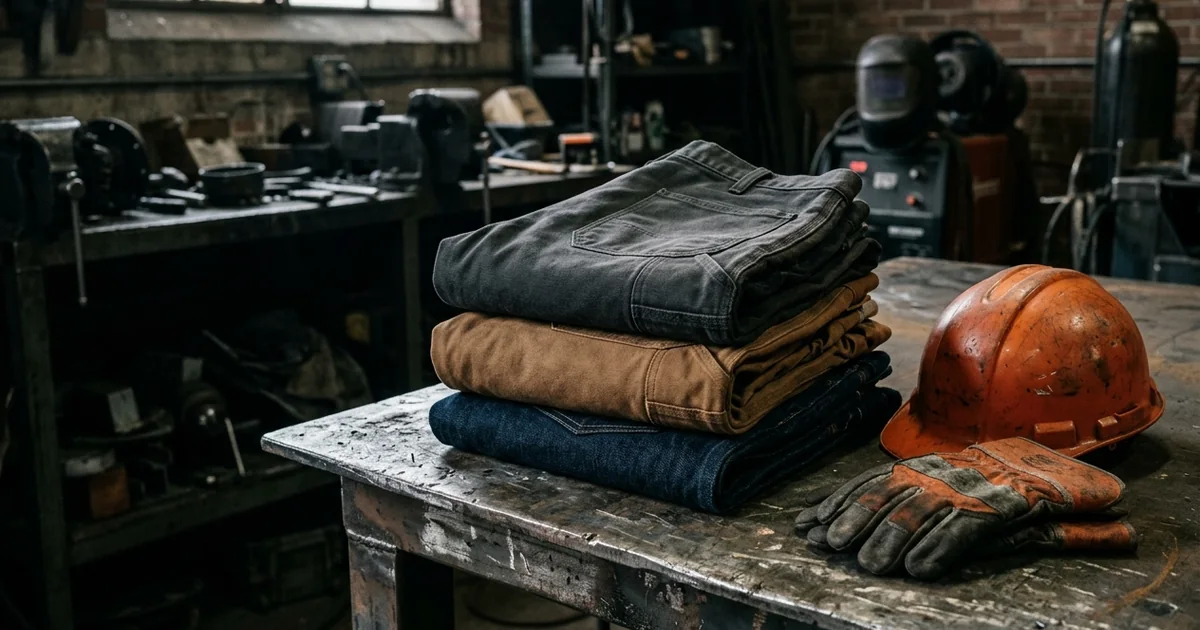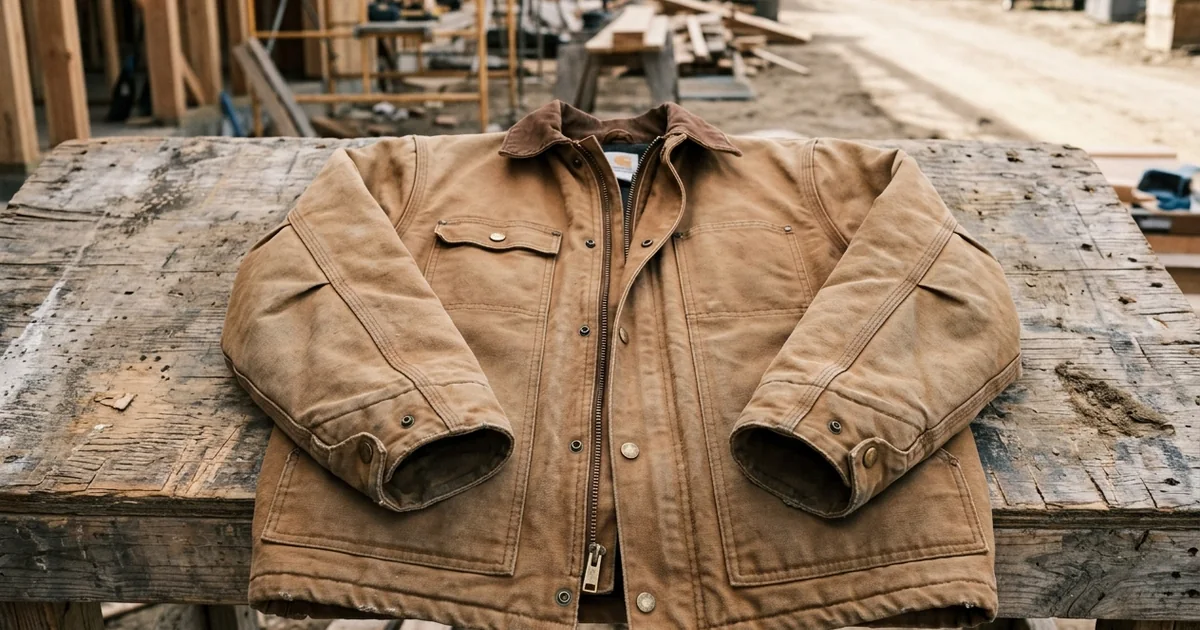

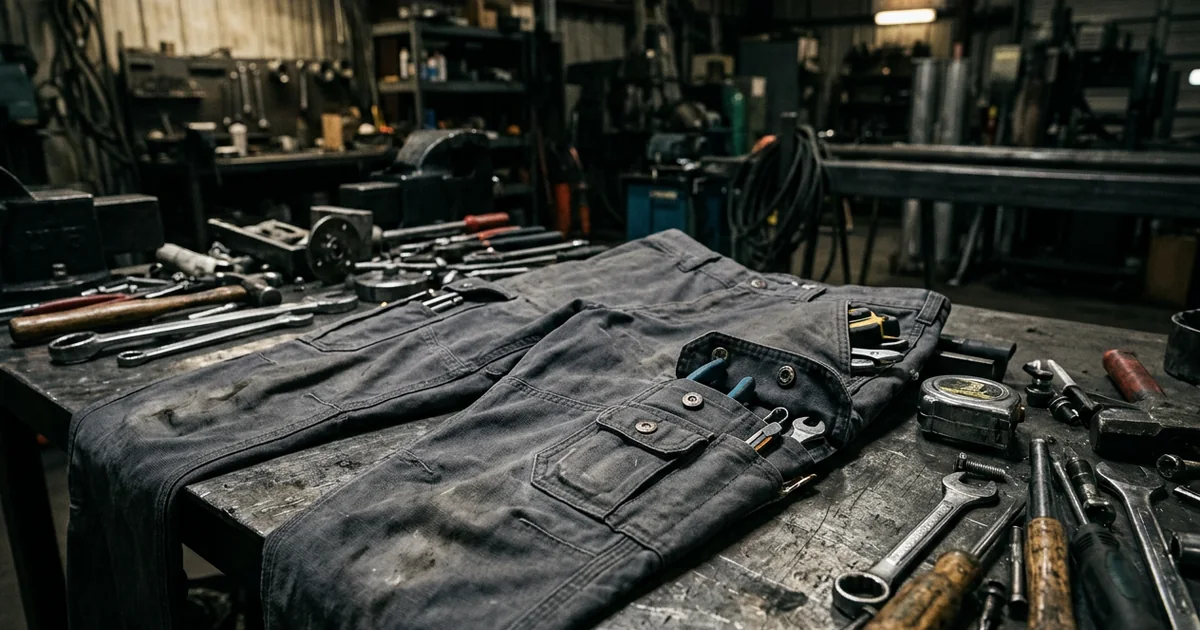
The best FR cargo pant with real utility pockets is the Carhartt FR Rugged Flex Canvas Cargo Pant (104205) — it's the only true FR cargo cut in this set, with dedicated phone and utility pockets sewn into an NFPA 2112-classified canvas and 2% spandex for bend-and-squat mobility. Here's the honest catch most "best FR cargo pants" lists hide: very few FR pants are actually built as cargos. So the real decision isn't just which cargo to buy — it's whether you need genuine cargo pockets or you'd be better served by a work pant or carpenter jean that carries more documented protection. What is flame-resistant (FR) clothing? Fabric that resists ignition, self-extinguishes, and won't melt onto your skin — not "fireproof." Below I rank six currently-sold FR pants on utility, protection, fit and price, label which are true cargos versus work pants, and read every spec off the garment's own listing.
This guide covers FR pants for flash-fire and general industrial exposure. If your job has an arc-flash (electrical) hazard, you need a stated arc rating in cal/cm² — I flag which pants publish one and which only state a CAT level.
Key Takeaways
- "FR cargo pants" is a small category: only the Carhartt 104205 here is a true cargo cut. The rest are work pants and a carpenter jean — I rank them by what the VOC actually wants (pocket utility + warm-weather comfort), not just the cargo label.
- Pockets don't have to compromise the FR: a true FR cargo like the 104205 is built and certified with its extra pockets to NFPA 2112 — you're not bolting non-FR pockets onto an FR pant. Buy a pant certified as sold, not a modified one.
- Stretch is the warm-weather lever: the two Carhartt picks use 2% spandex (Rugged Flex) for bend-and-squat mobility at 9 oz — far cooler and looser than the 11 oz canvas or the 14.5 oz cotton denim here.
- "CAT 2" and a published cal number aren't the same claim: both Carhartts state CAT 2 but list no cal/cm² value; the Ariat, Bulwark and Wrangler RIGGS publish a real ATPV. If you have an arc-flash hazard, you want the number, not just the category.
- Best true cargo: Carhartt 104205 — real utility pockets, 2% stretch, NFPA 2112 ($134.99). Best documented arc rating: Ariat M4 Workhorse — 12.7 cal/cm², dual 2112 + 70E. Best value: Bulwark EXCEL twill — 12.2 cal/cm² at $75.99.
What actually counts as an "FR cargo pant"?
Let me be blunt, because this is the trap. Type "fr cargo pants" into a retailer and you'll get a page full of plain FR work pants with a cargo filter loosely applied. A real cargo pant has dedicated bellows or utility pockets on the thigh — somewhere to drop a phone, a multimeter, a fistful of fasteners — without stuffing your front pockets. In this set, exactly one pant fits that definition: the Carhartt 104205. Everything else is a work pant, a carpenter jean, or a boot-cut — solid FR, but not a cargo cut.
So why rank the others alongside it? Because the VOC behind "fr cargo pants" isn't really "I need bellows pockets" — it's "I need room to carry tools without snagging and without compromising the FR, and I'd like to not cook in summer." A carpenter jean with a hammer loop and tool pockets answers that. A stretch work pant that lets you climb and squat answers it. So I rank on the underlying job, label each pant's actual cut honestly, and let you decide whether literal cargo pockets are the part you can't live without.
One thing that matters more than people realize: buy the pant certified as sold. A true FR cargo is engineered and certified to NFPA 2112 with its extra pockets, FR thread, and reinforced stress points already part of the garment. That's different from adding non-FR pockets or patches to a pant after the fact — which can introduce a flammable component the certification never covered. The pockets themselves aren't the risk; an uncertified modification is.
How I evaluated these — and what to look for
I don't run an arc-flash lab, and I won't pretend to. What I do is read every garment's own listing and tag, cross-check the protection claims against the published standards (NFPA 2112, NFPA 70E, ASTM F1506), and weigh that against what tradespeople actually report living in these pants. Here's the order I work the criteria in for a cargo/utility pant — it's also the order I'd want you to think in.
- Cut and pocket utility. Does it actually carry tools the way you need — true cargo pockets, carpenter loops, or just standard front-and-back? I label each one rather than letting a vague "cargo" filter do the talking.
- The right certification for your hazard. NFPA 2112 is the flash-fire garment standard; an arc rating in cal/cm² is the separate electrical-hazard number. I check which the listing actually claims, because a pant can be NFPA 2112 / CAT 2 yet publish no cal value — and a worker with an arc-flash exposure can't substitute one for the other.
- Mobility and warm-weather comfort. The 2% spandex in the Carhartt Rugged Flex pants is the single biggest comfort difference here — stretch you can squat in, at a 9 oz weight that breathes better than heavy denim. I weigh this heavily because the VOC for cargo pants is half about summer heat.
- Fabric weight and fiber. More ounces means more durability and spark resistance but more heat; 98/2 and 88/12 cotton-nylon blends add abrasion life over pure cotton. I note weight where the listing states it and write "—" where it doesn't, rather than guessing.
- Inherent vs treated FR. Inherent FR (the fiber itself resists flame) can't wash out; treated FR is a finish on cotton that lasts the garment's life with correct laundering. Both certify to NFPA 2112, so this isn't a protection ranking — it's a cost and care-margin call. None of these pages clearly states inherent vs treated except Bulwark (treated Excel-FR), so I say "not stated" where it isn't.
- Documentation quality. A spec stated on the page outranks a spec that's "probably there." When a listing gives a CAT level but no cal/cm², I tell you that and dock it for an arc-flash use — not because the pant is unsafe, but because on a regulated jobsite an undocumented number is one you can't defend in an audit.
- Price against what you actually get. Protection-per-dollar matters. A pant that costs more while publishing a lower arc rating and fewer specs gets ranked accordingly.
What I deliberately don't do: invent torture-tests, quote a sample size I didn't run, or carry one pant's arc rating over to another model. Where a number isn't on the listing, you'll see "—" and a note to verify, not a guess dressed up as data.
FR cargo and work pants compared
| Pick | Cut | Fabric / weight | NFPA 2112 | Arc rating | Real-world catch | Price |
|---|---|---|---|---|---|---|
| Carhartt 104205 Cargo | True cargo | 98% cotton / 2% spandex canvas / 9 oz | Yes (UL) | CAT 2; no cal listed | No published cal/cm²; priciest here | $134.99 |
| Ariat M4 Workhorse | Boot-cut work pant | 88% cotton / 12% nylon / 11 oz | Yes | ATPV 12.7 cal, CAT 2 | Boot-cut lowrise; no cargo pockets | $129.95 |
| Bulwark EXCEL PLW2NV | Twill work pant | 88% cotton / 12% nylon, treated / — | Yes | ATPV 12.2 cal, HRC 2 | Weight not stated; plain work pant | $75.99 |
| Carhartt 104986 Work Pant | Plain work pant | 98% cotton / 2% spandex canvas / 9 oz | Yes (UL) | CAT 2; no cal listed | No cargo pockets; no published cal/cm² | $124.99 |
| Wrangler RIGGS FR3W020 | Carpenter jean | 100% cotton denim / 14.5 oz | Yes | ATPV 23.7 cal, HRC 2 | Heavy & stiff; runs hot, no stretch | $77.99 |
| MCR Safety PT2T | Plain work pant | 88% cotton / 12% nylon / — | Yes | 8.6 cal, CAT 2 | Lowest arc here, yet priced above Bulwark | $106.99 |
A note on reading that table: an "—" isn't a zero. It means the spec wasn't stated on the page I fetched, so I won't assert it. Both Carhartts show "no cal listed" because they publish a CAT level without a cal/cm² number — fine for flash fire, not a verified arc-flash spec.
1. Carhartt FR Rugged Flex Canvas Cargo Pant (104205) — best true FR cargo
This is the pant for anyone who came here because they literally need cargo pockets. It's the only true FR cargo cut in this set: dedicated phone and utility pockets built into a 9 oz, 98% cotton / 2% spandex canvas that's UL classified to NFPA 2112. The 2% spandex — Carhartt's Rugged Flex — is the part that makes it worth the money. Most FR canvas is rigid; this one gives you light stretch to bend, squat and climb, and the 9 oz weight breathes far better than the 14.5 oz denim further down this list.
Who it's for: the worker who actually uses thigh pockets all shift and doesn't want to give up mobility to get them — and who works in heat often enough that a 14 oz denim would be a punishment. The real trade-off: you pay the top price here for the cargo cut and the stretch, and you accept a CAT level instead of a published cal number. The pain it solves: exactly the VOC complaint — pocket and utility room without snagging or compromising the FR, on a pant certified as sold rather than modified after the fact. The honest con: the page states CAT 2 but lists no cal/cm² ATPV, so if you have an arc-flash exposure you can't confirm the rating from the listing — and at $134.99 it's the most expensive pant in this set.
- Pros: Only true FR cargo cut here, with dedicated utility pockets; 2% spandex Rugged Flex stretch for mobility; 9 oz canvas runs cooler than heavy denim; UL classified to NFPA 2112.
- Cons: States CAT 2 but no published cal/cm² arc rating; highest price in the set at $134.99.
Check price at Working Person's Store →
2. Ariat M4 Workhorse FR — best documented arc rating
If your job has an arc-flash hazard, this is the best-documented pant here. It publishes a real ATPV of 12.7 cal/cm² (CAT 2 / HRC 2) and states dual NFPA 2112 + NFPA 70E compliance, on rugged 11 oz cotton-canvas blend (88% cotton / 12% nylon). That's the paperwork the cargo Carhartt is missing — a number you can hand a safety auditor, not just a category.
Who it's for: the electrician, oilfield hand or anyone with a documented arc-flash exposure who needs a stated cal value more than they need thigh pockets, and who wants a rugged 11 oz canvas that takes abuse. The real trade-off: you get the published arc rating and dual-standard compliance, but it's a boot-cut work pant — not a cargo cut — so the dedicated utility pockets aren't there. The pain it solves: the "is FR enough?" trap; here the cal number is on the page, so you're not guessing whether the pant clears your incident-energy level. The honest con: the boot-cut lowrise silhouette won't suit everyone, and at $129.95 it's near the top of this price range. The page also doesn't state inherent vs treated, so confirm fiber-care details if that matters to you.
- Pros: Publishes a real 12.7 cal/cm² ATPV with dual NFPA 2112 + 70E compliance; rugged 11 oz canvas; documented protection you can verify.
- Cons: Boot-cut lowrise cut won't suit everyone and isn't a cargo; pricey at $129.95; inherent vs treated not stated.
Check price at Working Person's Store →
3. Bulwark EXCEL FR Twill Work Pant (PLW2NV) — best value
This is where protection-per-dollar lives. You get a documented ATPV of 12.2 cal/cm² (HRC 2) and NFPA 2112 compliance for $75.99 — the lowest price in this set — on an 88% cotton / 12% nylon twill. The listing is also the most honest about its FR type here: it explicitly states the fabric is Bulwark's Excel-FR treated cotton-nylon, so you know exactly what you're laundering and caring for.
Who it's for: the budget-conscious worker whose hazard is electrical and who values a documented cal number over cargo pockets — an apprentice or a crew outfitting several people who can't spend $130 a pant. The real trade-off: a top-tier arc rating and NFPA 2112 at the lowest price, in exchange for a plain twill work pant with no cargo or carpenter pockets. The pain it solves: the assumption that documented arc protection has to cost three figures — it doesn't. The honest con: the page doesn't state the fabric weight (oz/yd²), and the FR is a treatment rather than inherent, so correct laundering matters over the garment's life. As a plain work pant it ranks here on value, not on pocket utility.
- Pros: Documented 12.2 cal/cm² ATPV (HRC 2) and NFPA 2112 at the lowest price here ($75.99); page is explicit it's Excel-FR treated.
- Cons: Fabric weight not stated; treated (not inherent) FR; plain twill work pant — no cargo or utility pockets.
Check price at Working Person's Store →
4. Carhartt FR Rugged Flex Canvas Work Pant (104986) — best stretch work pant
This is the plain-pocket sibling of my top pick. It's the same 9 oz, 98% cotton / 2% spandex Rugged Flex canvas with the same UL classification to NFPA 2112 — the only real difference from the 104205 is that you drop the cargo pockets and save ten dollars ($124.99 vs $134.99). The reason to choose it is the same stretch: in FR canvas, mobility you can squat and climb in is genuinely rare, and the spandex delivers it without jumping to denim weight.
Who it's for: the worker who wants the cooler, stretchy Rugged Flex canvas but doesn't actually use thigh cargo pockets and prefers a cleaner line. The real trade-off: you keep the mobility and the NFPA 2112 classification, you lose the dedicated utility pockets. The pain it solves: stiff, hot FR canvas — the 2% spandex and 9 oz weight make this far more wearable through a summer shift than heavy cotton. The honest con: identical to the cargo's — it states CAT 2 but no published cal/cm², so arc-flash buyers can't confirm a number from the listing. If you have an electrical hazard, look to the Ariat or Bulwark above.
- Pros: Same 2% spandex Rugged Flex stretch and 9 oz cooler canvas as the cargo; UL classified to NFPA 2112; $10 cheaper than the 104205.
- Cons: No cargo pockets; states CAT 2 but no published cal/cm² arc rating.
Check price at Working Person's Store →
5. Wrangler RIGGS FR3W020 Carpenter Jean — best for tool carry (cool weather)
If your real definition of "cargo" is "somewhere to hang tools," this carpenter jean answers it differently — and impressively on the numbers. You get a hammer loop and utility/carpenter pockets, the highest arc rating in this entire set at ATPV 23.7 cal/cm² (HRC 2), and four-standard compliance (NFPA 2112, NFPA 70E, ASTM F1506, OSHA 1910.269) for $77.99. That's a lot of documented protection and tool utility per dollar, with FR Nomex thread in the seams.
Who it's for: the carpenter, ironworker or fabricator who carries tools all day, works cool shops or shoulder seasons, and wants the highest documented arc rating here without paying premium-canvas money. The real trade-off: you get the top cal number and tool loops, but you give up everything warm-weather and stretch. The pain it solves: the choice between tool utility and a serious arc rating — this one delivers both cheaply. The honest con: 14.5 oz all-cotton denim runs hot and stiff with no stretch, which is the exact opposite of the summer-utility half of the cargo VOC, and it's a carpenter cut rather than a canvas cargo. A standout for cool-weather tool work; not the pant I'd reach for in July heat.
- Pros: Hammer loop and carpenter/utility pockets; highest arc rating here (23.7 cal/cm²); four-standard compliance (2112/70E/1506/1910.269) at $77.99.
- Cons: Heavy 14.5 oz cotton denim runs hot and stiff with no stretch; carpenter cut, not a canvas cargo.
Check price at Working Person's Store →
6. MCR Safety PT2T FR Work Pant — competent, but out-specced here
I'm ranking this last on the numbers, not on safety. It's a standard 88% cotton / 12% nylon FR work pant that meets NFPA 2112 and carries a stated ATPV of 8.6 cal/cm² (CAT 2) — a legitimate, documented protection level. There's nothing wrong with it as a pant.
Who it's for: the buyer who finds it in stock at the right size and color and wants a no-drama 88/12 FR work pant with a documented CAT 2 rating. The real trade-off: a competent, certified work pant, against the fact that nearly everything above it here either documents more protection or costs less. The pain it solves: a basic, certified FR work pant — but not the cargo utility or the warm-weather comfort the VOC is really asking for. The honest con: 8.6 cal is the lowest arc rating in this set, the page doesn't state fabric weight, it's a plain work pant rather than a cargo cut, and at $106.99 it's priced above the better-documented Bulwark (12.2 cal, $75.99) and the higher-rated Wrangler RIGGS (23.7 cal, $77.99). It gets out-specced and undercut by the field.
- Pros: Standard 88/12 FR cotton-nylon blend meeting NFPA 2112 with a stated 8.6 cal/cm² ATPV (CAT 2).
- Cons: Lowest arc rating here (8.6 cal) yet priced higher ($106.99) than the better-documented Bulwark and Wrangler RIGGS; weight not stated; plain work pant, not a cargo.
Check price at Working Person's Store →
How to choose FR cargo pants
Work the decision in this order — it mirrors how I ranked these and keeps you from buying the wrong pant for the right reasons.
1. Decide if you truly need cargo pockets. If you genuinely use thigh pockets all shift, the Carhartt 104205 is the only true FR cargo here — and it's certified to NFPA 2112 with those pockets as part of the garment, which is the safe way to get cargo utility. If "cargo" really means "carry tools," a carpenter jean like the Wrangler RIGGS or a stretch work pant may serve you better.
2. Match the certification to your hazard. Flash fire and general industrial exposure? NFPA 2112 is your garment standard — the flash-fire certification tested on a thermal manikin per ASTM F1930. An arc-flash (electrical) hazard? You need a stated arc rating in cal/cm², because all arc-rated clothing is flame-resistant but not all FR clothing is arc-rated. The arc rating is the lower of the garment's ATPV and EBT. Both Carhartts here state CAT 2 but publish no cal number — if you have an arc-flash exposure, choose a pant that publishes one (Ariat 12.7, Bulwark 12.2, Wrangler RIGGS 23.7).
3. Pick your weight and stretch by season and movement. The 9 oz Carhartt Rugged Flex pants with 2% spandex are the most mobile and the coolest here — built for bending, squatting and summer heat. The 14.5 oz Wrangler RIGGS denim is the most durable and protective but hot and stiff. Weight and stretch are the comfort dials; protection comes from the certification, not the ounces.
4. Don't compromise the FR for pockets. The pockets on a true FR cargo aren't the hazard — they're certified as part of the garment. The hazard is adding non-FR pockets, patches or pouches after the fact, which can introduce a flammable component the NFPA 2112 certification never covered. Buy the pant certified as sold; if you must add anything, use FR-rated accessories.
5. Confirm the paperwork before you trust a claim. If a jobsite mandates NFPA 2112, make sure the listing actually states it — all six here do — and if you need an arc rating, make sure the cal number is published, not just a CAT level. Pull the spec sheet for anything that comes up "—". An undocumented number isn't one you can show a safety auditor.
6. Plan the care before you buy. Every pant here is home-launderable, but FR has rules: no chlorine bleach, no fabric softener, no hydrogen-peroxide bleach, no starch — they degrade the FR or leave flammable residue. Wash inside-out; many makers recommend warm water to flush oils, but defer to the garment label. Treated FR (like the Bulwark) depends on correct laundering over its life, and grease or oil saturation makes any FR pant a fire hazard — clean it or retire it.
Frequently Asked Questions
Do cargo pockets compromise the FR protection of FR cargo pants?
No, not when the pant is built and certified as a cargo. A true FR cargo like the Carhartt 104205 is certified to NFPA 2112 with its utility pockets, FR thread and reinforcements already part of the garment — the pockets are covered by the certification. The risk comes from adding non-FR pockets, patches or pouches after the fact, which can introduce a flammable component the certification never tested. Buy the pant certified as sold.
Are there many true FR cargo pants?
Fewer than you'd think. Many products listed under "fr cargo pants" are actually plain FR work pants caught by a loose filter. In this set, only the Carhartt 104205 is a true cargo cut with dedicated thigh utility pockets. If you need real cargo pockets, confirm the listing shows them; if "cargo" just means tool carry, a carpenter jean with a hammer loop and utility pockets can serve the same job.
Are FR cargo pants arc-rated?
Not automatically. NFPA 2112 certifies a garment for flash fire; an arc rating in cal/cm² is a separate electrical-hazard number. Both Carhartt FR pants here state CAT 2 but publish no cal value, so they aren't verified arc-flash garments by spec. If your job has an arc-flash hazard, choose a pant that publishes a cal number — the Ariat M4 (12.7), Bulwark EXCEL (12.2) or Wrangler RIGGS (23.7) all do.
Which FR pants are coolest for summer work?
Lighter, stretchier fabric breathes better, so the 9 oz Carhartt Rugged Flex pants with 2% spandex are the most comfortable here in heat — the stretch lets you move and the lighter canvas runs cooler than heavy denim. The 14.5 oz Wrangler RIGGS denim is the opposite: durable and protective but hot and stiff. A pant you keep on through a summer shift protects you more than a heavier one you take off because you're cooking.
How do I wash FR cargo pants without ruining the FR?
Wash inside-out with normal detergent and skip chlorine bleach, fabric softener, peroxide bleach, and starch — they degrade FR or leave flammable residue. Many makers recommend warm water to flush oils; defer to the garment's care label. Hard-water minerals reduce FR over time, so an extra rinse helps. Treated FR depends on correct laundering over its life, and grease or oil saturation makes any FR pant a fire hazard — clean it or retire it.
Why Trust This Guide
This guide is written and reviewed by Wes Calder, an independent flame-resistant-workwear reviewer. Every recommendation is built on the published standards (NFPA 2112, NFPA 70E, ASTM F1506), manufacturer spec sheets and garment tags, hands-on handling, and what tradespeople actually report — and we tell you when a number is a manufacturer claim versus an independent standard, and when a garment is FR but not arc-rated. We earn an affiliate commission if you buy through some of our links, at no extra cost to you, and we never rank by commission over safety — see our affiliate disclosure.