
If you want one answer: for cold-weather flash-fire work the best FR vest is the Carhartt 104981 Brown FR Duck Sherpa-Lined Vest — the only insulated pick here, UL classified to NFPA 2112 with a listed CAT 4 category. But "best FR vest" really splits into two different jobs, and conflating them is how people end up with the wrong protection. Insulated FR work vests keep you warm in a flash-fire environment (oilfield, refinery, gas); arc-rated FR hi-vis safety vests make you visible and add arc-flash protection for electrical and roadside work. For the hi-vis group, my top pick is the Black Stallion VF1110 at a stated ATPV 8.2 cal/cm². FR clothing is fabric that resists ignition, self-extinguishes once the flame source is gone, and won't melt onto skin — it is not "fireproof." Below I split the two groups, quote only the specs each listing actually states, and leave "—" everywhere a number isn't published.
Key Takeaways
- Two different vests, two different jobs. Insulated FR work vests = warmth + flash-fire (NFPA 2112). Arc-rated FR hi-vis vests = visibility + arc flash (NFPA 70E / ASTM F1506). Read more in our arc-rated vs. flame-resistant explainer.
- Only the Carhartt 104981 is insulated. If you need a warm layer, it's the pick; the other six are thin hi-vis safety vests, not cold-weather gear.
- Highest stated arc rating wins the hi-vis group. The Black Stallion VF1110 lists ATPV 8.2 cal/cm² (CAT 2) — double the other vests' published numbers.
- NFPA 2112 ≠ an arc rating. 2112 covers flash fire; arc protection is a separate cal/cm² number, and several of these listings don't state one. If you also need a torso layer, see our best FR jackets guide.
- Inherent vs. treated matters for the long haul. Modacrylic vests keep their FR through washes; treated cotton needs careful laundering. Pair vests with our best hi-vis FR shirts for full coverage.
How I ranked these (protection first, not commission)
I rank on protection, then value, then fit — never on payout. The rule I hold myself to on safety gear: I only quote a spec the listing actually states. If a vest doesn't publish an ATPV cal/cm² number, its fabric weight, or whether it's inherent or treated, you'll see "—" or "not stated" — not a borrowed number from a different model. That matters most with arc ratings, because NFPA 2112 (flash fire) and an arc rating (cal/cm², ATPV) are separate things, and implying an arc number a listing doesn't publish could send someone into an arc-flash job underprotected. The CAT scale, for reference: CAT 1 ≥ 4, CAT 2 ≥ 8, CAT 3 ≥ 25, CAT 4 ≥ 40 cal/cm². Where a listing reports Ebt instead of ATPV (Tingley does), I flag it, because the two aren't interchangeable. Merit, not commission.
| Pick | Fabric / weight | Arc rating (if stated) | Best for | Price |
|---|---|---|---|---|
| 1. Carhartt 104981 (insulated) | 100% cotton FR duck, 13 oz, Sherpa-lined | CAT 4 listed; ATPV —; NFPA 2112 ✓ | Cold-weather flash-fire work | $159.99 |
| 2. Black Stallion VF1110 | FR-treated 100% cotton, 9 oz | ATPV 8.2 cal/cm² (CAT 2) | Highest arc protection, hi-vis | $74.99 |
| 3. OccuNomix LUX SSBRPFR | Inherent modacrylic; weight — | ATPV 5.5 cal/cm² (CAT 1) | Inherent FR + breakaway | $115.00 |
| 4. Ergodyne 8260FRHL | Inherent modacrylic mesh, 5.4 oz | ATPV 5.1 cal/cm² (CAT 1) | Breathable / hot weather | $89.99 |
| 5. OccuNomix LUX SSGC | Polyester mesh; FR thread/binding; weight — | ATPV 5.1 cal/cm² (CAT 1) | Wash-durable budget hi-vis | $105.50 |
| 6. Tingley V81522 | 55% modacrylic / 45% cotton, 6.5 oz | Ebt 6.8 cal/cm² (CAT 1) — not ATPV | Value breakaway | $88.99 |
| 7. Carhartt 105787 | Modacrylic/aramid mesh, 4.5 oz | ATPV — (not provided) | Lightest visibility layer | $79.99 |
1. Carhartt 104981 FR Duck Sherpa-Lined Vest — best insulated FR work vest
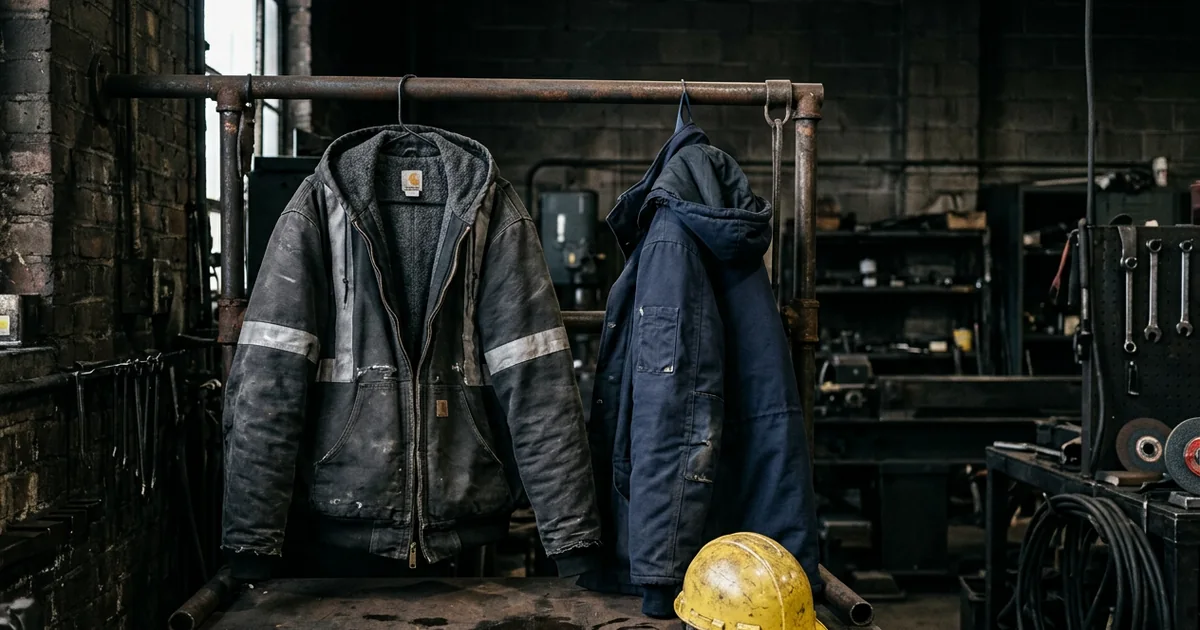
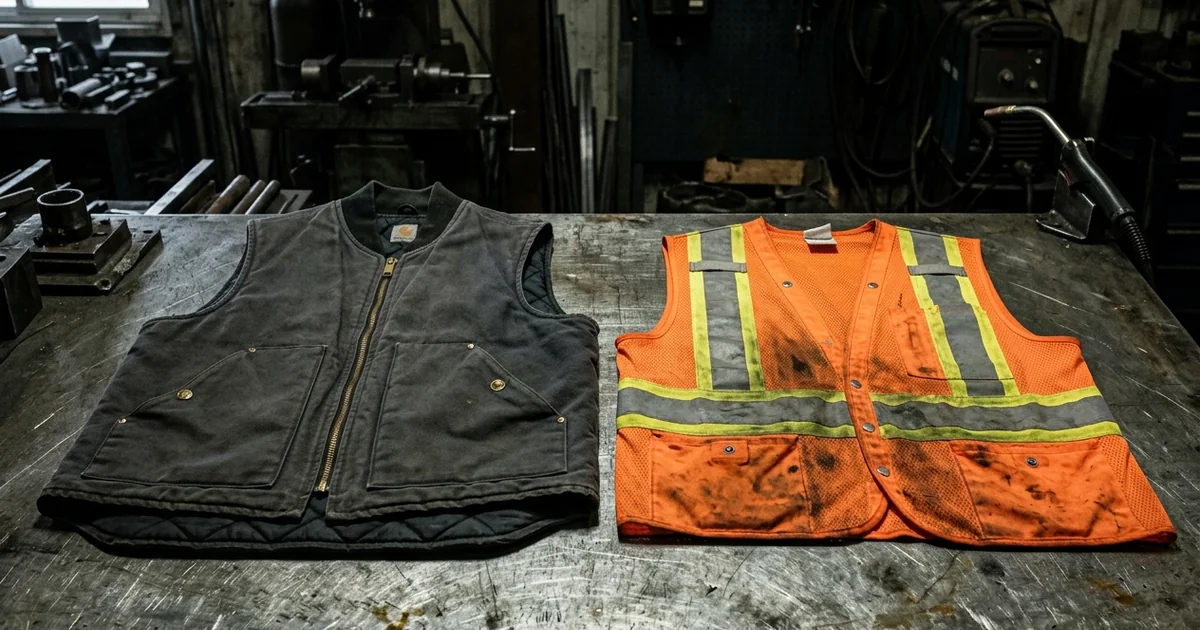
This is the only vest in the guide built for warmth, and it's the one I'd hand someone working cold in a flash-fire environment. The shell is 100% cotton FR duck canvas at 13 oz with an FR Sherpa lining, and the front zipper uses Nomex FR tape. It meets NFPA 70E and is UL classified to NFPA 2112, with a CAT 4 category listed in the specs. The honest trade-off: it does not publish an ATPV cal/cm² number, and it's FR-treated cotton, not inherent — so I leave the arc number as "—" rather than imply one.
- Pros: Only insulated option; NFPA 2112 + 70E; listed CAT 4 category; Nomex FR zipper tape; warm Sherpa lining.
- Cons: No stated ATPV cal/cm²; treated cotton (not inherent); priciest at $159.99; warmth makes it overkill for hot-weather visibility work.
Check price at Working Person's Store →
2. Black Stallion VF1110 TruGuard 250 — best arc-rated FR hi-vis vest
If you need visibility plus the most arc protection on this list, this is it. The fabric is 9 oz flame-resistant-treated 100% cotton, and it's the only hi-vis vest here with a stated ATPV of 8.2 cal/cm², putting it in CAT 2 — double the published numbers on the modacrylic vests below. It's compliant with NFPA 70E, ASTM F1506, and ANSI/ISEA 107-2015 Type R Class 2, so it does double duty as arc-rated and high-visibility PPE. The trade-off is that it's treated cotton, not inherent, so laundering discipline matters over its life.
- Pros: Highest stated arc rating here (ATPV 8.2 cal/cm², CAT 2); F1506 + ANSI Class 2; best protection-per-dollar at $74.99.
- Cons: Treated cotton, not inherent; NFPA 2112 not mentioned (it's an arc/hi-vis vest, not a flash-fire layer); solid fabric is warmer than mesh in heat.
Check price at Working Person's Store →
3. OccuNomix LUX SSBRPFR — best inherent FR breakaway vest
My pick when you want inherent flame resistance and a breakaway design for work near moving equipment or snag hazards. The shell is inherently flame-resistant modacrylic, and the binding, hook-and-loop closures, and thread are FR too. It meets ASTM F1506 with a stated ATPV of 5.5 cal/cm² (CAT 1) and lists NFPA 70E. Because the FR is inherent, the listing rates the material for 50 home or 30 industrial washes without losing protection — that's the real advantage over treated cotton.
- Pros: Inherent modacrylic (FR survives washing — 50 home / 30 industrial); breakaway safety design; ATPV 5.5 cal/cm² stated.
- Cons: CAT 1 protection (less than the Black Stallion); fabric weight not stated; $115.00 is high for this visibility class.
Check price at Working Person's Store →
4. Ergodyne GloWear 8260FRHL — best breathable FR hi-vis vest
The vest I'd choose for summer heat. It's an inherent modacrylic mesh at just 5.4 oz, so it breathes far better than a solid-fabric vest when you're working in the sun all day. It's ASTM F1506 rated, lists NFPA 70E, and states an ATPV of 5.1 cal/cm² (CAT 1) for Class 2 visibility. It's a lighter-duty layer — right for electrical and utility visibility work, but it isn't a flash-fire garment and isn't trying to be.
- Pros: Lightweight inherent modacrylic mesh (5.4 oz); breathable for hot weather; ASTM F1506 + ANSI Class 2; ATPV 5.1 cal/cm² stated.
- Cons: CAT 1 / lighter duty; NFPA 2112 not mentioned; mesh offers less coverage than a solid vest.
Check price at Working Person's Store →
5. OccuNomix LUX SSGC — most wash-durable budget-ish hi-vis pick
This one earns an honest asterisk. The shell is 100% polyester mesh, and the flame resistance comes from the FR thread and binding rather than an inherently flame-resistant fabric — the listing is upfront about that, and you should know it before buying. It meets ASTM F1506, is rated NFPA 70E, and lists Hazard Risk Category 1 with an ATPV of 5.1 cal/cm². It does hold up to 50 home or 30 industrial washes without losing its flame resistance, which is its strongest selling point.
- Pros: ATPV 5.1 cal/cm² stated; F1506 + NFPA 70E; 50 home / 30 industrial wash durability.
- Cons: FR is in the thread/binding, not an inherent shell; $105.50 is steep for that construction; fabric weight not stated.
Check price at Working Person's Store →
6. Tingley V81522 — best value FR breakaway (read the arc figure carefully)
A fair-value breakaway with an inherent modacrylic/cotton blend (55% modacrylic / 45% cotton, 6.5 oz). It carries ANSI/ISEA 107 Class 2, meets ASTM F1506, and conforms to NFPA 70E Hazard Risk Category 1. Here's the caveat I have to flag: its 6.8 cal/cm² figure is stated as Ebt (breakopen threshold energy), not ATPV — so it is not directly comparable to the ATPV numbers on the other vests, even though both land in CAT 1. Don't read "6.8 Ebt" as if it were "6.8 ATPV."
- Pros: Inherent modacrylic/cotton blend; breakaway design; ANSI Class 2 + ASTM F1506; reasonable $88.99.
- Cons: Arc value reported as Ebt 6.8 (not ATPV — not apples-to-apples); CAT 1; NFPA 2112 not mentioned.
Check price at Working Person's Store →
7. Carhartt 105787 Brite Lime Mesh — lightest visibility layer
The lightest vest here at 4.5 oz, in a 50% modacrylic / 30% lyocell / 10% aramid / 10% nylon mesh — a modacrylic/aramid blend that is inherently flame-resistant, though the listing itself doesn't label it that way. It meets NFPA 70E and ASTM F1506 and is ANSI/ISEA 107 Class 2, Type R. The reason it ranks last isn't quality — it's transparency: the listing provides no ATPV cal/cm² number, so you can't size it against a specific incident-energy hazard the way you can with the vests above. Great everyday visibility layer; confirm the arc rating with Carhartt before relying on it for a known arc-flash job.
- Pros: Lightest at 4.5 oz; inherent modacrylic/aramid blend; meets NFPA 70E + ASTM F1506; trusted brand; lowest hi-vis-mesh price among the Carhartts at $79.99.
- Cons: No ATPV cal/cm² provided (can't match to a hazard); NFPA 2112 not mentioned; mesh = minimal coverage.
Check price at Working Person's Store →
Insulated FR work vest or arc-rated hi-vis — which do you actually need?
Pick the insulated vest (the Carhartt 104981) when your hazard is flash fire and your problem is cold — oilfield, gas, refinery work in winter, where you want NFPA 2112 protection and a warm layer in one. Pick an arc-rated FR hi-vis vest (the other six) when your hazard is arc flash and you need to be seen — electrical, utility, and roadside work governed by NFPA 70E and ASTM F1506 with ANSI Class 2 visibility. They are not substitutes: a thin hi-vis vest won't keep you warm or carry a 2112 flash-fire classification, and the insulated duck vest isn't a high-visibility garment. If your job has both hazards, you layer — an arc-rated hi-vis vest over an FR base, with an FR jacket when it's cold.
Frequently Asked Questions
What's the difference between an insulated FR vest and an FR hi-vis vest?
An insulated FR work vest (like the Carhartt 104981) adds warmth and is built for flash-fire hazards under NFPA 2112. An FR hi-vis safety vest is a thin high-visibility layer for arc-flash and roadside work under NFPA 70E and ASTM F1506 with ANSI Class 2 visibility. They protect against different hazards and are not interchangeable.
Is NFPA 2112 the same as an arc rating?
No. NFPA 2112 certifies a garment against flash fire. An arc rating is a separate measurement in cal/cm² (ATPV) tied to arc-flash energy. A vest can be NFPA 2112 classified without publishing an arc rating, and vice versa — so check for both numbers if your work has both hazards.
Which FR vest here has the highest arc rating?
The Black Stallion VF1110, with a stated ATPV of 8.2 cal/cm² (arc CAT 2) — the highest published arc rating of any vest in this guide. The other hi-vis vests that publish a number sit around 5.1 to 5.5 cal/cm² (CAT 1).
Should I buy inherent FR or treated FR?
Inherent FR (modacrylic, like the OccuNomix and Ergodyne vests) keeps its flame resistance for the life of the garment and survives many washes. Treated FR (the FR-cotton Carhartt and Black Stallion vests) works well but depends on correct laundering to keep its rating. Both are legitimate; inherent is lower-maintenance.
Why do some vests not list a cal/cm² number?
Not every manufacturer publishes an ATPV on the product listing — the Carhartt 104981 and 105787 don't, for example. When a number isn't stated, I won't invent or borrow one. If you need to match a vest to a specific incident-energy hazard, confirm the ATPV directly with the manufacturer before relying on it.
Why Trust This Guide
This guide was written and reviewed by Wes Calder, an independent flame-resistant-workwear reviewer at FR Gear Lab. I rank on protection, value, and fit — in that order — and I quote only the specs each manufacturer's listing actually states, marking everything else "—" rather than guessing. FR is safety gear, so getting a cal/cm² number wrong isn't a typo, it's a risk. We earn a commission on some links, but we never rank by commission over safety — see our affiliate disclosure for how that works.